



About Guild Articles
Find practical, solution-oriented information—on design, development, management, technology, and executive matters—that you can use to make well-informed business decisions to ensure your organization’s success with learning.
-

Nuts and Bolts: Crooked Lines
We know, as designers, that a bulleted, text-heavy display of information is neither interesting nor compelling to most learners. What would make for an interesting or surprising look? What would break beyond the usual linear, bullets-in-a column structure? Consider the alternatives from designer Tracy Parish suggested in this month’s column.
-

On Social and Mobile Learning Architectures
Long-standing ways of teaching and learning are challenged by more dynamic and collaborative ways of finding and exchanging context-relevant information. We need to start thinking beyond the traditional courses and educational environments. How can designers leverage social interactions and uniquely mobile experiences to better support learning? Here are some ideas from around the world.
-

The Gamification of mLearning (Part 3 of 3)
Cricket Communications was seeking improved and more innovative ways to reach the sales professionals working in its retail locations by introducing mobile-enabled learning games to their existing platform. Here is the story of their highly successful gamification initiative!
-

Toolkit: Tools for Delivering eLearning with HTML5 (Part 2)
In August, Joe discussed browser compatibility with HTML5 and identified the most commonly used development tools you can use to publish eLearning lessons to HTML5. This month completes the review with a list of more tools that publish to HTML5, and others that are very useful in the eLearning development process.
-
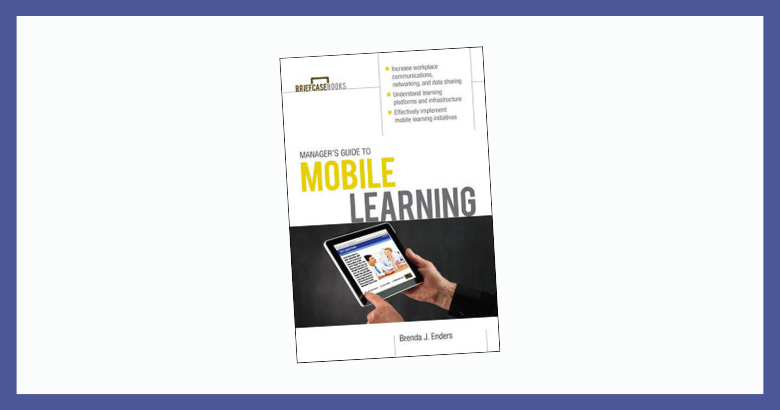
Book Review: Manager’s Guide to Mobile Learning, by Brenda Enders
For managers who see the benefit of anytime, anywhere access to learning opportunities, the Manager’s Guide to Mobile Learning, by Brenda Enders, will help you see the potential and outline the path to success for your mobile learning initiatives. Enders provides practical insights essential for anyone looking to dive into the mobile learning pool.
-

How to Manage Video
If your organization includes video in its eLearning media mix, managing that content involves some different issues compared to other media. Here is an overview of the issues, and some specifics for dealing with them.
-

Applying Informal Learning Using a Social Gaming Platform
A software company applied a social online peer-to-peer recognition game as part of its new values-implementation campaign. This case study demonstrates the opportunity that social gaming offers for the learning profession, as well as “lessons learned” and some conclusions for future applications.
-

eLearning Guild Research: Why Failing (While Learning) Is Good
“Freedom to fail” is a critical gaming feature that players leverage in order to improve their achievement of the various goals within a game. The “do-over” provides motivation and rewards engagement, and that is one more reason why game learning can be so powerful. The eLearning Guild’s latest research report discusses this and many other facets of gaming. Here’s an introduction.
-

Marc My Words: Back to School (Killing and Reigniting the Learning Flame)
Sometimes a trip down Memory Lane is worth making. The differences you remember between the best and the worst educational experiences you’ve had can be excellent guides to making better experiences for the learners in your organization. You can even turn the memories into a course-improvement checklist. Here’s a guided tour through those experiences.
-

LMS Operation and Governance: Taming the Beast
Is your existing LMS becoming an L-M-MESS? When you installed your LMS, you expected it might grow and change—and you were right. Only now it may have turned into a beast, with everything from outdated courses to spam-like email notifications. Sound familiar? If so, you will want to read this installment in Steve’s series!