Ready, Set, Go Increase Engagement & Retention
June 10 & 11, 2026 • All Online
Sounds familiar? Disengaged, multi-tasking learners who rush through training, forget what they learned shortly after, and struggle to apply the knowledge they gained in on-the-job situations.
Using game elements in learning helps employees better retain and apply what they learned by keeping them actively engaged, motivated, and emotionally invested in the training process. But it can be tricky to design.
In this six-session online conference, you’ll discover how to best use game design and game elements to actively support long-term retention and real-world applications. You’ll walk away with strategies to:
- Design gamified learning that focuses on skill development and application
- Create learning experiences that better reflect workplace realities
- Ensure your gamified learning enhances engagement and supports meaningful learning outcomes
- Seamlessly integrate gamification into a blended learning model
Connect and exchange ideas with other attendees! At the end of each day, you’ll gather in small groups to reflect on key ideas from the sessions, share perspectives, and explore how you’ll apply what you’ve learned.
Program
DAY 1: June 10
Conference platform and game element overview
11:15 AM – 11:18 AM ET / 8:15 AM – 8:18 AM PT
101 Kick off Panel: Where We Get Game-Based Learning Right & Wrong
Deborah Thomas, Silly Monkey LLC.
Karl Kapp, Commonwealth University
Kevin Thorn, NuggetHead Studioz, LLC.
Mark Britz, The Learning Guild
11:25 AM – 12:30 PM ET / 8:25 AM – 9:30 AM PT
This expert panel brings together experienced practitioners to examine where game-based learning succeeds and where it falls short in real-world instructional design. Our panelists will explore the underlying factors that make game elements engaging and effective, as well as common missteps that can limit impact or create barriers for learners.
Learn more.
201: Beyond Points & Badges: Gamification for Proficiency & Skill Transfer
Jenny Sun, Rivian
1:00 PM – 2:00 PM ET / 10:00 AM – 11:00 AM PT
Gamification is often reduced to points and badges layered onto passive learning experiences. While these approaches can increase short-term engagement, they don’t always support long-term retention or real-world application.
Learn more.
301: How Immersion Transforms Learning From Knowing to Doing
Aaron Delgaty, UNC Chapel Hill
2:30 PM – 3:30 PM ET / 11:30 AM – 12:30 PM PT
In many learning experiences, learners acquire knowledge but rarely get the chance to use it in ways that feel real. The session explores immersion as the missing link between knowing and doing and shows how ethnographic research can help instructional designers close that gap.
Learn more.
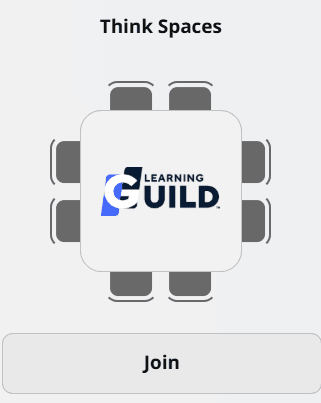
Think Spaces! Click into the Think Spaces menu item to join
Think Spaces,
3:35 PM – 4:35 PM ET / 12:35 PM – 1:35 PM PT
Join us for focused, small group table conversations where you can explore industry topics and build meaningful professional connections.
These sessions are intentionally designed to be semi-structured, practical, and relevant.
Learn more.
DAY 2: June 11
401: Winning Strategies for Gamification in Blended Learning
Lauren Ross, Emory University
11:30 AM – 12:30 PM ET / 8:30 AM – 9:30 AM PT
Just like a championship team needs a strong game plan, a successful gamification strategy requires the right tools, players, and execution. In blended learning environments, gamification can easily become fragmented if tools, modalities, and learner experiences aren’t carefully aligned.
Learn more.
501: Escape From the Moon: Creating an eLearning Escape Room
Alan Orr, BDO USA
James Brack, BDO USA
1:00 PM – 2:00 PM ET / 10:00 AM – 11:00 AM PT
eLearning escape rooms can create engaging and interactive training experiences, but they can also present challenges during design and development. In this session, we’ll share a case study of building an escape room where participants escape from an office on the moon with help from a robot named Lumi while learning to use a generative AI chatbot
Learn more.
601: Secrets of Gamification Revealed
Aaron Huffman, NetJets
Michael Milroy, NetJets
2:30 PM – 3:30 PM ET / 11:30 AM – 12:30 PM PT
Join us as we retell the misadventures of building “Ethical Pursuit,” an ethics compliance course inspired by Trivial Pursuit. This session shares the decision-making process behind choosing gamification, along with the challenges we faced while designing and building the experience.
Learn more.
Think Spaces! Click into the Think Spaces menu item to join
Think Spaces,
3:35 PM – 4:35 PM ET / 12:35 PM – 1:35 PM PT
Join us for focused, small group table conversations where you can explore industry topics and build meaningful professional connections.
These sessions are intentionally designed to be semi-structured, practical, and relevant.
Why join:
Learn more.
DAY 3: June 18
“Behind-the-Event”
3:00 PM – 3:30 PM ET / 12:00 PM – 12:30 PM PT
Join as we reveal the event design that was behind the game-based elements and other elements in this online conference.
101 Kick off Panel: Where We Get Game-Based Learning Right & Wrong
11:25 AM – 12:30 PM ET / 8:25 AM – 9:30 AM PT Wednesday, June 10
Through candid discussion and practical examples, you’ll gain a clearer understanding of how to thoughtfully integrate game mechanics, design for accessibility and inclusion, and make informed decisions about when (and when not) to use game-based approaches in your learning solutions.
Deborah Thomas
President & Owner
Silly Monkey LLC.
Deborah Thomas is an award winning serious games and training and development 25+ year veteran. She started SillyMonkey LLC 16 years ago. SillyMonkey LLC is a boutique training company specializing in innovative games and activities. They offer unique services including games and simulations to help learners retain learning objectives. They design custom board games, card games, electronic games, video games and other interactive multimedia training components for instructor-led sessions, as well as eLearning, mobile learning, social networks and virtual worlds. She is currently having fun designing a large-scale supply chain board game for a client.
Karl Kapp
Professor
Commonwealth University
Professor Karl Kapp is a scholar, a writer, and an expert on the convergence of learning, technology, and business operations. He is currently serving as a full professor of Instructional Design and Technology at Commonwealth University in Bloomsburg, PA. Dr. Kapp teaches a graduate level courses on Artificial Intelligence, Gamification, Game-based Learning and AR/VR. He is the Director of Commonwealth University’s Institute for Interactive Technologies.
Author or co-author of nine books, including the bestselling learning book: “The Gamification of Learning and Instruction” and his newest book “Action-First Learning: Instructional Design Techniques to Engage and Inspire.” Karl frequently works with organizations in the high-tech industry, life-science industry and is a LinkedIn Learning author of 12 courses.
Kevin Thorn
Chief Nuggethead
NuggetHead Studioz, LLC.
Kevin Thorn, EdD, is a learning strategist, visual storyteller, educator, speaker, and creative entrepreneur who believes serious work should still feel like play. As the founder of NuggetHead Studioz, he helps organizations design meaningful learning experiences through story-driven instructional comics, interactive e-learning technologies, and workshops using the LEGO Serious Play methodology.
Mark Britz
Sr. Director, Event Programming & Content
The Learning Guild
201: Beyond Points & Badges: Gamification for Proficiency & Skill Transfer
1:00 PM – 2:00 PM ET / 10:00 AM – 11:00 AM PT Wednesday, June 10
In this session, you’ll explore how to design gamified experiences that focus on skill development and application. By combining structured questions with AI-evaluated freeform responses, this approach creates opportunities for learners to test their understanding and receive immediate feedback. You’ll also examine how to balance cognitive load and scale these strategies across different audience sizes without increasing development complexity.
In this session, you will learn to:
- Analyze the gap between “feel-good engagement” and long-term encoding in gamified design
- Deploy gamification to target the moment of need using the Know—Understand—Trust framework
- Design freeform-answer scenarios that allow learners to stress-test their understanding
- Leverage AI and static tools to provide immediate, personalized feedback loops
- Scale game-based learning strategies across diverse group sizes without increasing development time
Jenny Sun
Sr. Learning Experience Designer, Visual & Interactive
Rivian
Jenny Sun is a Learning Experience Designer specializing in product thinking, behavioral psychology, and interaction design. She designs scalable systems that empower diverse networks to navigate complexity with confidence. By treating every learning journey as a product, Jenny is often seen diagnosing adoption risks and reducing friction for learners and fellow designers. She leverages her specialties to architect the cognitive and emotional frameworks required for trust, clarity, and lasting behavior change, putting humans back at the center of training.
301: How Immersion Transforms Learning From Knowing to Doing
2:30 PM – 3:30 PM ET / 11:30 AM – 12:30 PM PT Wednesday, June 10
By grounding learning in the lived experiences, decisions, and challenges of real people, you can move beyond abstract content and create environments where learners actively engage, experiment, and apply new skills. Drawing on applied anthropology, experiential learning research, and practical design examples (including game-inspired approaches), we’ll examine why immersion drives engagement and performance and what it takes to design for it.
In this session, you will learn:
- How to incorporate ethnographic techniques
- Translate real-world behaviors into immersive scenarios that prompt learners to act, not just absorb.
- To design learning experiences that better reflect workplace realities
- Improve engagement through meaningful interaction
Aaron Delgaty
Instructor of Anthropology
UNC Chapel Hill
Ren Delgaty, PhD, is an anthropologist, researcher, and strategist specializing in applied qualitative research, organizational relationships, and emerging technologies. He is an instructor of research methodologies at UNC Chapel Hill, and the founder of Note & Niche, a bespoke research studio focused on translating complex human dynamics into actionable insight for industry leaders. With experience teaching anthropology and AI-focused research methods at the university level, Ren brings deep methodological rigor to conversations about learning and development. His work centers on one guiding principle: if learning is meant to change behavior, it must reflect real human experience. Drawing from applied research projects and years of ethnographic fieldwork, Ren helps L&D professionals move beyond surface engagement tactics to design immersive learning rooted in authentic context and psychological believability. He speaks at the intersection of anthropology, instructional design, and organizational strategy, helping teams build programs that resonate because they are grounded in how people actually think, feel, and act.
Think Spaces! Click into the Think Spaces menu item to join
3:35 PM – 4:35 PM ET / 12:35 PM – 1:35 PM PT Wednesday, June 10
Why join:
- Topic driven tables with curated springboard questions
- Small (6 person max) groups for deeper networking
- A welcoming space to explore ideas with peers
401: Winning Strategies for Gamification in Blended Learning
11:30 AM – 12:30 PM ET / 8:30 AM – 9:30 AM PT Thursday, June 11
In this session, we’ll break down the Xs and Os of gamification in blended learning. You’ll explore strategies for connecting multiple learning tools into a cohesive experience while avoiding common pitfalls like scalability issues, awkward workflows, and disengaged learners. Walk away with practical tactics for ensuring your gamified learning experience enhances engagement and supports meaningful learning outcomes.
In this session, you will learn:
- How to seamlessly integrate gamification into a blended learning model
- How gamification strategies align with multiple learning tools into a cohesive, engaging experience
- How to understand solutions for overcoming common challenges, such as learner scalability, modality selection, and execution flow
- How to apply best practices for ensuring gamification enhances learning outcomes rather than becoming a distraction
Lauren Ross
Instructional Designer II
Emory University
Lauren ross is a Senior Instructional Designer with expertise in learner‑centered design, eLearning development, and LMS strategy across higher education, healthcare, and corporate environments. Experienced in ADDIE and Agile methodologies, cross‑functional collaboration, and the delivery of scalable learning solutions aligned with organizational goals.
Lauren leads blended learning initiatives, including the successful integration of gamification to drive learner engagement and scale cohesive learning experiences for diverse audiences.
501: Escape From the Moon: Creating an eLearning Escape Room
1:00 PM – 2:00 PM ET / 10:00 AM – 11:00 AM PT Thursday, June 11
You’ll learn practical approaches for designing the experience—from establishing the premise and planning puzzles to collaborating with SMEs and leveraging Adobe software with Articulate Storyline. The session will also explore how different difficulty modes can support varying levels of learner engagement.
In this session you will learn:
- How to collaborate with SMEs during a creative design process
- Ways to leverage the full suite of Adobe software with Articulate Storyline to build the escape room
- How to create two difficulty modes for varying levels of audience engagement and interest
Alan Orr
Learning Experience Designer
BDO USA
Alan Orr is a learning experience designer at BDO where he creates training solutions for professionals across the firm. He has been in the field of instructional design for eight years and has a background in program coordination and teaching in higher education.
James Brack
Senior Learning Experience Developer
BDO USA
James Brack is a Senior Learning Experience Developer at BDO USA who designs immersive learning experiences that blend creativity, gamification, and practical AI application. With more than five years at BDO and a background in instructional design, educational technology, and visual design, he creates interactive courses and video-based learning that increase engagement in virtual environments. His work reflects a passion for making emerging technology approachable, engaging, and useful for learners while connecting strong design principles with meaningful business impact.
601: Secrets of Gamification Revealed
2:30 PM – 3:30 PM ET / 11:30 AM – 12:30 PM PT Thursday, June 11
We’ll start with the big picture of what makes gamification effective before peeling back the layers of how the course was built in Articulate Storyline. Through stories, humor, and lessons learned, you’ll get a practical look at the design and development of a gamified training experience
In this session you will learn:
- What makes gamification work
- How to build gamification (and avoid the trap of building a game)
- How we built our game “Ethical Pursuit” by looking under the hood within Storyline
Aaron Huffman
Senior Instructional Designer
NetJets
Aaron Huffman is an Instructional Designer with over 20 years of experience creating eLearning, games, videos, and other training goodies.
He passionately believes that effective training should also be interesting. If we expect our users to invest their time in the training, we should match that effort by being creative, intentional, and maybe even enjoyable.
Michael Milroy
Learning & Development Manager
NetJets
Michael Milroy has designed award-winning courseware and websites. He’s currently a manager in Learning and Development at NetJets, bringing to the corporate world his skills and knowledge from his work in K-12 education, higher education, and outdoor education. He cut his teeth designing the technical training program for CompuServe’s award-winning technical support team. Since then, he’s consulted with some of the world’s largest brands, including PepsiCo, Coca-Cola, Southwest Airlines, Honda, Nationwide, Cardinal Health, Macy’s, Luxottica, American Eagle, Chick-fil-a, Marriott Vacations Worldwide, Ace Hardware, The Ohio State University and many more.
Think Spaces! Click into the Think Spaces menu item to join
3:35 PM – 4:35 PM ET / 12:35 PM – 1:35 PM PT Thursday, June 11
- Topic driven tables with curated springboard questions
- Small (6 person max) groups for deeper networking
- A welcoming space to explore ideas with peers