



About Guild Articles
Find practical, solution-oriented information—on design, development, management, technology, and executive matters—that you can use to make well-informed business decisions to ensure your organization’s success with learning.
-

Digimodernism and Learning
Technology extends what we can do at work, at play, and in our careers. It also reorganizes relationships and culture. Designers who think effective use of mobile technology is just a matter of fitting learning content onto smaller screens, or who approach social media as just another learning delivery channel, may be missing the bigger picture. Here are some ideas to consider.
-

Beginning Instructional Authoring: Why C.R.A.P. Is Exactly What’s Needed (Part 2)
The quality of visual design in your eLearning product can contribute to or detract from its effectiveness — and its credibility! Concluding the discussion started last month, Patti shows you how to use alignment and proximity to solidify your visual design, and how to use all four principles of visual design together.
-

Marc My Words: Back to Basics – When Training Is the Answer
After you have analyzed a performance problem and determined the non-instructional components of the solution, it’s time to begin working on the parts that have to be taught. Here are eight fundamental points of instructional design and delivery that you must incorporate into eLearning in order to get the results you intend.
-

Clicking, Learning, Telling: Audience Response System Use in Remote Locations
Do you enjoy a challenge? The author had to determine if specific harvest skills had been transferred from a workshop to lead farmers and then on to individual farmers in remote villages in Rwanda. The key to his success was the “clicker”: an audience response system. Not working in Rwanda? His tips will help you use clickers to lead focus groups in the corporate world, too.
-

Nuts and Bolts: What’s Your Story?
In Learning Solutions Magazine, a number of authors have suggested using stories to support learning. Sometimes managers object to the idea of using stories as being too touchy-feely. Here’s a new way to look at the process, and some words to replace “story.”
-

Explore a New Learning Frontier: MOOCs
Massive Open Online Courses (MOOCs) are a relatively new format for learning. These are online gatherings of people willing to jointly exchange information and collaboratively enhance their knowledge about a topic of common interest. Learn here about MOOCs, how they work, and how to take part in the “Mother of all MOOCs”!
-

Learning at mLearnCon: Here We Go Again, or Do We?
Many of us who were at mLearnCon a month ago are still processing the experience. That includes the experts who led sessions and major parts of the program. Here are the reflections of the MOSHPit Master, as he relates his learning in San Jose to the challenges we face.
-

Playing Cards at a Tech Conference: A Game of Phones Reviewed
The card game A Game of Phones made its debut at The eLearning Guild’s mLearnCon in June. While you might wonder what a card game has to do with mobile learning, the experience of the players showed the value of combining social interaction with a game around the context of using mobile technology. Blended for sure! Here’s the impressions of one who played and won.
-

Front-end Analysis: Blueprint for Success (Part 2)
In classic Instructional Systems Design (ISD), the designer investigates the performance problem and possible alternative ways to correct it before actually beginning to create instructional content. We call this Front-end Analysis, and this week’s feature concludes a two-part tutorial on the process.
-
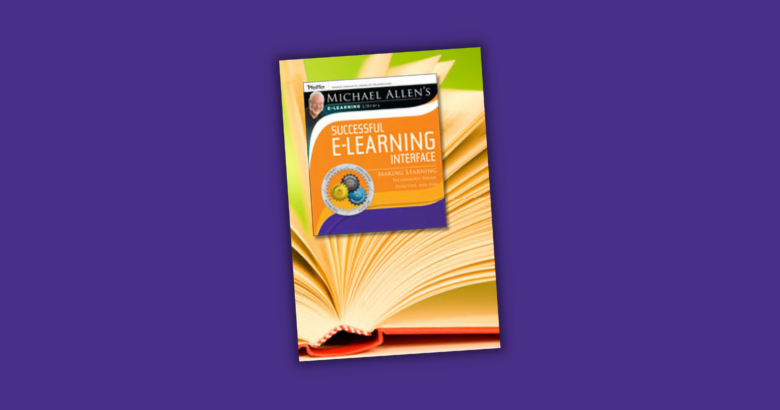
Review: Michael Allen’s Successful e-Learning Interface
While User Interface (UI) guidelines help designers solve usability issues on Web sites, eLearning must satisfy a different set of needs in order to provide an effective experience for learners. This learner interface can be at odds with the UI requirements. The latest volume in Michael Allen’s e-Learning Library will guide you and your team safely through resolution of these conflicts.