




Jennifer Neibert is a career learning professional who runs Brushfire Learning, a boutique firm creating custom solutions to engage learners and promote long-term performance sustainability. To the learning industry she brings more than 12 years of experience in eLearning and capacity building programs that improve the human condition in the U.S. and abroad. Jennifer’s work has taken her to four continents and allowed her the opportunity to present at several international and domestic conferences. She brings insight and understanding about our field and its challenges to her articles in the magazine.
Latest from Jennifer Neibert
-

The Power of Storytelling in eLearning
Today’s learners face a barrage of competing priorities and overwhelming workloads. By tapping into the power of storytelling, instructional designers and eLearning developers can create emotional connections and engage learners with real-life scenarios and consequence-based feedback that result in meaningful discovery.
-

Book Review: Leaving ADDIE for SAM Field Guide, by Richard Sites and Angel Green
Written as a follow-up to Michael Allen’s 2012 bestseller Leaving ADDIE for SAM, the recently released Leaving ADDIE for SAM Field Guide, by Richard Sites and Angel Green, is chock-full of checklists, worksheets, templates, and tools. The Field Guide is sure to become a go-to reference as you make the most of the Successive Approximation Model (SAM) in your organization.
-
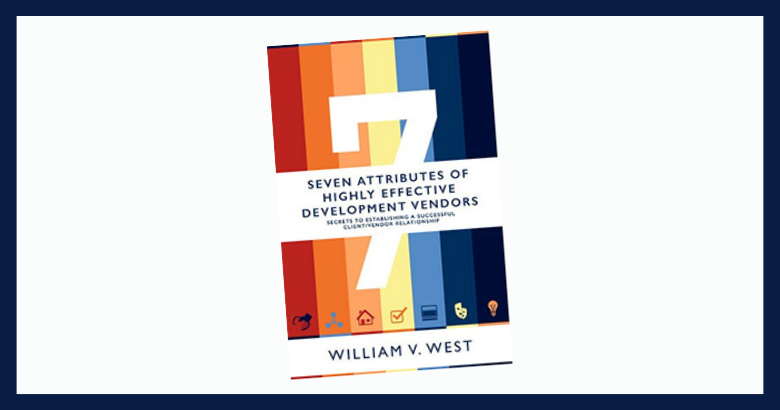
Book Review: Seven Attributes of Highly Effective Development Vendors, by William West
In his book Seven Attributes of Highly Effective Development Vendors, William West draws on more than two decades of experience working with many of the world’s most admired companies from the perspectives of both employee and external-development partner. West’s attributes can help guide those responsible for hiring vendors … and vendors themselves!
-

Mobile Learning for Talent Development: Critical Questions for Learning Leaders
Is your organization thriving … or are you merely surviving? And for those times when mobile learning is the perfect complement to your existing strategies, how can you take full advantage of its possibilities? This article takes a high-level look at the impact of mobile, data trends, and an organization’s learning culture to give today’s executives plenty of food for thought.
-

Book Review: Interface Design for Learning, by Dorian Peters
In Interface Design for Learning, Dorian Peters weaves together her work as a designer and specialist in user experience to give readers dozens of evidence-based strategies for designing effective learning experiences. Anyone tasked with creating learning interfaces, or curious about how design affects learning, should consider Peters’s book a must-have reference.
-

Book Review: Immersive Learning, by Koreen Olbrish Pagano
Games, simulations, virtual worlds, alternate reality games (ARGs), and 3-D immersive environments… For anyone curious about the relationship between these mediums, or looking for commonsense guidance for designing such experiences, make a note to add Koreen Olbrish Pagano’s Immersive Learning to your reading list in 2014.
-

Effective Performance with A.G.I.L.E. Instructional Design
The final three steps in Conrad Gottfredson’s AGILE instructional design methodology (iterate and implement, leverage, and evaluate) provide context and prioritization for creating workable learning solutions; for integrating technology, people, and research in our performance-support efforts; and for designing the ways we measure the business impact of what we do.
-

Getting the Most Out of Your Capital Investments
With a multitude of tools, technologies, platforms, and systems on the market, learning executives face a dizzying array of options to support formal and informal learning and performance. Building a cohesive strategy that spans multiple technologies is a serious undertaking, fraught with challenges. What’s a leader to do? Discover a learning ecosystem mindset that integrates them all.
-

Agile Instructional Design: Get in the Performance Zone
The first two steps of AGILE instructional design (align and get set) identify and validate business performance needs and define requirements for learning and performance interventions. And with two systematic approaches (rapid task analysis and critical skills analysis), you can scope performance and rate the impact of failure to ensure your solutions best meet your learners’ needs.
-

New eBook: 158 Tips on mLearning: From Planning to Implementation
As mobile device usage soars, organizations are changing their questions about mLearning from “Should we?” to “How should we?” In 158 Tips on mLearning: From Planning to Implementation, an eBook available for free from The eLearning Guild, 23 of today’s leading mobile learning experts share their thoughts and strategies to help guide your mLearning initiatives.