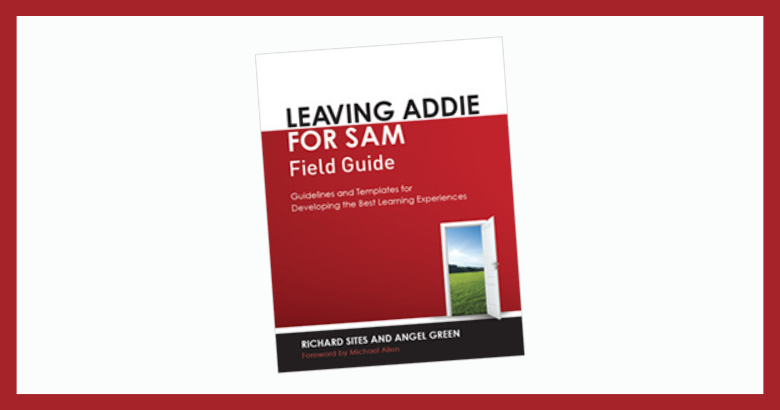
 As instructional designers and eLearningdevelopers, our ultimate goal is to create effective learning experiences forour companies and organizations that lead to real changes in performance. Wehave many models and approaches that can guide our work, but with the releaseof the Leaving ADDIE for SAM Field Guide,co-written by Richard Sites and Angel Green, we now have a handy reference tomake the most of Michael Allen’s iterative and pragmatic SuccessiveApproximation Model (SAM). The FieldGuide builds on the checklists, worksheets, templates, and tools from Leaving ADDIE for SAM and is formattedin a way to help you effectively implement SAM and “move the needle” on youreLearning and instructor-led training initiatives.
What it is … and what it isn’t
To be clear, the authors point out that the Field Guide is “a companion to Leaving ADDIE for SAM, not areplacement.” And having read Allen’s book and put many of the SAM tenets towork in my own practice, I wholeheartedly agree. Readers will find the mostvalue in the Field Guide when theyfully understand the basic background information found in Leaving ADDIE for SAM.
The authors divided the book into four mainparts: Preparation Phase, Iterative Design Phase, Iterative Development Phase,and Conclusion. The authors do highlight the fact that although the Field Guide moves through SAM in thischronological order (Figure 1), in real-world application the process is indeediterative and non-sequential. Given those details, the Leaving ADDIE for SAM Field Guide will quickly become an essentialreference for everyone who uses SAM to guide the design and development oftheir eLearning, instructor-led, or blended learning initiatives.
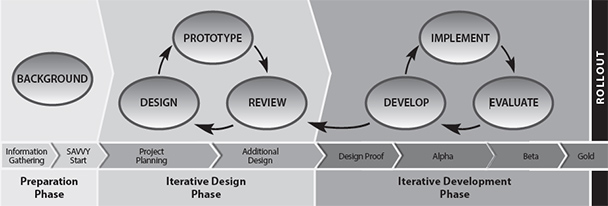 Figure 1: SAM is an iterative design and development processfor creating interactive learning events
Making SAM work
The team at Allen Interactions has seen muchsuccess using SAM to develop highly effective learning experiences that aremeaningful, memorable, and motivational, and the authors structured the Leaving ADDIE for SAM Field Guide in away to help other project teams use the process to guide their own work. Let’stake a closer look at each section in theField Guide:
- Part I:Preparation Phase
This sectionfocuses on the tasks involved in backgrounding (information gathering) and conductingthe Savvy Start. The Savvy Start is distinct from most project kick-offs inthat the goals of the meeting are to brainstorm, prototype, plan, revise, andtell stories that will clarify the actual performance the project seeks toimprove. Within Part I of the Field Guide,readers will find a list of backgrounding questions and numerous worksheetsto help plan, manage, and document the Savvy Start. This section includesinstructions for four exercises (role play, timeline, rotating flipcharts, and builda skills hierarchy) to help the group define the desired behavior of thelearners, as well as ideas and worksheets to help guide the prototypingprocess.
- Part II:Iterative Design Phase
This section of the Field Guide includes high-level contentabout SAM’s Iterative Design phase and includes a project-plan outline, project-statusreport template, and ways to build learning activities and involve a differentkind of SME—the subject matter enthusiast—throughoutthe process. As readers likelyacknowledge, most projects begin with a sizeable amount of existing content.But, the challenge for instructional designers is to develop and refine thatcontent into different or new forms that result in more than just passivelearning (Figure 2). The team at Allen Interactions builds learning eventsbased on four components—context, challenge, activity, and feedback (CCAF)—andthe Field Guide includes a sampleCCAF content grid and worksheet to help guide your own development efforts.
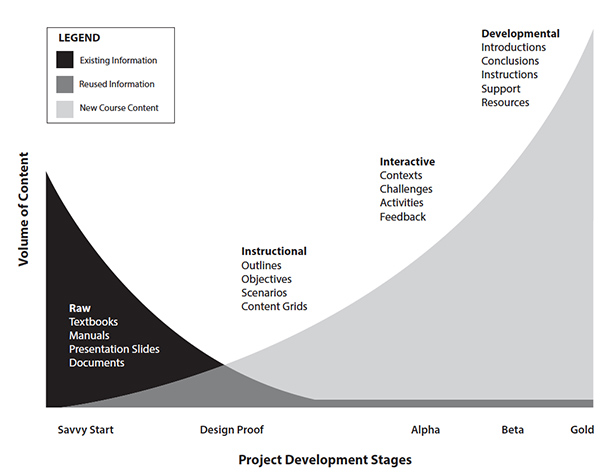 Figure 2: Content development through SAM
 - Part III:Iterative Development Phase
The thirdsection of the Field Guide features importantguidance and useful project tools needed to bring a learning product tofruition. Specifically, readers will find strategies and worksheets formanaging user reviews from the Design Proof through Alpha, Beta, and Goldreleases. Most helpful in this section is the fact that design of the reviewworksheets is for eLearning and instructor-led training projects alike. PartIII wraps up with great suggestions related to planning for future revisionsand quick questions for a one-year course revision strategy.
- Part IV:Conclusion
The Field Guide concludes with the SAM Leadership Self-Evaluationworksheet from Leaving ADDIE for SAM,with additional insight on rating yourself and the one key skill needed to be asuccessful SAM leader. Curious about what that skill might be? You’ll have toread the book! Sites and Green close the FieldGuide with a note to readers about the importance of making small changesand steps towards “moving the needle” on current training efforts.
The bottom line
If you’ve read Leaving ADDIE for SAM and put the process to work, then you willcertainly find the Field Guidehelpful in your day-to-day work. Yes, some of the examples and worksheets arethe same from one book to the next, but the added resources and updated formatmake the Field Guide a practicalreference guide that you’ll be sure to turn to again and again.
Bibliographic information
Sites, Richard and Angel Green. Leaving ADDIE for SAM Field Guide:Guidelines and Templates for Developing the Best Learning Experiences. Alexandria,VA: ASTD Press, 2014.