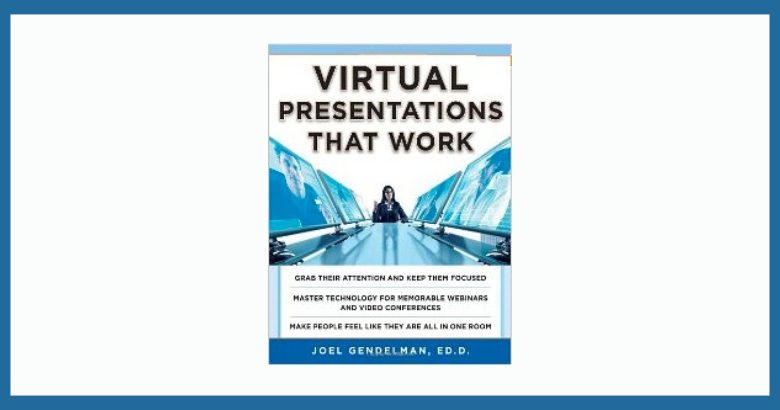
JoelGendelman has produced a basic how-to book for those who are new tovirtual meeting tools. He provides guidelines and examples that applyto any tool. His promise is that he will give the reader a path tomaking virtual presentations that are “as effective as, and morecompelling than, face-to-face presentations.”
 Tomany of his readers, skeptical of claims about technology, this willprobably seem overly bold, but he cites research that supports hisassertion. On the other hand, those who have already experiencedeffective virtual presentations know that his objective isattainable, but only with good guidance and plenty of practice.
Fast out of the blocks
Gendelmangets right down to the business of giving that good guidance. Hecompares the process of showing experienced face-to-face presenters(his intended audience) how to deliver in an online environment tothe process of teaching a pilot, one who already knows how to fly aplane in good weather and daylight, to fly by instruments. It’s agood analogy.
Gendelman organized thebook’s 277 tightly written, well-planned pages are organized into33 short chapters and seven appendices. He explains what makesvirtual presentations work and when to use them, and gives examplesof ways in which businesses are using them to increase their success.He then takes the reader through all the steps, from planning andpreparation (broken down to what must happen one month, one week, andone day before the presentation), to the techniques that work whengaining attention and engaging the audience, presenting informationand demonstrations, promoting interaction, excitement, andmotivation, and ending with a bang.
There’spractical advice on handling the inevitable technical problems,overcoming silence and resistance, and controlling the audience. Joelalso explains how to convert an existing face-to-face presentation toa virtual one, before wrapping up with a case-study exercise.
Throughoutthe book, readers encounter a series of worksheets that invite themto take action and that give them handy checklists they can use eachtime they prepare and deliver a virtual presentation. This is a veryeffective way to give the new virtual presenter a sense of confidencethat will come through to the audience.
How to use this book
Gendelmanis writing to people who will make business presentations or conductmeetings in the virtual environment. This is not a book primarilyintended to prepare a subject matter expert to teach. The contentcould be useful to an instructor new to synchronous training, but itwill not be sufficient.
I think that the best use of Joel’s book is for teachingmanagers, sales people, and executives to be effective onlinepresenters, as part of a program that gives them hands-on experience.Use this book as the take-away: you won’t need handouts if you do,and the worksheets will be excellent resources for in-class exercisesand discussion.
Iwouldn’t rely on the book alone – trying to learn to give a greatvirtual presentation without the hands-on part would be a lot liketrying to learn to ride a bicycle by reading a book — a skillthat needs coaching, feedback, and guidance. But this book makes agreat pair of training wheels!
Publisher information
Gendelman, Joel, Ed.D. (2010)Virtual PresentationsThat Work. New York:McGraw-Hill. 277 pages. Publisher’s list price USD $19.95; Amazonpaperback USD $12.92; Kindle Edition USD $9.99. ISBN978-0-07-173936-8.