By Mickailynn Holman
Game-based learning (GBL) works best when simple mechanics support learner engagement. We don’t need expensive tech or expert gaming skills. By using practical, familiar game patterns, we can increase motivation, autonomy, and skill-building in everyday learning. As a casual gamer and learning professional, I’ve seen that well-chosen game mechanics consistently help people invest more in their progress.
To put these ideas into practice, this article offers strategies for including core game mechanics—such as choice, challenge, feedback, and exploration—into everyday learning, using tools most people already use. The goal: help you turn ordinary experiences into motivating, successful learning opportunities.
Why Game Mechanics Work
- Choice boosts learner autonomy. GBL increases intrinsic motivation through giving learners control over their learning path. Games let players choose missions, paths, or strategies — giving a feeling of ownership.
- Challenge increases engagement. Well-structured challenges increase focus and active participation in learning tasks. Good games offer just enough difficulty to feel exciting without being overwhelming.
- Feedback improves mastery. Immediate, direct feedback improves understanding and determination. Games make it clear right away whether your action worked.
- Exploration stimulates deeper learning. Game-based environments encourage safe experimentation and discovery. Games reward curiosity and encourage learners to discover solutions on their own.
Now, let’s explore how to use these principles in learning design using three easy-to-understand mechanics.
3 Mechanics Anyone Can Understand
1. Missions
One of the easiest mechanics to borrow is the mission. In games like The Simpsons: Hit & Run, missions give players clear goals tied directly to the storyline. Along the way, players can choose to take on side quests–optional challenges that invite exploration and build skills that support the main objective. You always know what you’re working toward, but have freedom in how you get there. This idea works well in learning, too!
Instead of forcing everyone through the same linear content, learning is broken into small, goal-based missions that people can choose from. A simple mission board shows what needs to be done, what’s optional, and where to go next—whether as a slide, a site page, or a printed card. Learners want to know their goals and have control over achieving them.
Missions combine choice and challenge without adding complexity. The trick is to keep it simple:
- Make the mission clear
- Keep the choices real
- Let learners decide their path
2. Progressive Challenges
A common mistake in learning design is asking people to do too much too soon. When we expect mastery on the first try, then learners lose interest. Games offer challenges that gradually improve skills, allow practice, and strengthen confidence over time.
A familiar example is Candy Crush, where each level features a small variation or new constraint that gently increases the challenge. You try a move, see what works (or doesn’t), and adjust on the next attempt. Over time, those small adjustments add up, patterns start to click, and your skill builds with each level.
In learning, progressive challenge breaks a skill into smaller tasks that build on each other. Learners move through Level 1, Level 2, and Level 3 versions of the skill. Difficulty increases each time, feedback is quick, and retries are allowed.
When failure feels safe and progress is visible, learners are more willing to stay engaged and keep going. The key is to:
- Design challenges that support real growth, not just completion.
- Use points or badges as motivation only when they’re tied to real progress.
- Find the sweet spot for challenge levels: too easy feels boring, too hard feels discouraging.
3. Cooperative Problem-Solving
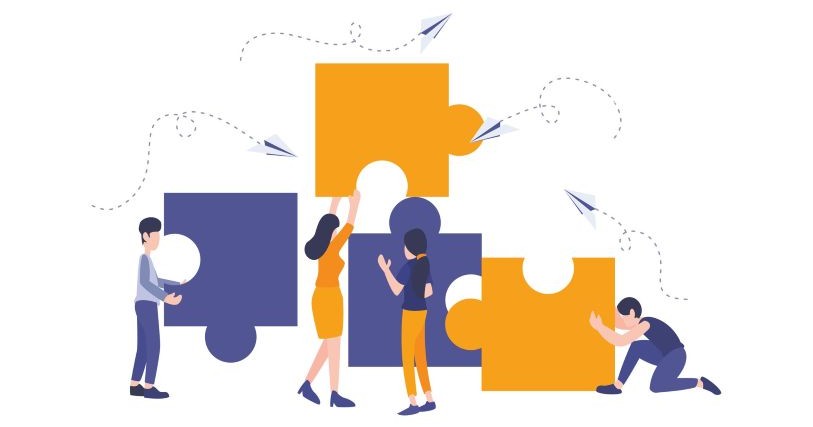
A lot of meaningful learning happens when people work through problems together. Cooperative problem-solving is built around this:
- Multiple learners are working toward a shared goal.
- No one person has everything they need to succeed on their own.
- Learners rely on collaboration, communication, and combined thinking to move forward.
In practice, this can mean pairing or grouping learners, giving each person a part of the information. One might know X, another Y; together they build a solution. This can be done through paired tasks, breakout groups, or shared documents. These tasks encourage discussion, strategy, feedback, and exploration.
A clear example of this mechanic comes from games like Unravel Two. You and your partner are literally tied together, and progress is only possible through cooperation. You have to coordinate your actions, communicate constantly, and solve problems as a team. It’s a simple but powerful idea that shows how effective collaborative learning can be.
Exploring ideas, negotiating meaning, and building solutions together deepens understanding. It’s important to design collaboration with intention. Tasks should require real interdependence, not forced group work or busywork. The mechanic should support the learning goal, not distract from it. When done well, collaboration isn’t just a way to deliver content; it becomes the learning itself.
TL;DR: Small Shifts, Big Impact
Game-based learning is about applying well-known mechanics to make training more motivating and practical. Anyone can use these methods without special tech. Focus on the mechanics themselves to create a meaningful learning experience.
Try this in your next learning experience:
- Missions: Let learners choose between two clear starting tasks or goals.
- Progressive challenge: Build one capability across three levels that slightly increase difficulty.
- Cooperative problem-solving: Design an activity in which learners must share information to co-build a solution.
These are the same mechanics that make games engaging. With a few small design shifts, anyone can use them in everyday learning.
Explore Game-Based Learning!
Registration is open for the Learning Guild’s Game-Based Learning online conference, June 10–11, 2026. Engaging, interactive sessions will:
- Offer a behind-the-scenes look at building a game-based compliance course
- Suggest strategies for moving learning from passive to active—and boosting long-term retention
- Consider the challenges and rewards of developing a virtual escape room
- Explore the need to align tools, players, and execution to deploy successful learning games in your environment
Register today! Free for Professional-level and Enterprise members.
Image credit: ngupakarti