

-
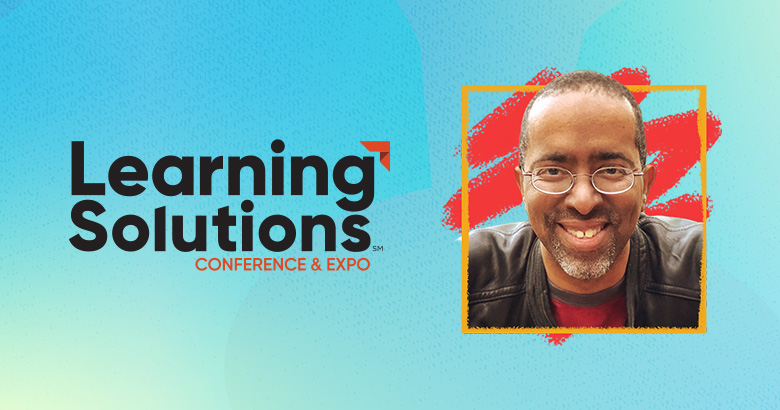
Design for Cognitive Bias: Using Mental Shortcuts for Good Instead of Evil
People’s minds take shortcuts to get through the day. Usually, they’re harmless. Even helpful. But what happens when they’re not? In our closing keynote for Learning Solutions 2022, David Dylan Thomas will explore real-world examples to identify some particularly harmful biases that frequently lead people to make bad decisions. You’ll explore how to apply these insights into content strategy and design choices that can be used in the programs you build to redirect or eliminate the impact of those biases. We will also explore our own biases as designers, and learn some methods to prevent our own blind spots from…
-

The Future of Work Is Here
Constant technology innovations, an evolving workforce, and a changing global marketplace were already dramatically impacting the face of the workplace. Then COVID-19 arrived and the script got flipped upside-down. The ways we connect, share, and learn with each other changed overnight, disrupting how our organizations work and how we approach supporting the training and development needs of a hybrid workforce. In this inspiring keynote, technology strategist and futurist Crystal Washington shows learning professionals how we can thrive in today‚Äôs uncertain times while keeping an eye on the horizon to be ready to ride future waves of change. We will explore…
-
Embrace the Shake: Transforming Limitations into Opportunities
The long-term success of L&D can often depend greatly on our ability to find a way to rise above any challenge and find solutions no matter what comes our way. The phrase “Embrace the Shake” comes from artist Phil Hansen’s personal story of transformation. After developing a career-ending tremor in his drawing hand, Phil embraced his “shake,” both physically and metaphorically by redefining his limitation as an impetus for creativity. Phil not only restored his artistic abilities, he became a much more creative and innovative artist. During this powerful opening keynote, you will discover how finding creativity within limitations will…
-
Monthly Meeting: LLA Monthly Meetup: Emma Hayes How Unconscious Thoughts Lead to Microinequities in Learning
Emma Hayes, Chief Culture Officer at SECU, joins ourMonthly Meetup with a presentation titled, “How Unconscious Thoughts Leadto Microinequities in Learning.”
-

Cognitive Science in Instructional Design
In the information age it’s believed more is better. However, when it comes to learning we often find the opposite: less can be more. Because of the cognitive load limits of learner’s memory, we’re only able to focus on and learn a finite number of any given items on a screen, slide, or page. The problem for most instructional designers is finding balance. In this session we’ll discuss the role cognitive load plays in how people learn and retain information. We’ll start with a baseline discussion about what cognitive load is and why it’s important to consider in instructional design.…
-
Using VR to Create a Psychologically Safe Space for Learning
Learning can come with costly mistakes. Whether learners are expanding their understanding of diversity and inclusion or working in hazardous environments, on-the-job missteps can damage relationships or even cause injury. How do we create space for learning while still protecting individuals from dangerous repercussions? Virtual reality is one solution. In this session, you’ll explore how VR can enable your learners to have tough conversations, tackle risky situations, and enter dangerous landscapes. We’ll examine several case studies of VR training in action across the globe. These examples will demonstrate how VR training can positively impact trust and personal safety. Then, we’ll…
-
Recapping the Research: What’s Going on with Adaptive Learning in L&D?
Adaptive learning is an emerging technology gaining traction with organizations looking to leap ahead and improve their audiences’ experience and enhance learning outcomes. While many products are now adding this feature to their offerings, it can be tough to determine what the end goal is and if this new technology solves the issues at hand. The recently released “Adaptive Learning Research Report” from The Learning Guild offers a wealth of information on this topic. Let’s take a deep dive into the report and discuss the core benefits that adaptive learning brings to the table.
-
Taking a Systems Approach: Designing Comprehensive Solutions
Every learning and development person has gotten that request. The one where you immediately want to ask: “Are you sure that’s a training problem?” But you can’t always make that case to stakeholders who have come to you with a training solution already in mind. There are a number of different ways to address this challenge, and having concrete methods to analyze the underlying issues can make all the difference in persuading stakeholders and in solving actual business problems. In this session you’ll find out how systems theory and systems mapping are additional tools that you can use to address…
-
Evidence-Centered Design for Virtual Reality Training
Designing virtual reality (VR) training can be intimidating in many ways. The perception of unlimited possibilities can often pose challenges for learning designers. It may be difficult to know where to begin or how to select the most impactful ideas. What if there were a method of designing VR experiences that ensures you’re fulfilling the intended learning goals and promotes the behavior changes you wish to see? This session will help you design and measure learning within your VR solutions and help you embed assessments directly within the experience using an Evidence-Centered Design for Assessment (ECD). In the ECD framework,…
-
Spaced Learning: A Design and Technology Primer
Spaced learning is an approach that can help your learners build and apply knowledge over time, leading to increased confidence and competence. There is a lot of excitement around systems that can “automagically” deliver content and resources over time to help training “stick”. Unfortunately, like most things in workforce development, buying the technology to support spaced learning is only a small piece of what it takes to do it well. We will look at spaced learning from two perspectives: How to design for it, and the technology needed to deliver and measure it. You will learn how to approach an…

