
In August 2012 I wrote a column about narrating work, focused largely on watching my friend Gloria work andlearn out loud on Facebook about the art of cookie making. The experience ofseeing someone share photographic examples of small challenges, mistakes, andwins over a span of months—and watching others comment and even join in learningwith her—was fascinating.
I was intrigued by thepossibilities that doing better at showing our work could have onorganizations, on each other, and on our own professional development. That columnturned into an Ignite! session at DevLearn 2012, then into a popular longerconference session. And now—it’s a book.
Why show your work?
Really, we know that a lot of“traditional” knowledge management approaches don’t work very well. We havepiles of status reports and documented standard operating procedures and whathave you, and still, datasays we spend a quarter of our time looking for something—or someone—with theinformation we really need (Figure 1).
 Figure 1: One of the bestreasons for showing your work is that it ultimately helps you
You find out after a project isfinished that someone in another building already did something just like it, ora key person leaves and no one can step in. Or you struggle to self-learnenough to complete a project and later run into someone at the office holidayparty who, it turns out, has a degree in the thing you struggled to learn lastspring. We are constantly documenting procedures while learning and relearningto handle exceptions to them, often keeping that data in our own heads.
Working efficiently and effectivelyisn’t just about capturing “information.” We need to do better, not atdocumenting what people do, but howthey get things done. This will helpour organizations, our coworkers, and others who engage in our practice. Itwill support your credibility and establish or strengthen your brand. And it’show we help each other learn.
What does it mean to show your work?
It means telling others at ameeting, or blogging, or making a video on your phone, or sketching on a chartpad, or drawing on a wall, or tweeting pictures, or uploading a document to SharePoint.Or perhaps, mentioning on Yammer something like: How I learned that. Where Igot that idea. My problem and how I solved it. Before-and-after examples. Whatwe did in class today. My slide deck from the big sale last week, with notesabout how I handled objections. An obstacle and how I overcame it. How I spentmy day. What was hard about that? Why we did it that way.
How about some specific examples?
- “I Was Struggling to Figure Out What to do withthis Content”: Instead of showing off a finished, polished course, Matt Guyan tookto his blog to describe his struggle to come up with an interesting treatmentfor the content—and where he found the inspiration for his solution: https://learningsnippets.wordpress.com/2013/11/28/showing-my-work-3/
- “This Doesn’t Happen Overnight”: Kevin Thorn(Nuggethead Studioz), while working on a serious comic for HIV awareness, showsthe evolution of the comic’s characters from rough sketch to final form as thestory itself developed: https://www.learnnuggets.com/2013/02/serious-comic-character-development/
- “Why I Did It That Way”: The process forchoosing a font, with considerations alien to many of us but critical todesigners, and from which any of us who design instructional materials canlearn: https://37signals.com/svn/posts/3285-the-typography-and-layout-behind-
- “Here’s What I Did. Please Ask Me About It”: TheeLearning Guild hosts wonderful events at which attendees can show their work:mLearning DemoFest, which happens every summer at mLearnCon;eLearning DemoFest, held in the fall at DevLearn (Figure 2); and SolutionFest,which takes place at the spring Learning Solutions conference. Conversation islively and often goes beyond just “how did you do that?” to “how did you dothat with no money?” or “how did you do that given the time constraints andconflicting stakeholder ideas?” Guild members can access the “Best of” webinarsafter each event; for example, “Best of SolutionFest 2014.”
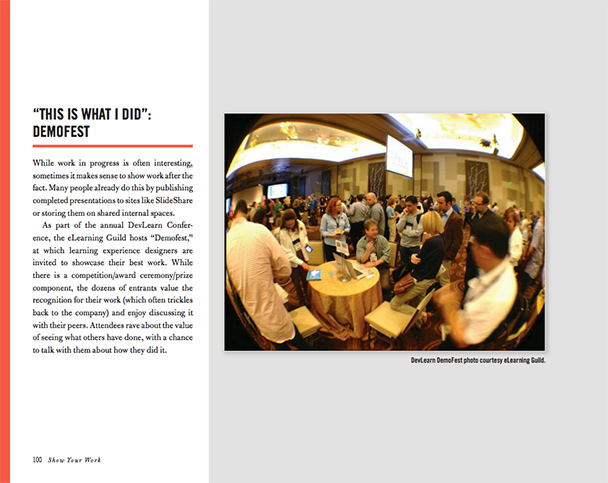 Figure2: mLearning DemoFest and MobileFest in the summer, eLearning DemoFest inthe fall, and SolutionFest in the spring feature dozens of designers and developersshowing their best work
- “This is How I Managed That Project”: NancyDuarte tweeted about her process for designing a book. She lays it out inPowerPoint, then prints out the slides and gets down on the floor with them.
- “We Learn From Sharing Our Mistakes”: Hospital mortalityand morbidity conferences routinely held meetings at which physicians gather todiscuss unusual cases, how they handled them and why, and what they might dodifferently next time.
- “What I Learned Because Others Showed TheirWork”: Leslie Jensen-Inman talks about an early job in a design studio, and learningfrom pressmen how to make her design work better—to make her work stronger—byavoiding things that could cause common printing problems. “Theyshared with me design decisions designers made that really ticked themoff—things that made the pressmen’s jobs harder and sometimes impossible. Inessence, the pressmen showed me how to make my work stronger. They showed mehow to think beyond just being a designer and they helped me to design as amaker. They did this by encouraging my curiosity. They did this by sharingtheir experiences and their knowledge.”(https://the-pastry-box-project.net/leslie-jensen-inman/2013-march-24)
Want to start? Don’t over engineer
Want to share your work or help others share theirs? This shouldn’tbe hard, or involve big launches or implementations of platforms, or requirethe use of tools with a long learning curve. Pay attention to where it couldfit into your workflow. Look at your existing systems and channels. Whenconsidering how to show your work, or encourage others to show theirs, Charles Jennings reminds us: “Thepoint is to extract learning from work, not create more work.”
Want more?
Show Your Work: The Payoffs and How-Tos of Working Out Loud, is available from Wiley.com, Amazon.com, and other booksellers worldwide.
More examples—including yours, if you send themJane’s way—are available at https://www.pinterest.com/janebozarth/show-your-work-book-coming-may-2014/
From the Editor: Enhance learning with social and mobile elements!
Learn how to create an awesome collaborative learning experience by connecting mobile learners through social media! You can, by attending the great sessions at the leading mobile learning conference and expo, The eLearning Guild’s mLearnCon 2014 in San Diego June 24-26. Multiple sessions addressing the state of mLearning + social media today and the directions we are moving toward tomorrow, together with the new Mobile Foundations program (included as part of your conference registration), will give you comprehensive guidance for defining your mobile learning strategy, enhancing it with social media, and connecting to business results. And we’ve added mLearning DemoFest to show you mobile learning solutions that your colleagues have already executed in a wide variety of organizations!