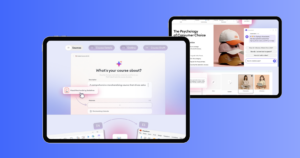
Mobile has truly unlocked a world of potential when it comesto learning. Organizations now have employees’ attention during their downtimeand, in some industries, during their off time. Today’s mobile-drivenenvironment means that people are always connected to one another, and if wecan embrace a few simple design principles, we can also increase their connectionwith their respective workplaces.
Most people want to learn and improve continually. There’san inherent desire to do our jobs well and grow in the process. Yet manyemployees cringe when they hear the word “training.” When you think about it, it’sreally not that surprising. After all, traditional training has not alwaysdelivered on its promise of help. Sitting in a classroom, listening to hours ofinstruction, or parking yourself in front of a screen to take a lengthy course isnot typically effective. In fact, research shows that most employees tuneout—largely because, based on what we know about the brain, they can’t processall of the content, let alone remember it, if it isn’t reinforced. As a result,they don’t take the learning back with them to the job, which means theorganization doesn’t benefit.
For these reasons, we have a great opportunity to revisit ourapproach to corporate learning as both an optimal mobile and an optimallearning experience. If we can nail these two things, we’ll be able to impartthe knowledge we want to all employees—whether they’re in the warehouse, in thefield, on the retail floor, or in and out of the office. Plus, we’ll be able tobetter share the embedded knowledge that already exists, help our peopleconnect and engage, and ultimately effect change in the workplace in a way thatwe can measure.
But how do we do this? To understand better, we must look atmobile design practices and at learning design practices and optimize for both.Luckily, the two often go hand in hand.
1. Design for less, not more
It’s no wonder that traditional learning approaches don’t translateinto strong learner experiences. Speaking from personal experience, if I have fiveminutes to spare, I don’t want to spend four of them scrolling through a long listof possible topics and then one minute viewing the introductory portion of acourse that doesn’t quite fit on my mobile screen and only tells me what I’mgoing to learn. Five minutes into the exercise, my time’s up and all I’vegained from the experience is frustration. This is an isolating experience, nota connecting one. On the other hand, if I could click one button and receive theexact piece of information I needed to know for my job, whether it was via ashort video or a few key questions, I’d have it made.
2. Design for the bored
The vast majority of mobile users can be classified aseither “bored” or “busy.” We may not like to think of it this way, but the sameis true of mobile users in the workplace. The bored users are looking forproductive ways to fill their time. They want to connect and engage and, yes,even learn. These are opportunities to leverage gamification to draw them inand then capitalize on those opportunities by embedding the knowledge they needin their minds. Gamification can be everything from game-play to leveragingfriendly competition, to rewards programs, to various recognition mechanisms. Andsince our employees are rarely motivated by exactly the same thing, the bestway to engage them, mobile or otherwise, is to offer a combination of all ofthese mechanisms—so long as we do so in a way that doesn’t complicate themobile learning experience.
3. Design for the busy
The power of the mobile device is that it’s in your employee’spocket. Of course, the challenge of the mobile device is that it’s in your employee’spocket. Employees are now used to accessing what they need in their busy liveswithin seconds. This rapid access to information needs to be the same experiencein the workplace, whether it’s pulling up data in seconds to answer acustomer’s question or simply looking up the right steps for completing a dailyroutine. Effective mobile learning allows learners to get the information theyneed, whenever and wherever they need it on the job, preferably with the touchof a button.
For example, if a customer enters a store and wants to knowthe size specification on a specific product, the associate cannot spend fiveor 10 minutes scrolling through thousands of products or clicking through acourse to find the information they need. This will leave the employeedistressed and the customer unhappy. Alternatively, if the employee can accessthat information through an easy click and search interface similar to theirtypical Google experience, everyone’s happy.
4. Design for your audience
Who is the mobile learner? Is it the Millennial we allenvision or the seasoned line worker? Surprisingly, it’s both.Mobile devices of some sort have crossed generations and made their way intoalmost every work environment, including delivery trucks, factories, offices,and retail floors. For this reason, it’s important to make sure your mobilelearning experience is not designed for expert users. Your first impressionmust be clean, and learners must intuitively know where to go. Many of the most-usedmobile applications (Google Search, YouTube, Twitter, and Pinterest) are theleast flashy and simplest to use for all demographics.
5. Design around the limitations of the workplace
Video is clearly one of the most engaging ways to sharedetailed information about a topic. However, the reality of many of today’sworkplaces is that bandwidth is often an issue. Designing with a mobile-firstapproach is not just about user interface, but also about effectively managingbandwidth to optimize the learner experience in all environments. If your videowon’t play, or your course is difficult to see and navigate, learners will findgreener pastures.
6. Design to capture feedback
Besides being a sophisticated communication tool, mobiledevices can also provide valuable feedback with regard to learning, knowledge,and, ultimately, behaviors. Take advantage of the always-on connection to yourlearners to keep your finger on the pulse. Sending out quick surveys, obtaininginformal feedback, capturing suggestions, and recording behavior observations aregreat ways to engage with your employees on an ongoing basis and collect theirinput. Again, you should design these experiences to be quick and easy, and tomaximize touch and minimize key-strokes.
You can also help employees provide feedback and learn from oneanother by taking advantage of built-in cameras, voice recorders, and videorecorders on these devices. For example, your salespeople might record a shortversion of their latest pitch and submit it for review. A warehouse associatemight take a picture of a chemical spill and share it with his or her peers forcleanup or to reinforce a best practice. You can capture this information,share it, and tie it back to learning, all by leveraging your mobile device.
The power of mobile learning
The power of mobile learning continues to grow and challengeus in new ways. With so much on the go, it can be difficult to know where tostart, but these six design principles can help get you on your way and focusedon what matters most—delivering learning to your employees in a way that drivesmeaningful behavior change and the resulting measurable business impacts. Remember,your employees want to engage with you, your learning content, and one another—inthe simplest, most effective way possible that respects their individual needs.