

Learning Platforms
Technology platforms that support the creation, hosting, distribution, tracking, and reporting of learning programs and experieinces.
-

Demo Days – How to Onboard and Retain Top Talent with Development Plans in iSpring Learn LMS
Onboarding shouldn’t feel like deciphering a secret code. While vague instructions and poor structure hide new hires’ talents and stall their growth, iSpring Learn, which is a cloud based learning management system, transforms generic training into tailored experiences for every employee. With its easy-to-use interface and tools, onboarding brings clarity, confidence, and career visibility from day one while also reducing time to productivity, boosting engagement, and unlocking continuous potential development.
-

Launching Your Customer Education Program: Technical Considerations for Taking Training to Your Partners
Training departments are continually challenged to serve more than just internal employees, especially when it comes to product training efforts. As your partners grow, so do investments in time and budget. Establishing a plan for managing and distributing training content is essential to ensuring your products are properly understood, marketed, and sold. Creating a customer education program – also known as an extended enterprise approach – helps remove the friction of accessing training, ensures your external partners are well-informed, and can provide insights into how learners are using your content and course effectiveness. In this eBook, you’ll discover:
-
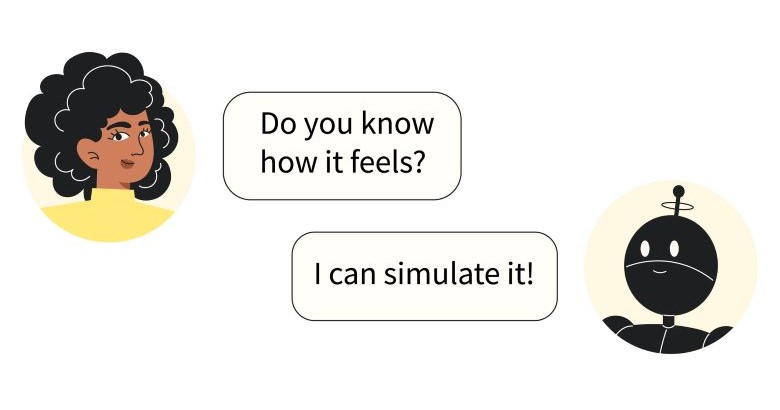
Thinking Machines That Don’t: Confronting AI’s Biases & Systemic Flaws
Ever-agreeable and positive, LLMs reflect subtle biases that reduce friction—and can result in treating all information and knowledge as functionally equivalent.
-

AI Impact Zones for L&D
By Megan Torrance and Lauren Milstid We’re well past the moment of wondering if AI will affect learning and development (L&D). It’s already here—showing up in tools, workflows, learner experiences, and even the work itself. But when everything’s shifting all at once, it’s hard to know where to start. We’ve found that it helps to explore AI in L&D through three distinct but overlapping zones of impact. These AI Impact Zones give us a way to name what’s happening, plan where we’re going, and take more strategic steps forward. Each zone reflects a different way AI is changing how we…
-

Three Technologies that are Reshaping the L&D Landscape
Technology is transforming nearly every learning and development function, from content creation to coaching to upskilling. Dani Johnson’s keynote, “Navigating the Future: Harnessing Learning Technologies in the 2024 Workplace,” at DevLearn 2024, revealed more details on some of the tech that is changing learning and performance management as we know it. New advances in measuring & verifying skillsAI has helped make significant strides in skills assessment. Here are three ways that L&D is very close to being able to quantify at scale people’s abilities: The rise of “relationship tech”Did you know learning technology can help build or enhance relationships between…
-

From Badges to Big Data: Junior Achievement’s Credentialing Journey
Junior Achievement (JA) reaches over 14 millionstudents annually, but what stands out beyond their scale is their innovativeapproach to workforce pathways in the U.S. In this session, we’ll explore howthey developed and scaled a credentialing strategy and governance framework andthe role of credentialing in bridging the gap between education and employment.
-

Your AI Strategy Is Your Talent Strategy: Building the Skills Infrastructure to Power Enterprise Transformation
AI isn’t just disrupting workflows—it’s redefining the roles, skills, and systems that power the modern enterprise. In this session, we’ll explore why your AI strategy is your talent strategy, and how forward-thinking organizations are using skills intelligence to turn disruption into momentum. You’ll learn what it takes to build a future-proof talent tech stack—one that moves beyond content libraries to real, validated capability-building at scale.
-

True Impact: Measurable Performance Gains with Workflow Learning
For years, Learning & Development (L&D) has struggled to bridge the gap between formal training and real-world performance. While traditional training metrics—completion rates, learner satisfaction, and knowledge retention—have served as indicators of effectiveness, they fall short in measuring true business impact. Workflow learning, often referred to as “learning in the flow of work,” has emerged as a transformative approach that embeds learning directly into daily work. But how do we quantify its success? Empirical evidence has shown that workflow learning significantly improves time to competence, reduces errors, and lowers training costs. Research by Katie Coates and Frank Nguyen further supports…
-

Sell More Courses
Selling courses shouldn’t be harder than taking them. The Learning Syndicate and Totara make course buying seamless – no clunky checkouts, no confusion, just smooth sales and happy learners.
-

AI as a Collaborative Partner: Redefining Roles in the Workplace
Artificial Intelligence (AI) is no longer a futuristic concept; it is a transformative force reshaping industries and the way we work. As AI continues to evolve, it is redefining job roles and responsibilities, enabling humans to focus on higher-level tasks and decision-making. This shift is creating a new paradigm where AI and humans collaborate to achieve greater efficiency, innovation, and productivity. The evolution of job roles AI is transforming job roles by automating repetitive, manual, and data-driven tasks. This automation allows human workers to concentrate on more complex and creative responsibilities. For example, in industries such as manufacturing, customer service,…