



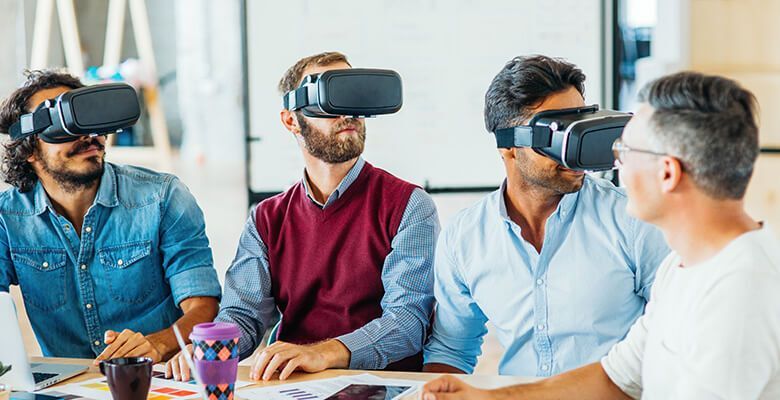
The Institute of Electrical and Electronic Engineers (IEEE) has set a series ofstandards and ethics codes for the use of computers and electronicdevices such as virtual reality (VR). Michael Madary and Thomas K. Metzinger ofJohannes Gutenberg Universität Mainz, in Mainz, Germany, have also triedtheir hand at designing acode of ethics for VR. I’veevenwrittenarticlesand talked aboutVR ethics myself. These ethical guidelines range from general to highlyspecific, from common sense to unattainably lofty, while always retaining alogic of protecting people from harm.
Personally, I don’t think the codes are working at all.While most of us act in good faith and try to do the (highly subjective) rightthing, the truth is that almostno one paysattention to the VR ethical codes. At South by Southwest in March2017, Nonny de la Peña asked a group of approximately 200 top VR and techprofessionals if they’d read the IEEE Code of Ethics. Only a couple peopleraised their hands, and many (myself included) admitted to not even knowingthese ethics codes existed.
The underlying cause is that no regulating bodies have the authorityto give teeth to the codes or punish violators. VR’s rapid technologicalevolution and sales growth have far outpaced any attempts at oversight andregulation. Instead, economics and market forces provide the primary influenceson how we use and develop VR. In other words, no one holds companies accountablefor much else beyond profits. The rest of us typically throw our hands up indisgust … and then use their products anyway.
Ethics is far too big a topic to adequately cover in onecolumn. Below, I’ll explore three important ethics subcategories as a proxy forhow well the VR industry is faring on the whole:
- Accessibility
- Privacy and consent
- Diversity and inclusivity
Thegood: Accessibility
VR is, by its very nature, a good medium for expandingaccessibility, which is ethically admirable. For example, everyone, includingpeople with disabilities, can virtually visit remote mountaintops, canyons, andseafloors, not to mention Mars. Well, not quite everyone can do this. Whileusers can see and hear the virtual worlds, the other senses are largely excluded.That means hearing impaired, blind, and visually impaired people cannot easilyexperience VR.
However, several companies are creating solutions to provideVR access for these communities. Microsoft is currently testing a VR“canetroller” that allows visually impaired people to physicallynavigate within and through virtual environments. Similarly, Google is workingon a virtuallaser pointer interface that audibly tells blind and visuallyimpaired users what virtual objects their two hand controllers are pointing atand also indicates the distance to the objects. Samsung’s RelúmĭnoAR glasses help the partially blind see with enhanced clarity. Theseand other similar projects indicate that the industry is continuing to head ina good direction, ethically speaking.
Thebad: Privacy and consent
Every major VR headset and software company collects data onits users. This data is often shared with network partners, used for marketing,sold, stored, and occasionally hacked or otherwise compromised. For example,Facebook, the parent company of the Oculus Rift VR headset, has received a lotof badpress regarding data privacy, consent, and hackers in the pastcouple years. Fortunately, little of that press has been directly about Oculus,but it’s still disconcerting to have no control over our personal data. Otherbig VR companies also give cursory nods to privacy and consent, but they’reultimately similarly opaque. The EU’s recent adoption of the General DataProtection Regulation (GDPR) is a step in the right direction, but the VRindustry’s privacy and consent ethics still leave much room for improvement.
Theugly: Diversity and inclusivity
Diversityand inclusivity are two related areas where we’re blatantly andbrazenly violating ethical codes. Specifically, the VR industry, like all oftech, is overwhelmingly comprised of straight, white, non-disabled, 20- to40-something cisgendered males. Not coincidentally, much VR content is targetedat this demographic. People outside of this demographic often feel excluded ordiscriminated against, and rightly so. In many ways this is a difficult problemto solve, but from a certain perspective, it’s a no-brainer. Hire diverseteams, pay them the same, and create content aimed at diverse communities. What’sso hard about that?
Whatcan we do about it?
Ethics discussions can be perceived as ivory tower debateswith no real implications for regular people in the real world. One solution isto give power to an existing governing body (or create a new one) andcollectively agree to adhere to ethical codes for the use of VR, with punitiveactions when people violate these codes. A second, simpler solution is to talkabout ethics in VR with your VR and non-VR peers alike, put it in your companycodes of conduct, and create a culture of awareness of VR ethics throughout theindustry.
A third solution—one that I obviously favor—is to publiclywrite about ethics and VR with the intention of increasing awareness, stirringdebate, and changing behavior. As Buckminster Fuller said, “If humanity doesnot opt for integrity we are through completely. It is absolutely touch and go.Each one of us could make the difference.” We all need to engage with these thorny issues to come up with bettersolutions. What do you think we coulddo, individually and collectively, to improve how we adopt and use VR?
Resources
The IEEE Virtual Reality andAugmented Reality Working Group is working on a whole list ofstandards for VR and AR safety, usage, ratings, etc.
Here’s a cool video of Microsoft’s cane controller inaction.
Carucci, Ron. “WhyEthical People Make Unethical Choices.” Harvard Business Review. 16 December 2016.
Wankel, Charles and ShaunMalleck (ed.). Emerging EthicalIssues of Life in Virtual Worlds. Charlotte, North Carolina: InformationAge Publishing, 2010.


