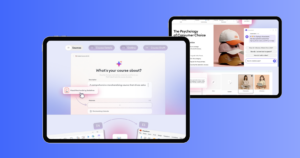
Take a look at this little Save-a-Life Simulator. Play with it for a while and come back to this article whenyou’re done. I’ll wait…
Pretty cool, huh?
But let’s look a little deeper. What are we looking at? Okay, there is certainlya training (eLearning) component, butis that all it is? Is the training even the most important part?
To me, it is something more.
There’s no instruction in how to use the device
First there is no real instruction in how to use the defibrillator. Youlearn that through performance support. Designerstook the complexity out of the training and built in real-time user directionswithin the product; the defibrillator itself determines if the patient needs tobe shocked, and then literally tellsthe user how to use it at the moment of need. Can you imagine a person who hasnever done this before trying to make sense of a set of printed instructionswhen time is so critical? By having the defibrillator actually guide the user,errors and delays are minimized. Nice.
Motivation and confidence
So where does that leave training? Here, the training developers madeseveral inspired design decisions. Since the manufacturer had already builtuser directions into the defibrillator, they didn’t need redundant step-by-stepinstruction. What they did need, however, was a simulation that would focus ongetting someone to actually use the defibrillator in the first place. And, byincorporating a decision-making activity, they presented realistic situationsand decisions that have life and death outcomes. This approach buildsconfidence on the part of users that they cando it, rather than having them freeze and run away.
Instant engagement
The training piece is brief and to-the-point. No objectives, nopretests and posttests, no lessons or PowerPoint slides, etc. Quickly get thelearner involved in the critical decisions that he or she needs to make and letthe consequences of those decisions do the teaching. Clearly, making wrong decisionsbrings the learning home pretty graphically and indelibly. And because theentire program is short, it can likely be accessed anywhere and on any device—acritical attribute of learning and performance in today’s mobile world.
Background information stays in the background
There is background information on heart rescue, with interviews, casestudies, and other content. But since this is not essential to the majorperformance goal, it doesn’t dominate the training component. Instead, they provideit via an optional “learn more” feature that displays at appropriate points inthe program. This separation of essential vs. non-essential information filtersout any “nice to know” noise and is a key in focusing the user on the mostimportant content.
Where was the design effort?
Another interesting aspect of this program is the relative value of trainingvs. performance support. Sure, the training is valuable, but it is likely aone-time occurrence for each person. It is hard to see anyone continuallyreviewing the training. Once they get it—that they need not worry about how touse a defibrillator, just that they need to take action and actually use it,and that the defibrillator is as foolproof as it could possibly be—the trainingcan be jettisoned. As useful as the training is, I suspect much more time andeffort went into getting the performance support component built into the defibrillatoras right and user-oriented as possible.
I also suspect that when the designers of this product started takingabout how to proceed, they didn’t start by saying, “we need to build trainingto teach people how to use a defibrillator.” The creators knew that the mostcritical goal of this program was not to provide detailed training indefibrillator use, but to reduce panic and increase willingness to “stepforward.” The designers knew that if they could get people to actually use a defibrillator, the rest would berelatively easy. This represents a true understanding of the criticalperformance requirements.
What if…
Imagine a world where the tools we use remove complexity rather thanadd to it, and are so intuitively easy to use that we can operate them—correctly—thefirst time, precisely when we need to use them, with minimal risk. Imagine acomputer that would be this easy to use. Or a smartphone. Or a homeentertainment system. You get the idea … the fact that this little simulationfocuses on a life and death issue is further testament to the power ofperformance support and user-centered design.
How much of our training is compensation for tools that don’t workright? How much of it is an attempt to re-explain bad documentation? How much ofit is nothing more than “work-arounds,” often too little and too late, to a badsystem or process? Why do we tolerate unneeded complexity, and then asktraining to straighten it all out, sometimes at the last minute? If we cancreate a tool that saves lives andteaches people how to use it at the moment of need, how many other everydayapplications could benefit from this same approach?
The possibilities are endless.