What’s your opinion of your organization’s accountingpractices? I’m willing to bet that’s probably not something you think about allthat much as an L&D pro—unless you run your own business, of course. As forme, I’ve always known that my employers have accountants. I’ve always beenaware of the organizations’ financial positions. However, I’ve never concernedmyself with how the accountants go about their work. I trust that they knowwhat they’re doing, especially because I don’t really understand what they’redoing. I got As in my accounting courses in college (humblebrag), but itcertainly isn’t one of my core competencies today. Accountants haveprofessional standards, and, if they maintain those standards, I assume they’redoing what they should be doing to support the company.

Workplace learning is quite different. Unlike accounting,L&D is a loosely defined profession with the potential to directly impacteveryone in the company. Sure, we have our competency models and best practices(for those who still tolerate that term). We often use similar technologies anddelivery methods. However, the work that we do can vary wildly fromorganization to organization. Job titles like “instructional designer” meandifferent things depending on where you work. Even the department’s name is amoving target, depending on how we want to represent the scope of our function(L&D, talent development, training, learning enablement, etc.) All of thisvariability can make it quite difficult to explain what you do for a living topeople outside L&D.

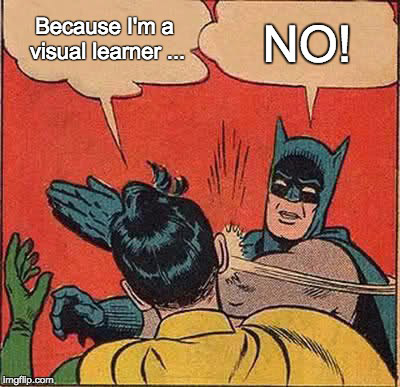
There’s another big difference between accounting andL&D. While people may not have strong ideas about how accounting works,they DEFINITELY have opinions on learning. No, I don’t think employees arespending considerable time every day thinking about learning practices. Butwe’ve all learned new things. We’ve all taken classes we didn’t like. We’ve allbeen trained in a particular way that worked for us that one time. While we maybe the designated learning people, much of our audience has established beliefson how we should be doing our jobs. This can manifest as awkwardly specificrequests, critical feedback, and general engagement challenges. Personally, Ican’t go a week without someone telling me they’re a “visual learner.” So, ifwe’re supposed to be the “experts,” how can we best do our jobs when everyoneelse acts like they already know how learning works?
First, let me clarify that I fully believe people shouldhave strong opinions about how they’re supported at work. I’d rather have themcare and be critical than completely disengage. These opinions can help usshape a support structure that best fits the context of the work. At the sametime, many people’s opinions on learning are limited to their own experience.What worked for them—based on their background—is not likely to work foreveryone. Uninformed opinions can also be easily swayed by trends andmarketing. For example, do you have people in your organization screaming for“microlearning” without any real understanding of what “microlearning” means? (Moreon that conversation here.)
It’s our job to navigate people’s opinions on learning whilemaintaining a critical eye on both the needs of the business as well asevolutions in our field. When someone tells me they are a “visual learner,” Ican’t smack them in the face with my understanding that learning styles don’texist. Sure, I’d love to show off my advanced knowledge on my field and correctthem on the spot. But, in real life, you can’t alter long-held beliefs in onefell swoop. Rather, we must leverage influencing tactics to strategically shiftpeople’s mindsets while establishing the credibility to be viewed as trueexperts moving forward.
Speak in familiar terms
While many people have an opinion on how learning works,plenty don’t really care all that much. It’s not what they do for a living, sothey may not be looking for a deep lesson in learning theory. What they do careabout is the job for which they are held accountable. So, rather than speakingin L&D terms, we must use the language of the business when attempting toshare new ideas and shift mindsets. For example, rather than speakingKirkpatrick and talking levels of evaluation, we should focus discussion on thefact that collecting the right data throughout an initiative can demonstratehow learning opportunities are impacting business outcomes and the employeeexperience. In that way, L&D is a lot like pizza. You can get people moreinterested when you bring it to them rather than making them come to you.
Relate to real life
I never start a conversation about learning science withlearning science terminology. Rather, I find real-life examples of learningscience in application and relate the current topic to those more familiarideas. For example, retrieval practice is a proven strategy for knowledgeretention, but you don’t need to know the science behind it to acknowledge itspotential. When I want to bring the topic up in conversation to combatinformation-dumping, I talk about flashcards. Most people have used flashcardsas a study aid with great success, but they never considered why they workbetter than re-reading the content over and over. Real-world examples can openeyes to simple, foundational learning principles and help shift opinionsregarding workplace L&D tactics.
Leverage trusted partners
You may not yet have the credibility to directly addresspeople’s opinions and change minds regarding the best strategies for workplacelearning. That doesn’t mean you can’t start influencing through others. Findpartners with established credibility and an interest in workplace learningtopics, such as employee engagement, knowledge sharing, and performanceenablement, and start the conversation there. Provide simple references,including brief articles, videos, and case studies, to gauge their interest.Discuss how you can partner to influence other stakeholders who may not be asengaged or flexible in their beliefs. Getting champions on your side early canstart a collective voice to begin shifting the overall organizational mindset.
Prove in increments
As I already mentioned, you can’t shift beliefs in one fellswoop. Introducing a radical new strategy at full scale may push people tochange too quickly and result in pushback and disengagement—even if it is theright idea in the end. Instead, tag small, new ideas onto existing, familiarlearning strategies to help people realize there are better ways to addresstheir performance problems. For example, rather than fight for the value ofshared knowledge as a foundation for my entire learning ecosystem (which Iwholeheartedly believed), I started small and showed how making resourcesavailable helped cut down on training time while increasing retention andapplication over the long term. Once the concept proved successful for severalhigh-value projects, I was free to have the larger conversation aboutoverarching learning strategy, using the stakeholders’ own experience asevidence to my point.
Have the research ready
If you’re trying to shift people’s opinions on learning,someone is going to eventually hold you to it and ask for proof. Rather thanargue principles based on common sense or experience alone, it’s critical tohave tangible evidence available to back up your claims. If I were deep in aretrieval practice conversation and someone wanted to better understand thescientific basis, I would share RetrievalPractice.organd similar resources so it’s clear that it’s not just me who thinks this way.It’s also a good idea to have practical case studies available so stakeholderscan see how these ideas have led to meaningful results in the real world.