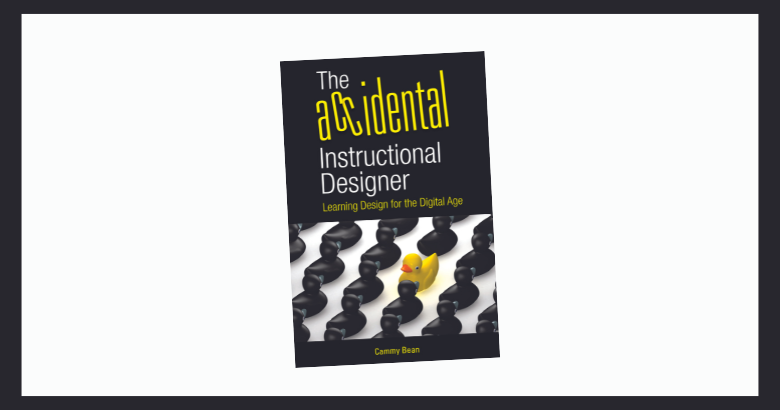
On January 9, 2012, we published a short article by CammyBean: “The Accidental Instructional Designer.” She based it on a blog post shehad written a month or so before. Clearly written from her experience, it wassincere and dead-on perfect advice for beginners. We knew it was good.
What we didn’t expectwas just how much readers were going to love it.
In the two-and-a-half years since publication, Cammy’sarticle has continued to get new readers and new “thumbs-up” from thosereaders. It is in the top 1.5 percent of all the articles we have publishedsince 2002, both for readers and for appreciation. That little article stillgets 500 to 600 readers a month.
So now, Cammy has turned that short little article into a202-page book by expanding the key points and adding even more content andhelp. She says, “Much of this book is geared toward the new practitioner—therecent accident.” This is just my opinion, but she’s being modest. If you’vebeen an instructional designer for quite a while, if you’re a “one-personshop,” if you manage a team of instructional designers, if you’re looking forsome new ideas to re-charge your passion, TheAccidental Instructional Designer is going to be a good read for you.
Part by part
The 202 pages break down into three parts. Each one provideskey insights into the instructional-design profession.
Part one covers the “Big Picture.” It’s short—just twochapters. The first chapter explains the eLearning Pie. If you have a need tohelp others (for example, decision makers) understand what it takes to makeeLearning that works, Cammy offers an effective way to explain the four BIGskill sets that are involved. You can sketch it on the back of an envelope, anapkin, or on your iPad. Cammy also uses another model, the T-shaped model, tohelp readers understand how to deal with those big skill sets. One of theimportant takeaways for Part 1 is “Know Your Sweet Spot, Know Your Weakness.” Youwill also read about the CBT Lady, a not-so-funny cautionary tale about howpeople see instructional designers and our work. Cammy gives you a set of keyquestions, the answers to which will keep you from becoming That Person.
Part two is a practical journey covering the essentials ofthe instructional-design trade, from working with subject matter experts (SMEs)to the common core knowledge (theory, best practices, and yes, name-dropping)involved in communicating with your fellow designers. This is the part of thebook where I think even folks who have been in the instructional design tradefor a few years, and who don’t think of themselves as beginners, can pick up afew pointers. In addition, if you are a manager of instructional designers,Part two is actually a good guide to topics you want to make sure yourdevelopment plan for your staff covers. And finally, if you are new to thisbusiness, or if you are aware of your weaknesses (see Part one), and you areheaded to a conference (say, one of the ones The eLearning Guild hosts), you coulduse the nine chapters in Part two to help you identify the concurrent sessions thatwould most benefit you by attending.
Part three, only one chapter, provides pointers to help thereader move forward to make a career of intentional instructional design. Fromnetworking online and at conferences, to reading and developing a habit ofconstant exploration of new things, this chapter is short, but a greatcompilation of resources follows it.
Don’t be the CBT Lady!
This book will serve as your guardian angel, as long as youtake the great advice that Cammy Bean is offering and don’t let it just collectdust on the shelf. She has done a marvelous job of expanding that short articlein 2012 into an outstanding guide to help you never stop being a happyaccident. I predict readers will love it even more than they love the articlethat sparked it.
Bibliographic information
Bean, Cammy. TheAccidental Instructional Designer: Learning Design for the Digital Age. Alexandria: ASTD Press, 2014.