From the outset of his latestbook, Leaving ADDIE for SAM, MichaelAllen tells us this is not a book about instructional design (“at least it wasn’tintended to be,” he says). Having spent the last few days engrossed by itscontents, I am here to tell you it is most certainly a book that makes you think about instructional design. Thesuccesses and the failures. The steps and the processes. The SMEs and thecontent. And the meetings … oh, the meetings.
 For the lucky among us, we’veseen extraordinary learning programs created by teams of engaged stakeholdersand creative designers and developers that produce real, measurable changes inperformance. For most of us, unfortunately, we often see programs created bythose same stakeholders, designers, and developers producing dismal results atbest. These programs look like training (“Hey,we’ve got a pre-test and post-test.”). They sound like training (“Upon completion of this course, you will beable to….”). Some of them even smell like training (“Mmm … coffee and doughnuts.”). And whilemost instructional designers will argue that they used the time-tested ADDIEmodel to produce those training programs, LeavingADDIE for SAM will (one hopes) challenge them to think about some of thelimitations and challenges of such a linear process and look to the iterativeand collaborative opportunities afforded by SAM, the successive approximationmodel.
SAM: The Successive ApproximationModel
In Part I of Leaving ADDIE for SAM, Allen outlines fournecessary criteria for the ideal process model, each of which are met by SAM.
1. The Process Must BeIterative
Development done in small steps with frequentearly evaluation allows for changes that can be modified or reversed at a timewhen changes cost the least.
2. The Process Must SupportCollaboration
Project teams that collaborate effectively takeadvantage of the ideas, opinions, experiences, and knowledge of team members,while avoiding bureaucracy and indecision through clear role definitions,decision-making, documentation, and process flows.
3. The Process Must BeEfficient and Effective
Recognize that no project is perfect, outlinewhere energy and resources should be focused and produce usable projects asquickly as possible.
4. The Process Must BeManageable
A manageable process allowsfor the completion of projects on time and on budget with a product that meetsestablished quality criteria.
Toput SAM into practice, design teams have a couple of options. SAM1 is a basicprocess well suited for smaller projects led by an individual or small teamwhere no specialized technical skills (e.g., software programming or videoproduction) are required (Figure 1). The process cycles through threeiterations with steps familiar to instructional designers—evaluation/analysis,design, and development—allowing teams to create and refine prototypes alongthe way. Ideas and assumptions are discussed and tested early, thus allowing forrelatively quick development of a usable product after only a couple ofiterations.
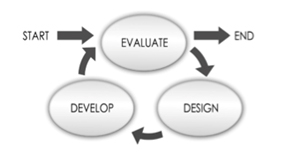
Figure1: Basic Successive Approximation Model—SAM1
Forprojects with more content or eLearning development that requires more advancedprogramming skills, SAM2 is useful (Figure 2). In this model, work is dividedinto three distinct phases—preparation, iterative design, and iterativedevelopment.
- Preparationallows the team to gather background information and conduct a “savvy start”—abrainstorming event bringing the design team and stakeholders together toreview information and create initial prototype ideas.
- Theiterative design and iterative development phases are broken down into smallerincremental steps, allowing teams to make decisions and refine prototypes earlyon.
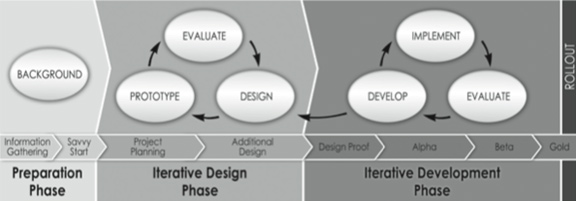
Figure 2: extended successiveapproximation model—SAM2
The bottom line
On multiple occasions, Allenclearly offers that the best model for any designer or developer is the onethat works well for a particular organization—a model that consistentlyproduces effective learning outcomes on time and on budget. If the ADDIE modelworks for you, Allen argues, by all means use it! He offers SAM as analternative process utilizing similar tasks, without the traditionalstep-by-step requirements of the ADDIE model. That said, Allen does contendthat SAM has its challenges, including work refined too early in the processand a tendency towards perpetual cycling. For teams thinking of using the SAMprocess, including my own, I offer the following advice:
- Beaware of the inherent challenges in any instructional design model or process.
- Involveall project stakeholders (including targeted learners and their supervisors)early and often.
- Considercontent breadth before depth.
- Avoidthe first cousin of analysis paralysis—theiteration station. Three cycles is enough!
- Beopen, and welcome feedback and changes to prototypes.
Perhaps the biggest bang foryour buck is found throughout parts two and three of the book. Chock-full ofsamples, including a “savvy start” meeting agenda, multiple prototypes, aproject plan, review checklists, and more, LeavingADDIE for SAM will be an indispensable resource for instructional designersand developers looking for a fresh approach that’s less onerous andprocess-bound and more iterative and driven by creativity. Tell me, will you beLeaving ADDIE for SAM?
Bibliographic information
Allen, Michael. (2012) Leaving ADDIE for SAM: An Agile Model forDeveloping the Best Learning Experiences. Alexandria, VA: ASTD Press. ISBN:978-1-56286-711-9. 208 pages.
Publication date: September26, 2012
Publisher’s price: $38.95 forpaperback or PDF
Barnes & Noble: $28.17for paperback only
Amazon: Price information notavailable at the time of review