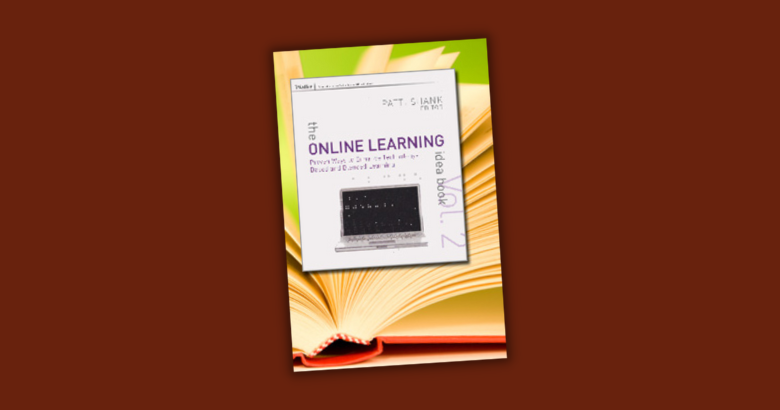
WhenVolume 1 of The Online Learning Idea Book appeared in 2007, reviewers praisedit for its focus on practical, innovative, tried-and-tested ideas from practitionersin the field. Volume 2 is, in my opinion, even better.
A huge storehouse of ideas
Patti Shank, who edited Volume 1, hascollected enough ideas to fill almost 400 pages: five chapters, with a total of83 ideas that dozens of collaborators provided. An array of illustrations – 70figures and 24 exhibits – accompanies the ideas.
The chapters organize the ideas intological areas that make it easy for designers and developers to find solutionsfor those problems that come up so often in the creation of online materials.The chapters address ideas for:
- The design and development process
- Supporting learners and learning
- Synchronous and social learning
- Self-paced learning
- Media and authoring
Within each chapter, all the ideasfollow a common presentation format:
- TheBig Idea
- What: A short description of the idea, enough to help you decide if it’s what you need.
- Why: A brief explanation of the value and benefits of the idea.
- UseIt!
- How: A more detailed description of the idea, its implementation, and tips for use.
- Adopt or Adapt: Ideas to help get you started adapting the idea to your situation.
- Attribution (The originators of the idea, and their contact information)
The ideas will work on their own,and you will find that many of them would make ideal combinations. Here are afew of the idea topics:
- Online?Yes, No, Maybe So
- BetterCollaboration with Your Subject-Matter Expert
- Story-BasedLearning
- TeamReview Form
- MyPersonal Learning Network
- LearningLog
- VirtualJob Interviews
- Pollingfor Engagement
- YouTubeYouTalk
- WikiReview
- BranchedScenarios with Three Cs and Placeholder Content
- TalkingHead Video, CNN-Style
- SimulateIt
- PechaKucha for Learning
- WordClouds
- Creatinga Slide Replay Button in Captivate 5
Who this book is for, and how to use it
Shank is clear that she has thepractitioner in mind, whether that practitioner is a designer, an authoringtool user, or someone who performs both functions. However, as she points out,there are several ways to use the book.
An individual designer ordeveloper can easily use it as a source book. There is plenty of margin spacefor handwritten notes and for sticky notes and flags.
Teams of designers can use thebook as a reference when developing their standards and protocols for dealingwith typical client requirements, and as a basic framework for communicatingamong themselves about particular solutions.
If you are teaching others todesign online learning, this would make a wonderful textbook. Because it is sopractical in its approach, you can easily organize discussions and projectsaround the ideas and not be in danger of getting too “academic” in yourdeliberations. The same is true of initiatives intended to teach methods formultimedia development, use of technology in the classroom, and for leadingfaculty development workshops.
Finally, many of the ideas,particularly in Chapter 5, relate to particular media and authoring tools:PowerPoint, Captivate, Articulate Presenter, Articulate Quizmaker, Flash!, andmore.
Recommendation
I’ll just cut to the chase here: Getthis book. Use it.
Book Details
Shank, Patti (Ed.). (2011) The Online Learning Idea Book, Volume 2:Proven Ways to Enhance Technology-Based and Blended Learning. SanFrancisco: Pfeiffer. 378 pages. ISBN 978-0-470-47230-9
Available from:
Pfeiffer: $60.00
Amazon: $50.66 (paperback), $22.54 (Kindle)
Barnes & Noble: $50.66 (paperback), $48.00(Nook)