



Emerging Technologies
Breakthrough technologies impacting how people work, shop, entertain, and live that can ultimately affect how people learn.
-

From Skeptic to Champion: My Journey with GenAI
Whether you’re just starting to explore generative AI or are ready to take the next step, this session will offer valuable insights to help you integrate it into your professional toolkit – enabling you to stay ahead in an ever-evolving technological landscape.
-

Hands-On Learning: Applying Social Cognitive Theory in Leadership Training
In this session, you will gain a comprehensive understanding of the impact of generative AI on content strategy, the critical decision points to consider, and the concrete next steps to take.
-

Four AI-Proof Skills to Develop in Yourself and Your Workforce
There’s no question that AI is changing the face of work, including what skills employees need to have. In Justin J. Shaifer’s keynote at DevLearn 2024, he expanded on four skills that learning & development professionals will need to have in the future and that they will need to teach to the workforce at large: Prompt engineering While this skill was obsolete just a few years ago, everyone will now have to learn how to provide high-quality prompts to chatbots to get the output they need. Employees will have to discover skills to write precise prompts that AI can use…
-

Demo Days – Boosting Engagement and Business Results using Docebo
In this demo, see how Docebo drives learner engagement and delivers real business impact. Explore AI-powered personalization, gamification, and social learning features that keep users motivated and active. Learn how Docebo integrates with your workflows and automates delivery, while analytics connect learning to performance. Whether for onboarding, compliance, or customer training, Docebo turns learning into a strategic advantage.
-
Trust in the AI Rollout
By Megan Torrance and Lauren Milstid Visit the website of any major technology consultancy firm and search for “trust in AI.” You’ll get articles full of essential and valid topics, such as explainability, security, data privacy, reliability. These are the cornerstones of technical trust, and they’re critically important. We want to know the AI models are sound, the data is safe, and the output isn’t unintentionally biased. But there’s a big hole in that conversation—and it’s a human-sized one. As learning & development (L&D) professionals, we often sit in the space between systems and people. And while IT teams can…
-
Will AI Change the Work of Instructional Designers? Maybe It Already Has
By Saul Carliner, Giuliana Cucinelli, and Samira Karim On the one hand, it seems that ever since the launch of ChatGPT in November 2022, professionals in learning and development (L&D)—including instructional design—have tried to figure out how this technology might affect the work of instructional designers. After all, some early examples of generative AI (the class of artificial intelligence tool represented by ChatGPT) include entire courses and tutoring services prepared by the software. Some writers focus on using AI; others speculate about how AI might change our jobs. On the other hand, despite the sudden appearance of ChatGPT, AI technologies…
-
Thinking Machines That Don’t: Confronting AI’s Biases & Systemic Flaws
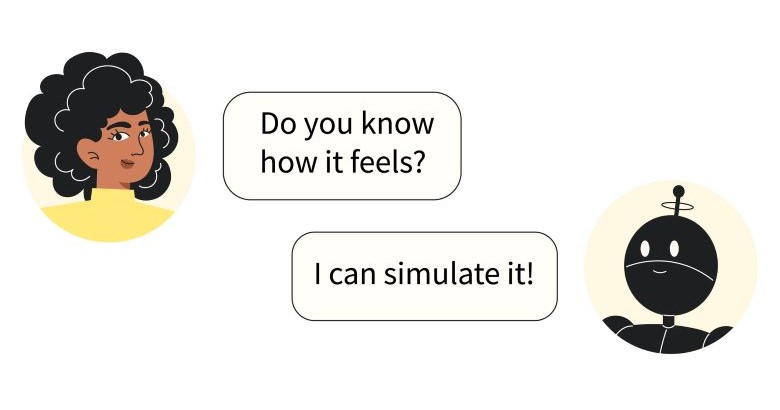
Ever-agreeable and positive, LLMs reflect subtle biases that reduce friction—and can result in treating all information and knowledge as functionally equivalent.
-

Understanding AI Models: A Guide for L&D Professionals
Cut through the AI hype. This free guide breaks down key terms, tools, and use cases to help L&D leaders confidently apply AI to personalize, scale, and transform learning.
-

AI Impact Zones for L&D
By Megan Torrance and Lauren Milstid We’re well past the moment of wondering if AI will affect learning and development (L&D). It’s already here—showing up in tools, workflows, learner experiences, and even the work itself. But when everything’s shifting all at once, it’s hard to know where to start. We’ve found that it helps to explore AI in L&D through three distinct but overlapping zones of impact. These AI Impact Zones give us a way to name what’s happening, plan where we’re going, and take more strategic steps forward. Each zone reflects a different way AI is changing how we…
-
Gamifying eLearning
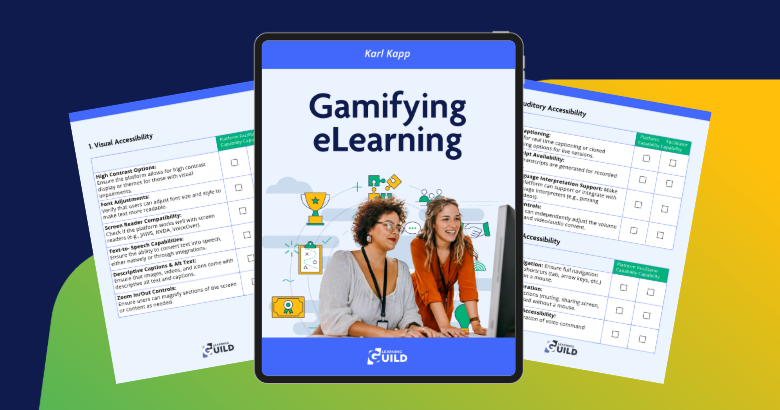
Boost learning with effective gamification! Kapp’s checklist helps integrate fun, replay value & challenges for real learning, not just points.