I know this is “TheeLearning Guild.” I also know that a good many members do not live in a worldof online-only training, or at least don’t live in a world completely removedfrom other humans, so I thought this might make for an interesting column thismonth. I recently had the opportunity to tour Duke University’s new School ofMedicine building, the Mary Duke Biddle Trent Semans Center for HealthEducation.
It’s a gorgeous, gleamingexample of the kinds of learning spaces most of us only read about, in thiscase filled with the stuff of Grey’sAnatomy. The new school is a no-stone-unturned process of thinking througheverything to support a good learning experience.
So here’s a recapof my tour. As you read: think about what you would do if money were no object.Or if money is an object, what can you do now? What could you be thinking farin advance of the next building renovation or furniture order? And before youstart saying, “We could never afford this/they’re lucky/but it’s Duke,” keep inmind: Duke waited 80 years for this.
Location
After 80 years ofbeing scattered in buildings across campus, the med school now, in the words ofassociate dean of curriculum Colleen O’Connor Grochowski, is “in one place,with a street address and a front door.” Learners spend their days in a centrallocation nestled near the new hospital pavilion, the cancer center, clinical areas,and research offices.
Spaces
The first thing thetrainer in me noticed? Everything moves: tables, chairs, lab equipment, eventhe walls. Nothing is bolted down. Spaces can be configured and quicklyreconfigured to suit small or large groups, and for special events the showcaselecture hall on the main floor can hold 400 people – the whole med schoolstudent body—at once. File cabinets area little better than waist-high, to serve as impromptu tables for stand-upgatherings. Open spaces—plenty of them—have lots of flexible, movable,comfortable seats to support informal chatting or serendipitous meetings, nowpossible among all the students, unlike those in past years who may havecrossed paths once, never to meet again. And all those movable walls? You canwrite on them, too.
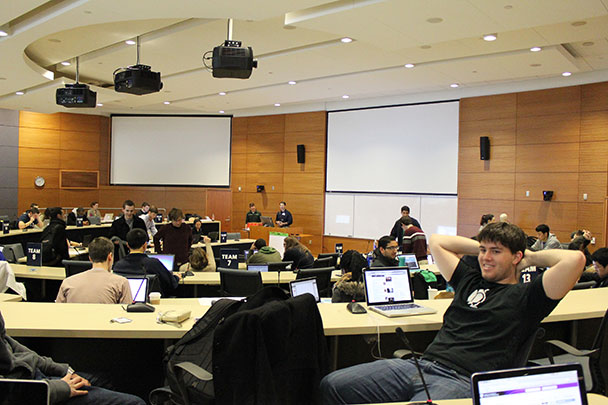 Figure 1: There is a heavyfocus on team-based learning; this classroom space has movable tables andchairs so students can turn or otherwise quickly reconfigure the area as needed(Photo courtesy The Chronicle)
For the learnersspecifically? Lockers tall enough to hang a lab coat. Showers for students whobike to class. And a student lounge with a foosball table, game consoles, areal kitchen, and a big patio to encourage them to step outside every now andthen. (Grochowski says: “The housekeepers have been told to do only basiccleaning in here. It’s the students’ space and we shouldn’t disturb it.”)
Affordances
Seventy-inch touch screens inclassrooms and smaller monitors in conference rooms make it easy to display informationand images and share notes and ideas. Virtualmicroscopy allows everyone to see exactly the same thing on a screen in frontof them, not different items or something projected huge, with the usualaccompanying loss of resolution. There’s an entire floor dedicated tosimulation, including an operating room, a birthing room, and an ICU.
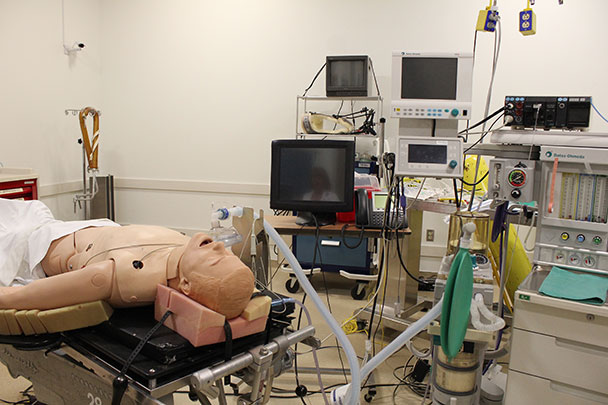 Figure 2: This is one of many simulation rooms (Photocourtesy The Chronicle)
The simulation area includes clinical examrooms where student doctors interact with “standardized patients,” actors whohave been assigned detailed roles to play, and instructions for evaluating thequality of interactions with the students and the care they received. Studentswith an interest can use teleconferencing to practice talking withSpanish-speaking patients.
Learner ownership?
The students runtheir own website https://www.dukedavisoncouncil.org/ that includes an overview of the student experience, a welcometo Durham, North Carolina, and an ask-a-student feature for visitors wanting tolearn more about the med school. It’s also a space for them to showcase theirthird-year work, a unique opportunity to pursue scholarly research in any areathey choose.
What else?
The sixth floor wasleft unfinished in anticipation of … needs that have not yet been anticipated.
The new Dukemedical school is positioned to be the gold standard in configuration of physicalspace for training physicians, now and in the future. So, again: What would youdo if money was no object? Assuming that money is an object, what are some changes you could make now, or soon?More mobile furniture? Whiteboard paint? A chance to interact in otherlanguages? Improvements to break areas, to make them less like dungeons? Standardizedpatients, or callers, or prospects? Givesome thought to ways you can control your space to enhance the experience andsupport learning for your workforce.
Want more?
Learn more aboutthe Duke University School of Medicine at https://medschool.duke.edu/.