One of the persistent challenges inour work is finding the line between just enough and too much. We fight scopecreep, push against adding on “just this one more thing,” and work to keepstakeholders focused on the tight bits of training that will enable or supportperformance. I recently saw a new twist on this—something that gave me an aha moment—and thought I’d share.
Last summer, I was lucky to attenda keynote presentation by one of my idols, Eric Meyer of CSS fame. He was describing an emergency with his sick daughterRebecca being taken by helicopter to a children’s hospital in an unfamiliarcity. There was no more room in the helicopter, so Eric was traveling as apassenger in a car en route to the hospital. Working only from his phone, Ericfrantically searched the hospital’s website for information about where thehelicopter would be landing, what entrance he should use, where he needed togo, what information he might need, and what staff he should ask for. All ofthis was made harder by the fact that the trip was happening after hours, when publicentrances might be closed and usual staff were not likely to be around.
The hospital website offered alovely home page and a menu with these items:
- About Us:the hospital’s strategic plan, a list of amenities like music rooms and teenspaces, and the hospital’s most recent annual report
- Find aDoctor: an alphabetical directory by specialty
- Patientsand Families: information about billing, calendars, and support services
- News andEvents: interesting promotional updates on research relevant to juvenilepatients
- Supportthe Hospital: how to donate or volunteer
It’s a beautiful site with greatinformation for the average visitor coming for an elective procedure. It’sgreat information for someone doing comparative research about, say,specialties or clinical trials. It’s not great for the visitor who, in acrisis, needs critical information now. As Eric said, there was no tab for: “Myloved one has been rushed to the hospital. Where should I go? What do I need toknow, do, bring?”
Missing the affective domain
You know what else is missing? Thedifference between calm and panic. Even if the parents planning an electiveprocedure are frightened and filled with dread, they can still sit and reviewand compare and surf. But the panicked parent—the one in an emergency, whoneeds help right now, who needs answers quickly, and on top of that is notthinking clearly—is operating from a different place. The site may in fact havethat information somewhere, but finding it requires clicking and scanning andscrolling back and using the right keywords—all made harder on a phone during acrisis.
You’ve felt it, too—when you aresuddenly locked out of some critical work function with a deadline looming, or whenyou forgot to submit some something-or-other that endangers your healthinsurance coverage, or (an example from Eric) when you are leaving for theairport, stop to check in online—and can’t find the reservation you know youmade. You have had that frantic feeling kick in. New employees likely have thosemoments often. So what is the message for the training designer?
How can this help my work?
Be thinking about frustrated orpanicked learners. Help them with keywords. Be consistent with language: Is it“hazardous” or “toxic”? Is it “manager” or “team lead”? Help others learn abouttagging. In a panic, would you besearching for “time sheet” or “Acme Corporation T.E.A.M. HRIS Portal”?
- Offer “in an emergency” options or quick links. Considertwo- or three-tiered design. I once did a “user guide” version of our policymanual for managers. Each section started with an “If this happens…” job aid;for instance: “If an employee gets hurt at work, you MUST 1. ____ 2.____ 3.___.” This was followed by a couple-of-paragraphs overview of critical pointsgood for a quick scan, and finished with detailed information if the managercared to review that in depth.
- Offer overviews and recaps that users can easilyaccess later, without having to search through a whole course.
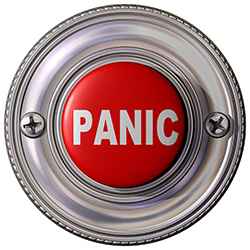
- Include a “Panic” button instead of just “Next”buttons.
- Offer easily findable, searchable job aids post-training.
Ask:
- What does the new hire need to know right now,today?
- What does the manager need to know right now,today?
- Ask the same questions about job roles orcritical incidents.
Remember tricks you know fromsafety training, like the PASS (pull, aim, squeeze, sweep) acronym for fireextinguisher use. Or the “blue to the sky, orange to the thigh” rule for usingan EpiPen autoinjector. Could you build similar mnemonics into otherinstruction?
Use your influence. Everything wedo isn’t necessarily a “training course.” Where you can, try to have input onprojects like site or app designs. Try to be involved in conversations around informationstorage and retrieval. Work with community managers and knowledge managers tofind out where people are struggling and how you can help. Talk to the peoplewho answer the initial calls or emails when panic hits.
What might they want to do while they’re freaking out?
I know we’re good at documentingand addressing critical incident information. But are we recognizing theemotion—the feeling of panic or crisis—that may come with it? When approachingyour work, think about this quote from Eric Meyer: “I don’t know why they’re here freaking out, butthey’re here freaking out. What do I think that they might want to do whilethey’re freaking out?”
And even if your topic isn’t likely to lend itselfto panic, try applying that guideline anyway. When, as a designer, you’rechallenged with differentiating must-know versus nice-to-know content, when youare trying to articulate the absolute bare bones of correct or effectiveperformance, see if applying the “what if they’re freaking out?” concept canhelp you crystallize and better define what you’re after.
Want more?
You can hear Eric’s story here.
See this 2010 Nuts & Bolts column for more tips on determining critical contentand cutting extraneous information.
Editor’s note
Enjoy Jane Bozarth’s columns? Then be sure to find her nextweek at DevLearn 2016 Conference & Expo, November 16 – 18 in Las Vegas. Jane will leadsessions on music and the brain and the dynamics of a community of practice, and she’ll participate in a panel on accessibility in eLearning design.