
Part One: What Is a Learning and PerformanceEcosystem?
“Youcannot create value for any one investment—you have to bundle them.”
—David Norton, developer of the BalancedScorecard
Here’s a blinding flash of the obvious…
The increasing complexity of the world in which we live and work,combined with the explosion in the amount of knowledge we need to be successful,requires us to be more sophisticated in how we learn. We must be betterprepared to learn on demand, with minimum disruption to our workflow andproductivity. With this goal in mind, it is increasingly critical that theresources we put in place to help us learn—and ultimately perform—be as direct,effective, and instantly available as possible.
Our gut tells us this is where we have to go; yet we often struggle withhow to express where we are headed, especially if we want some structurewithout forcing ourselves into a lockstep, one-size-fits all methodology. So,over the next two columns, we’re introducing a new concept that may just bewhat we need to put the disparate pieces of our function together, forourselves and our clients.
Training is not enough
Here’sanother blindingly obvious observation: given that most workers get just a fewdays to a few weeks of training each year, it is impossible for them to learneverything they need to know through formal instruction, unless, perhaps, theywere in training every day. Not agood idea.
Trainingalone will not get people to mastery. At best (and this is never guaranteed),it can get them to baseline proficiency. To keep the learning process going, wemust look to alternatives to formal training and move beyond the classroom tothe workplace. If we do this, our view of the ways we can positively impactlearning and performance greatly expands, to the view in Figure 1.
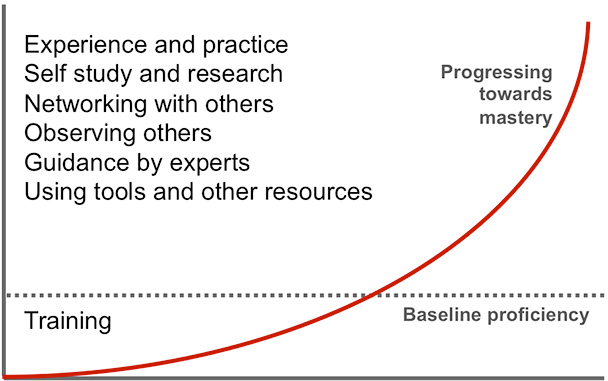
Figure1:Training is not enough to get people to mastery
The growing diversity—andcomplexity—of learning and performance solutions
Weare becoming smarter about how people learn. We know that people learndifferently depending on their level of experience and expertise. A masterperformer learns quite differently than a novice. We also know that peoplelearn differently depending on the content to be learned. Learning a carpentryskill is different than learning a scientific principle, which is differentthan learning how to write computer code or a music score. So the challenge weface is not just in expanding our toolkit and the places where we apply it, butclearly matching our solutions to the people we seek to help, and the specifictype of work they have to do.
Itis important to recognize that these solutions are not limited to trainingprograms; they are much more diverse. People learn from each other as well asfrom a variety of online, non-instructional information resources. Sometimeslearning is secondary to performance; that’s where performance support comesin. In many of these situations, how the user approaches these learning andperformance opportunities is self-directed, rather than dictated by theprogram. And, it can all be customized based on individual or group needs, sothat we don’t have to teach all things to all people.
As we look atall these approaches to learning in a new way that better addresses therealities and challenges people face working in complex and always changingenvironments, we must moveaway from individual, siloed, “one-off” solutions to an ecosystem comprised of multi-faceted options that enhance the totalenvironment in which we work and learn.
A learning and performance ecosystem:The big picture
Ecologist Ernst-Detlef Schulze defines anecosystem as the network of interactionsamong organisms and between organisms and their environment. Ecosystemswere originally used to describe connections in nature, among species and theirphysical environment. However, ecosystemsare not limited to the natural world; the idea is also popular in business andtechnology; and now, in learning.
Definition: Alearning and performance ecosystem enhances individual and organizationaleffectiveness by connecting people, and supporting them with a broad range ofcontent, processes, and technologies to drive performance.
Alearning and performance ecosystem introduces new capabilities that integratelearning and performance solutions intothe work environment, where the vast preponderance of learning actually takesplace. While training is still important, the overall strategy minimizes theneed for workers to leave work in order to learn, reducing work disruption andplacing more learning opportunities directly into the workflow.
Learningand performance ecosystems put people and users in the center. They support peopleand users with six primary componentsthat we are already familiar with—talent management, performance support,knowledge management, access to experts, social networking and collaboration,and structured learning (Figure 2.) From these six components, we can craft aninfinite number of dynamic learning and performance solutions; solutions thatare far more robust than training used alone.
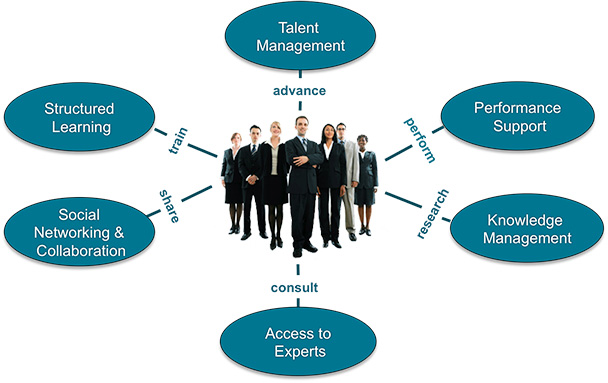
Figure2:Learning and performance ecosystem primary components
Why do we need a learningand performance ecosystem?
There are five unique and importantadvantages to embracing an ecosystem framework:
- It expands our capabilities and choices. The ecosystemis a much bigger toolbox. It takes into account the full array of componentsand resources that you can combine in hundreds of different ways to supportlearning and performance.
- It increases our innovativeness and agility. The demands ofmodern organizations, especially in the arena of learning and performance,require quick responses to problems and innovative solutions. The ecosystemframework allows us to apply more direct and impactful solutions, faster, usingthe appropriate combination of approaches, some of which can be embedded in theworkflow.
- It helps us find solution relationships. Ecosystemcomponents are complementary and synergistic. When used in combination,ecosystem components can support learning, mastery, transfer, reinforcement,enrichment, sharing, and more.
- It adds value. By providing more options, ecosystem solutions have the potentialto be more efficient and effective, improving productivity and lowering costs.
- It provides a framework to organize the learning and performanceimprovement function. The ecosystem provides an inherent structure for organizing staffand budget in ways that can optimize resources.
Whatshould be clear is that a true learning and performance ecosystem is morecomprehensive, conceptually and operationally, than the individual componentsthat comprise it. Next month, in part two, we’ll dive deeper into this emergingnew framework.
Note: Steve Foreman contributed significantly to this article.