When I joined Kaplan seven years ago, I had one directive from theoperational senior vice president who oversaw the training function: modernizeour approach to learning. That sounds like an exciting and enviable challenge,right? I walked through the door during a period of historic growth for theworld’s largest education company. Meanwhile, the learning and development (L&D)function had not yet been fully defined and provided me with the opportunity tomake a real impact.
However, I was quick to notice three problems with his mandate:
- I didn’t know what he meant by “modernizelearning.”
- He couldn’t tell me what he meant by “modernizelearning.”
- The rest of the company—including L&D—wasn’tasking for radical change in learning.
Since then, the call to evolve the role of L&D has becomedownright deafening. If you haven’t heard it, you just aren’t listening. Theworkplace has changed, but we have not kept pace with the ways we support it.Many L&D thought leaders, including Jane Hart and Clark Quinn, are sharing great ideas on how to shift the L&D mindset. If Ihad a nickel for every time I saw Bersin’s “Meet the Modern Learner” infographic (Figure 1) in a conferencepresentation, I’d have A LOT of nickels. Our industry has acknowledged ourimpending irrelevance and wants to take action to modernize our approach. But…
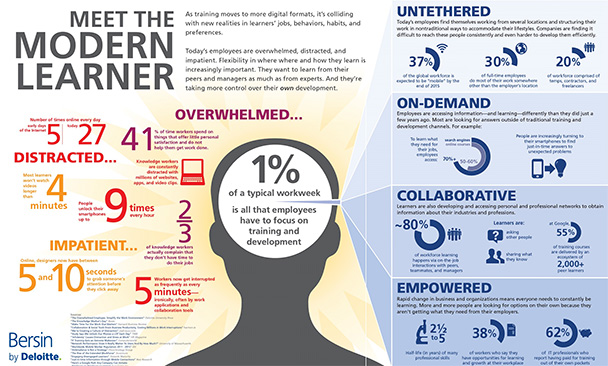
Figure 1:The iconic Bersin “Meet the Modern Learner” graphic
The message doesn’t seem to be penetrating many organizations. Ourobjective is ambitious: to enable employees and curate learning experienceswhile operating more like performance consultants and less like trainers. Iagree wholeheartedly with the need for this shift, and my writings andpresentations support this mindset. However, while we want to become morevaluable within our companies and make a more meaningful impact on the bottomline, not everyone is on board with “training” coming off the sidelines. In real life, most employees have grown upwith a certain understanding of the role the training team plays, and theyaren’t ready to embrace the radical change L&D knows they need.
As Deloitte points out in its Global Human Capital Trends 2016 report, “Despite thestrong shift toward employee-centric learning, many learning and developmentorganizations are still struggling with internally focused and outdatedplatforms and static learning approaches.” If we know something is wrong, andstakeholders aren’t getting what they need, and employees want somethingbetter, what do we have to do to get this evolution started?
Beginwith L&D
Most L&D people have never been judged by their ability to impactthe business. That sounds ridiculous, but it’s true! Instead, we’ve beenmeasured by the size of our course catalogs, number of training hours delivered,and how much people “like” what we do. This makes a radical mindset shiftscary, especially for those who aren’t making the decisions. To use a sportsanalogy, it would be like practicing to play your position a certain way allseason only to have the rules of the game change just before kickoff.
Before we introduce new strategies to our stakeholders, we must helpeach member of our L&D team understand the role they will play in ourevolution. This will likely require dedicating time and effort to bothcommunication and skills development. For example, as we made the shift to amore holistic approach at Kaplan, I spent considerable time with our writers,who were afraid they would lose relevance as we shifted away from contentcreation in favor of curation. Overall, we must be consistent and united in oureffort to change the role of L&D in the modern workplace.
Focusyour message on impact, not theory
Learning theory is super interesting, and I spend plenty of timereading about it. But I’m a learning geek! Most operational stakeholders aren’tfamiliar with learning theory. They don’t know what brain science is, and theyprobably don’t care. So, rather than trying to sell them on a modern approach,we should communicate our ideas based on potential business impact.
Let’s use microlearning as an example. We could tell managers that wewant their employees to spend five minutes every day focused on learningbecause it better aligns to how the brain works (spaced repetition, retrievalpractice, etc.). It sounds like a solid idea, but many managers are likely tobalk at the proposition of five minutes of “unproductive time.” After all,they’re already short-staffed, and employees “don’t have enough time” to gettheir work done. They do their own math and determine five minutes every dayfor the 20 employees on their team is more than eight hours of lost productionin a five-day work week. This is exactly what happened to me when I launchedAxonify’s microlearning platform at Kaplan.
How could we better sell managers on the value of microlearning? Let’ssay they currently send employees to a two-hour training session once everymonth to learn about new products. It’s only once per month as opposed to everyday, which sounds like less of a commitment. However, let’s do the math.Sending 20 employees for two hours of training results in 40 hours per month spentaway from the operation (in addition to logistics to schedule them for theevent). Five minutes of daily microlearning results in 34 hours per month forthe same team (plus less hassle given that they don’t have to move away fromtheir workspace to engage). Add some basic knowledge assessment into the mix toshow improved retention with a science-based approach, and you can easilyjustify the new idea for right-fit topics using language that managers alreadyunderstand—just like I did.
Bringin outside voices
They hired you as their corporate learning person. You’d think thatwould make you the default expert in all things learning and performance,right? Unfortunately, people naturally pigeonhole one another based on pastexperience. Several people who worked with me at Disney still think of me asthe “PowerPoint guy” because I built some memorable presentations 10 years ago.I’ve grown my skill set considerably since then, but I know it would take someeffort to get them to trust my expertise in non-media topics.
Your professional value may be directly attached to your legacy ideasin the minds of your stakeholders. So, while you may be perfectly qualified tointroduce a modern approach on your own, bringing in an outside expert forvalidation can get you past potential roadblocks. There are plenty of learningpros out there—like me—with deep backgrounds and practical experience in modernlearning concepts who are willing to help move the needle. They may also beable to bring stories and case studies to further bolster the real-world valueof your new idea. If you can’t bring in an outside thought leader, you can atleast refer to recognized experts in the field whose work helped you developthe concept you’re recommending.
For example, every event The eLearning Guild sponsors—including theonline events and Summit events, as well as the face-to-face events—presentssessions by recognized experts. Every week, LearningSolutions Magazine gives you the ideas and suggestions of multiplepractitioners who have solved the problems you face in introducing modernlearning concepts, or who can make good referrals. Have you ever contacted anyof these folks for help?
Integratemodern with traditional
Many people still think learning looks like school. This perspectivehas been furthered by the event-based mentality present in most corporatelearning environments. So, when you introduce a modern approach that doesn’talign to people’s past experience, you also must consider ways to help themunderstand the value and help shift their mindset. Otherwise, they may outrightreject it because they can’t see beyond the surface. You know how you sometimeshave to hide children’s medicine in food they like? It’s kinda like that.
Let’s use microlearning as an example one more time. When I introducedmicrolearning at Kaplan, many employees didn’t appreciate that you could use questionsto deliver new knowledge without formal training. In their minds, questionsequaled testing, so they were afraid to get the answers wrong for fear ofretribution. Rather than just push this new idea onto the employees, we found away to align our modern approach with their traditional mentality towardtraining. We integrated microlearning as the reinforcement component ofexisting training initiatives. Employees attended events and completed eLearningmodules, approaches with which they were familiar, followed by the opportunityto answer three related questions per day in Axonify. We also supported thiswith messaging to remind employees that the questions were designed to helpthem remember information and would not be used as a formal assessment ofknowledge (aka, a test). Employees quickly became so comfortable with theexperience that we were able to leverage microlearning without the traditionalintroduction.
Like most important and lasting changes, the evolution of workplacelearning is going to feel slow and possibly painful. Changing people’smentality on the role learning plays in today’s workplace is a difficult task.After all, if it were easy, everyone would have done it by now. It took me sevenyears at Kaplan to drive meaningful change, and I still wasn’t finished when Ileft the company. We must understand our workplace context and build ourstrategies to meet people where they really are—not where we wish they were.L&D doesn’t own workplace learning. We never did. We’re now realizing that,and we’re finding new ways to enable and support the real owners—our employees.
Whatabout you? Are you leading the charge to evolve L&D within yourorganization? How is your message being received? What steps have you taken tojustify your new ideas and show the value of a modern approach to workplacelearning? Share your experience in the comments!