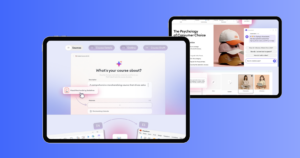
In November 2014, Certification Game held a hackathon withthe intent of finding the best course design methodology for immersive andgamified eLearning. Participants came up with some very intelligent ideas thatwere valuable in the design process. Nearly as valuable was the participants’ collaborativebrainstorming that identified general likes and dislikes in eLearning.
After combining the formal ideas with the brainstormed bestpractices, Certification Game identified key elements of engaging eLearningthat would be the pillars for a gamified course design. Current industrytrends, as well as tried and true methods, affirmed these pillars. The developmentteam, which includes two veteran instructional designers and an experienced gamedeveloper, was able to implement the design pillars in our first course. Here’sthe story: I hope it will be useful to others going down a similar path.
Best practices: Process and structure elements
It became evident that there are ways to promote engagementwith process and structure elements that are completely independent from thecontent. Some of the best practices for structure and process we haveidentified and implemented are:
- Creating short, manageable pieces of learningsets up learner engagement. Grouping learning objectives and insertingmini-games every few minutes facilitates sectioning the course. Because theyare content-driven and serve to review the just-completed content, mini-gamesare a great place for a learner to pause or resume a course.
- Templates gave critical structure to the course,ensuring consistency in content delivery. For example, templates includedset-up and review slides, as well as tutorials.
- Good editing enhances the flow of the course,and removes distractions and errors. Quality assurance and beta testing help make sure everything is edited properly.
Game-based learning vs. gamification: Some distinctions
The concept of learning games, sometimes called game-basedlearning, is not to be confused with gamification. Gamification is a hugebuzzword in the industry right now, and for good reason. When implementedproperly, gamification can drive engagement by effectively using extrinsicmotivators. Learning games are games in the traditional sense, and have thelearning objectives of the course integrated within the gameplay. Learninggames can also be designed to simulate the real-world environment that thelearner is preparing to enter.
The core of Certification Game’s eLearning courses areoriginal, content-driven games, but the courses will use both learning games andgamification.
Learning games: Concepts and implementation strategies
Leaving gamification strategies aside, I’d like to highlighttwo lesser known concepts and implementation strategies for learning games thatemerged as design pillars: simulations and mini-games.
Simulation games
Consider how NASA, the military, and commercial airplanepilots train for the high stress environments in which they work. They use highpowered simulations. I cite those three partially because the organizations arewell-known, people can immediately picture them, and the way they usesimulations is familiar to many.
Simulations are useful in many different situations. Theycan be as informal as rehearsing a speech in the mirror, or playing out ascenario with colleagues.
Simulation games can do more than just provide anenvironment for making choices. Incorporating game dynamics and game mechanicsthat let the learner practice broader business skills, and using contentdirectly from the learning objectives, provides a trifecta of learninghappening simultaneously: making the choices that they will need to make inreal-world situations, reinforcing broader business skills, and reviewing thespecific content.
Mini games
These are very short games that only take 60 – 90 seconds tocomplete, and are mixed into the content delivery in order to break things upfor the learner. The mini games also provide a review of what was just learned.They are games with simple rules and objectives, and are familiar to mostpeople. Mini-game examples include Word Search, Hangman, popular televisiongame shows, and jigsaw puzzles.
Mini games serve as good stop and resume points for thelearner, and provide variety and content review. Instead of a short multiple-choicequiz, the mini games will provide a way for the student to review the content,make sure they understand it, and repeat the learning objectives.
Benefits of learning games
Learning games are powerful tools that are underutilized inadult learning. With more and more research from organizations such as the Games and Learning Society, managersas well as designers are starting to understand that games are not necessarilya waste of time. Serious learning can be, and is, even more likely to takeplace while playing games. Simulations let participants practice real-worldapplication in a safe environment, and mini-games are effective for reviews.
Beyond using learning games to boost retention andengagement, and making sure to use best practices for the structure and flow ofthe course, the hackathon reinforced our conviction that social interaction is a must-have for immersive and entertaining eLearning.“Certify,” an in-person training concept innovated by Calvin Bench and MichaelCrowther during Certification Game’s Austin Hackathon in November 2014, allowedfor collaboration, promoted interaction among participants, and helped tostress the concept of social learning in the design. All learners should havesupport, and be able to contribute stories and clarify uncertainties toreinforce the learning objectives.
Social learning can be difficult to apply in on-demandlearning, where there are no live instructors or classmates to interact with. Still,quality eLearning courses should surround the students with social resources.This is important since sharing relevant past experiences and asking questionsare known to be great ways to facilitate better understanding. The value ofhaving individuals, companies, and organizations teaching and learning fromeach other is tremendous. Some key elements of social learning are:
- Learning from peers, and contributing first-handknowledge
- Using gamification elements such as badges andresources
- Staying informed about the latest and greatestin their areas of interest
Multimedia
Aside from social learning, learning games, and bestpractices for eLearning structure, a final area for consideration is usingmultimedia to create immersive courses. Multimedia is widely used in eLearningtoday, so the following techniques will probably be familiar to you.
- Video is useful in two ways. One way is in shortclips that drive the story and help immerse the learner in the story’senvironment. The other is in clips that elaborate on specific learningobjectives and explain complexities in the content.
- Music engages and immerses participants audibly.A specific example of this is that when the story has the learner enter anelevator, there is cheesy elevator music playing.
- Graphics and design also come into play here. Adesign style that is not overly branded keeps things interesting and notrepetitive. Another advantage of this is the ability of the design style tosupport the learner’s recall of content by using the theory of chunking. Byhaving a different background for each group of learning objectives, people aremore likely to chunk information together, and therefore retain more of it.
The long, long road of game development
It has been a long development road for Certification Gamesince the hackathon in Austin. Much like the hackathon’s winning idea (“Trialand Error”), the development process has been one of testing solutions andrefining ideas. The hackathon was highly valuable and jumpstarted the designprocess. With crowd-sourced ideas from different design and developmentprofessionals, Certification Game could be sure of having the current pulse ofthe eLearning community.
That pulse led us to identify certain importantaspects for course design. In particular, design aspects such as having aconsistent structure, implementing content driven games, fostering sociallearning, and applying immersive media techniques proved to be pillars for thecourse to stand on. Those pillars were formed from specific ideas, as well asgeneral concepts. We believe that finding creative ways to implement the designpillars supports our efforts to find our way to gamified eLearning courses.