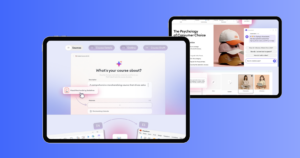
What hyperlinking did for text and Prezi has done for slidepresentations is dramatic: Making it easy to create and present eLearningcontent in nonlinear formats enables instructional designers to create engagingand easily personalized eLearning.
Just as “choose your own ending” books make reading anadventure for kids, hyperlinks offer readers the opportunity to delve deeperinto areas of an article and select which content to access and in what order. NonlineareLearning navigation might deepen learner engagement by expanding learners’ options.
When to use linear navigation
Typically, linear presentations of information include text,slide presentations or lectures, and videos, though all of these media alsohave nonlinear implementations. Linear navigation offers IDs a lot of controlover how content is used, which makes it easy to deliver information in a logicalsequence. This is ideal for introducing a complex topic to an audience of learnerswho have little or no foundation in the topic.
When an instructor—or instructional designer—must ensurethat specific content is covered, requiring linear navigation might be ideal.And if some course content references material contained in other coursesections, a linear presentation might be easier for learners to follow. It’salso easier for an instructor to present—and rehearse—linear content.
But for much eLearning, especially asynchronous modules, nonlinearcontent navigation may offer significant benefits.
Where nonlinear eLearning content shines
Some areas where nonlinear navigation is advantageous toboth learners and IDs include:
- Linear navigation can limit the amount and typeof interactivity offered to—or required of—learners. It’s possible to build inpauses where learners are asked to respond to questions or other prompts, but,even if a large question pool ensures variety in what’s asked, everyone thenprogresses through the same material in the same order. Nonlinear navigation mightuse questions and other user inputs as jumping-off points: Those who miss aquestion can get a review; those who show they’ve mastered a section can jumpforward. Similarly, branching scenarios aid learners in exploring variouspotential outcomes in a learning simulation.
- Nonlinear eLearning navigation offers learnersmore control over which content they access. Rather than leading all learners throughthe same sections in the same order, nonlinear content allows learners to skipor test out of sections covering material they know. Since learners won’t beforced to endure repetitive or too-basic content, they are likely to engagemore deeply in the newer or more challenging material they choose to access.
- Presenting content in a nonlinear format allowsfor personalized learning experiences by making it easy for content creators toinclude content on all levels, from basic introductory material to deeplydetailed material geared to experts or specialists. Learners can learn as muchor as little as they need—they can head directly to the answer of a pressingquestion, study a process, or dive into detailed supplemental materials todevelop deep expertise.
- Nonlinear eLearning content requires activelearner participation, demanding that they decide which content to access andwhen. It also allows learners to control their pace, even backing up if theyneed to. These features could improve their understanding and retention of thematerial by allowing repetition and ensuring that learners fully understand asection before moving on.
Instructional designers do not, of course, have to chooseonly one option; multiple techniques and approaches increase eLearning personalization. Content canbe presented in a linear sequence, but the navigation can allow learners toskip sections if they know the material. Or a large body of content can bebroken into sections that learners can take in any order, while the contentwithin each section is presented in a logical progression.
The proliferation of options for offering eLearning content in nonlinearformats means that IDs and eLearning developers can more easily meet the needsof a varied learner audience with personalized eLearning.