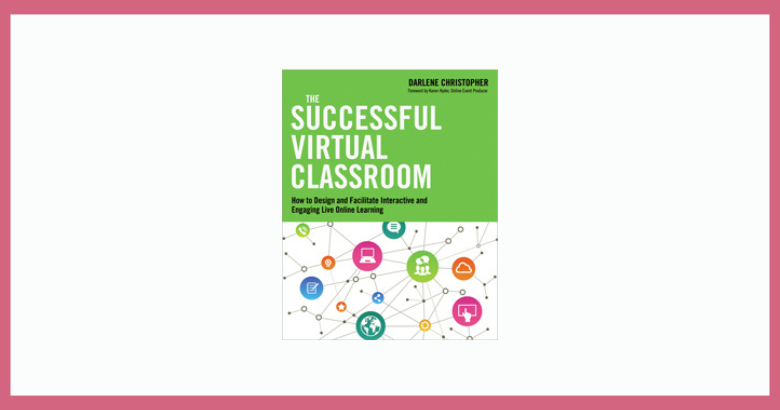

Virtual classrooms—live, online instruction delivered toremote audiences by flesh-and-blood facilitators—have been around for years,and their use continues to grow. The tools have become more sophisticated, butfor many instructors whose experience has mainly been in physical classrooms,being effective and engaging in the virtual space is a daunting challenge.
Darlene Christopher has written The Successful Virtual Classroom: How to Design and FacilitateInteractive and Engaging Live Online Learning for new and experiencedtrainers alike, to guide them to delivery of instruction at a distance that isevery bit as effective as it would be in the classroom. Based on her 10 yearsof experience in the virtual classroom, she has put together her PREP model, asolid foundation for success.
The PREP model
The Successful VirtualClassroom guides the reader through planning, rehearsing, executing, andconducting a post-session review (PREP). Christopher does this in a way thatprovides mastery of the mechanics and that shows how to use the potential oftechnology to teach and inspire learners. Rather than rely only on her ownexperience and anecdotal evidence, or on assumptions and misconceptions aboutvirtual learning, she bases her approach on research into what actually works.
Within each section of the book, Christopher providesfield-tested tools, tips, and techniques to ensure learner value andengagement. She includes checklists, worksheets, templates, exercises, andexpert tips that will speed the work of the designer, the facilitator, and theevent producer. These are supported by numerous photos, screenshots, andexamples, as well as case studies. For the facilitator who is totally new tothe virtual classroom, there are many definitions and explanations that willdispel any mystery around the sometimes opaque terminology associated withonline delivery and technology.
Beyond the model
One of the key benefits of The Successful Virtual Classroom is the amount of attention thatChristopher gives to instructor preparation, rehearsal, and support. Ourexperience in The eLearning Guild, after 14 years of producing virtualclassroom events, has shown us that these details make or break the success ofonline instruction.
In addition to these vital elements, Christopher hasincluded chapters that she calls “fine-tuning”—content that should be in anybook on teaching in the virtual classroom, but that is left out of nearly allof them, and that no other book covers as completely. These chapters include:
- Working with Global Participants
- Ideas for Icebreakers and Exercises
- Additional Uses for the Virtual Classroom
- Feature List to Consider When Selecting aVirtual Classroom Tool
- Course Conversion (from physical classroom tovirtual)
- Webcam tips
All virtual classroom facilitators need this book!
Considering the completeness of the content and the qualityof the support materials included in TheSuccessful Virtual Classroom, I would have to say that this is one of thosebooks that will get used until the covers fall off. Readers will learn from itwhen they are new to online facilitation and they will continue to refer to itas they produce each new program. It will find a role in development plans andin instructor training. On the whole, it is a $39.95 investment that will paydividends for years.