The American workplace has always comprisedmultiple generations. Today’s workforce is no exception, especially as economicpressures force many people to retire later in life. It’s now common to seecompanies with up to five very different generations working side-by-side.
Just as Traditionalists and Baby Boomers adaptedtheir structured, linear work environments to meet the flexible, collaborativedemands of Generation X, a new generation is forcing business leaders to onceagain modify work styles to effectively engage employees and increaseproductivity.
Digital connection + collaboration = Generation C
Enter Generation C, the collective name given to Generations Y and Z, whose needs for digital connection and collaborationwill disrupt the workforce in ways no other generation has before.
Accounting for more than 75 percent of the workforce over the next decade, Gen C is first and foremost concerned with theirpersonal learning and development, and as they begin to enterthe workforce in droves, this is where businesses should start focusing now torecruit and retain top talent.
Compared to their “show me the money” predecessors, Gen C valuescutting edge training and continued learning opportunities over largerpaychecks because they see this as a way to “rise up” through organizations morequickly, which is something that greatly motivates their productivity andengagement.
Not only is what theylearn important to their future success and engagement, equally importantis how they learn.
As a generation of digital natives and the largest segment ofsmartphone users, Gen C has naturally adapted technology to suit what is mostuseful or convenient for them, including learning. They have entered theworkplace with new needs and new expectations, but with less than 45% of Fortune 500 companies using eLearningtechnologies to train their employees Gen C’s demands have not been satisfied.
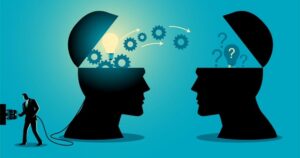
Meeting the demands of this generation leaves business leaders asking,“How can we effectively engage and train this new generation while stillaccommodating older employees?” The solution to meeting cross-generationaldemands is flipped training, a model that allows employees to review trainingmaterials on their own time—often through online learning programs—and use thescheduled in-person training sessions as a time to apply what they’ve learnedor seek advice from peers.
Flipped learning is transforming traditional learning outcomes,making especially significant strides in the educational space, where over 75 percent ofteachers in some places have flipped a lesson with 71 percent of those teachers stating they sawimproved grades from students. By applying some of the basic concepts of theflipped classroom, corporate training leaders can transform their currenttraining programs into an engaging, flexible, and effective learning experiencefor employees.
When applied to a business setting, the flipped model is fairlyself-led with mentor/trainer intervention along the way, and requires eachgeneration to contribute knowledge in some way. The idea is to create a mobile asynchronous learning environment that is convenient to the mobile-first,tech savvy generations of today’s workforce, and also provides resources, andpost-training peer and mentor interaction to encourage employees to practice bydoing and applying what they’ve learned in a real situation.
Here are ideas on how to flip your training model and steer clearof traditional learning methods that have previously stifled self-pacedconvenience and learning variety among employees, and eliminated consistency indelivering training to a distributed workforce.
Make it experiential
In addition to providing employees access to live traininglectures, it’s also important to give them the time needed to practice whatthey’ve learned in a way that best suits their needs.
Particularly for leadership education but also for other domains, both the active and the experiential learning models oflearning allow Gen C to decide how to achievea desired result or modify their behavior to improve effectiveness of a learnedskill.
As outlined by Jane Hart, experiential learning fulfills Gen C’s need to “learn bydiscovery rather than being told.” This generation prefers training that’sinteractive, which gives them the freedom to explore and draw their ownconclusions about the content being learned. Including interactive elementsinto training programs, like simulations, games, shadowing peers, and roleplaying caters to this need by enabling them to learn by “being there.”
Another way to give Gen C access to more hands-on learning is byallowing young employees to use the technology they like best to essentiallytrain themselves and ask questions later when doing their jobs. By allowing employees to learn and practice thematerial on their own schedule and in their own way, you turn their actualtraining time into a collaborative experience where they can use peers asresources. Instead of spending an hour a day taking notes and listening to alecture, employees can use that hour for a lively peer or mentorship sessionthat caters to Gen C’s need for social learning.
Additionally, for companies using video classrooms to supportlab-work training, it’s important to find a platform that gives trainers theability to “drop in” while employees are working.
Keep it mobile
According to a recent study, 100 percent of employees said theywould complete more training in a mobile format and80 percent of learning and development professionals believe mobile learningincreases employee engagement. With those two statistics in mind, corporatetraining leaders must restructure workforce education programs to includeresources that are easily accessible on any mobile device, such as live video-trainingsessions and on-demand tutorials.
Mobile learning allows for training to occur over a longer periodof time as opposed to the “sit down once and learn” model that traditionaltraining programs deploy. Moreover, Gen C is used to “real-time” interaction,whether it’s through social media or texting. Mobile learning means employeesdon’t have to wait for anyone or anything to further their learning.
Additionally, being on-the-go and always digitally connected, thisgeneration prefers “quick learning,” which makes eLearning appealing becausecontent that is typically built for mobile-device consumption is formatted inconcise, bite-sized chunks rather than long-form content.
Empower peer-to-peer learning communities
Gen C has grown up in a world where everything they do is socialin some way, shape, or form, and corporate training for this generation shouldbe no different. Organizations should leverage think-tank-like employeeresource groups (ERGs) to keep their workforce engaged in the development ofthemselves and their peers. ERGs are groups of people within an organizationwho share similar characteristics and utilize each other for careerdevelopment.
As mentioned above, flipped training requires students to attemptto learn new material on their own and then bring their questions and strugglesto the teacher. ERGs will give employees another resource to leverage beforethey have to go to the teacher and use allotted training time for lessons thatcould have been taught to them by their peers.
Engage and retain
As Gen C continues trickling into the workforceand assumes more leadership roles, organizations will need to accommodateworkplace learning efforts to engage and retain this generation. By flippingtraining programs, companies can ensure their youthful workforce is not onlydeveloping quickly and efficiently the way Gen C wants to, but also create thecollaborative culture today’s organizations need to be successful.