My purpose in this article is not to give you a “crystalball” vision of what absolutely will happen in 2016, but to point you to twodisruptive technologies (or developments) that each of us, as learningprofessionals, need to pay attention to in the next five years, beginning now.I’ll also make some suggestions around evaluating the utility of ideas andtechnologies you will hear discussed as impacting your work in 2016. FinallyI’ll offer a short discussion of the road that technologies take to reachmainstream adoption (or “Change Takes A Long Time”), better known as theGartner Hype Cycle.
Words to watch in 2016
Every year in every forecast, you get laundry lists ofwords, terms, and ideas that the writer believes will be important. I’m onlygoing to name two in this section, but you are going to see them and hear ofthem more and more. You are not going to be able to ignore them in 2016, andprobably not for the next five years. Neither is going to impact most organizations greatly in 2016, butpay attention to developments in both of these areas because they aredisruptive. They will affect how we work, they will affect business models,they will change workflows, and they will have an impact on individualperformance and entire job markets.
Cognitive computing
Cognitive computing, currently in development by IBM (this link opens a30-minute video overview of cognitive computing, and it’s worth the time;education applications at 26:00) and Accenture (link opens ashort summary), is the simulation of human thought processes in a computermodel. Related to another buzz word (machine learning) that you have probablyheard, cognitive computing involves self-learning systems that use data miningto mimic the way the human brain works. These systems learn and get better withuse, and are emerging to augment human capacity and understanding by dealingwith unstructured data, applying analytics to the convergence of mobile,social, cloud, and Internet of Things technologies. In a recent survey of C-suite executives, more than a third of the executives named cognitive computingas a top technology in the next three to five years. You may also want to watchIBM’s Executive Overviewof their project on YouTube.
Internet of Things
The Internet of Things (IoT) refers to physical objects (“things”)with internet connectivity, enabling the exchange of data from sensors,electronics, and software. In addition to the importance of this unstructureddata to cognitive computing, the IoT is significant for three reasons. First,it changes the generation of data, replacing people in key workflows. Second,early adopters have found that the IoT actually increases and promotescollaboration between employees and between customers and organizations.Finally, the IoT changes workflows based on the data generated, and driveschanges to business models and ultimately to the kinds of jobs that areavailable. All of these will very much change the nature of our work in thefield of learning. The changes will come from the impact of the IoT onworkplace learning (informal learning, performance support, and the shift oftasks from people to the IoT) and on the content and technology of formalinstruction.
Sorting for significance
As you listen to various other ideas about what will be hotin 2016 and what will be passé, my suggestion is that for each topic you askyourself: is it a technology, a tactic, a practice, a delivery method, or amedium. Does your answer change depending on context?
Why is that important? Carefully analyzing the nature of anidea will help you deal with marketing hype, and it will help you understandhow to apply it.
Let’s take “microlearning” as an example. This is a buzzwordthat emerged in early 2015 (although it was around before that). Tom Spiglanin,in his blog post “Microlearning: Fab or Fad?” gives an excellent analysis of what it is and what it isn’t.But he makes two really key points. First, microlearning is not a product, butwe see it being sold as if it were. The term refers to an activity. Second, itis a tactic, for use in particular cases where it actually fits the context.Microlearning isn’t a strategy.
You can make the same kind of analysis for other ideas:spaced repetition; spaced learning; augmented reality; virtual reality. Theseare not “hype” or fads, but it is essential that you take the time tounderstand them, the research supporting them, and the appropriate applicationsof each.
Context also matters because what’s hot for one organization’ssituation may just be totally irrelevant to yours.
Utility
Here’s another way to think about ideas and buzzwords.Figure 1 is a “two by two” chart that may help you think about the utility of atechnology, based on its potential for producing significant new value for your organization versus its current relevance for yourorganization.
Noise: There isalways noise in the marketplace. Technologies, products, or proposals that haveno potential for producing new value for your organization and that have no increasedcurrent relevance to it are just noise foryou, and can be ignored as long as they have no potential or no relevance.An example might be simply changing courseware providers. Again, thisevaluation considers only your organization’s situation and is not a globaljudgment.
Status Quo: Therewill be opportunities that, while their potential for adding new value islimited, could be relevant to what your organization currently does. They mightmake processes more efficient or cheaper, but not necessarily more effective.An example might be a change in authoring tools.
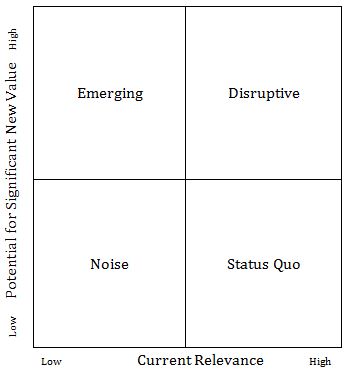
Figure 1: Sorting out the utility of a technology or a proposal
Emerging: Theseare technologies that have the potential to make processes more effective ormore productive, even though they are not (yet) relevant to current efforts.These would be technologies to continue watching, or to apply on a small scalefor evaluation. An example (for a given organization) might be gamification.
Disruptive: Thesetechnologies are ones that can completely change the nature of your business.Cognitive computing and the Internet of Things are examples of disruptivetechnologies at the enterprise level that are also definitely going to affectyour work in supporting learning. Closer to our own immediate level in theworld, badges and cmi5 are examples of (possibly) disruptive technologies.
Time to mainstream adoption
This concept is the basis for the Gartner Hype Cycle, which looks at the trajectory of emerging technologies from thetime of their appearance to the point at which they are productive and adoptedby the mainstream. Gartner publishes Hype Cycles for a number of businessactivities, including Education. Even though “education” differs from“training” or “learning and development” in the enterprise world, it can beinstructive to consider the position of various tools and technologies on theeducation cycle, and to consider where related technologies are on other HypeCycles.
For example, we have heard a lot about the Experience API orxAPI (Tin Can API) and a number of enterprises have started to experiment withit. If you look at the Hype Cycle for Education, 2015, you will see that for education (where digitization isstill gaining momentum, not yet into execution mode), you will see that Tin CanAPI is in early days (“On the Rise”). At the same time, Learning Analytics anduse of the cloud are at the Peak, Gamification is past the Peak, and BYOD(Bring Your Own Device) strategy is on its way to mainstream adoption.
What all of this means is that we hear about technologiesfor two years, five years, or even 10 years before they become mainstream. Thisdoes not mean you shouldn’t try to adopt ideas and technologies early if theymake sense for your situation. If the technology is mature, the vendor orproducer seems stable, and if you can make a business case for it, go for it.