Can an innovative “eLearning on a stick” project save lives?TorranceLearning and Vitamin Angels think so.
Malnutrition is the leading cause of preventable deaths inchildren worldwide. Vitamin Angels fights malnutrition by deliveringmedication, vitamins, and nutritional counseling to more than 52 million childrenand expectant moms each year. The nonprofit organization serves some of thehardest-to-reach places on Earth, delivering its lifesaving treatments in 57countries, many in Africa and Eastern Asia.
To do this, Vitamin Angels partners with 1,000 NGOs, seekingpartners in areas where malnutrition, intestinal parasites, and vitamindeficiencies are most severe—and where residents lack access to national healthservices. The organization strives to fill in the gaps left by national healthservices, which fail to reach roughly 30 percent of citizens in developingcountries worldwide, according to Vitamin Angels.
Working with local nonprofits enables the organization toreach more people, but it also means that tens of thousands of health careproviders need to be trained to deliver the vitamins and medications andcounsel citizens—in multiple languages and in far-flung, tiny, remotelocations. According to TorranceLearning’s chief energy officer, MeganTorrance, many of the delivery sites have “a children’s health day or acommunity health day a couple of times a year, where all of the NGOs cometogether” to deliver badly needed services. The health care providers representingVitamin Angels might be volunteers or practitioners who administer these treatmentsonly once or twice a year. “It’s not like your local pediatrician’s officewhere, every time a kid walks through the door, you’re giving him avaccination,” Torrance said. Those factors create training and performancechallenges.
Training for health care providers has to be thorough andconsistent. Vitamin Angels has relied on instructor-led training (ILT) and assessment,which requires getting people out to hundreds of locations each year. Even so,they’ve managed to train about 1,000 health care providers annually.
“Vitamin Angels’ challenge is to provide more opportunitiesto more health care providers each year to learn how to implement nutritionservices consistent with best practice,” said Clayton Ajello, an epidemiologistand a member of the Vitamin Angels board of directors. The organization hopesto be able to expand its services to “tens of thousands of health careproviders, many of whom reside in relatively remote areas of the world whereVitamin Angels cannot bring instructor-led training,” Ajello said.
The ILT approach is fraught with logistical hurdles, itmakes consistency and tracking nearly impossible, and it is not scalable. Ifever a situation called for an eLearning solution, this is it.
Most eLearning solutions assume at least some basic level oftechnology, though—a recent browser, a reliable network connection, anoperating system within the past few generations, say Windows 7 or OS Yosemite.When they took on this project, the designers and developers at TorranceLearningknew that they could not make any assumptions about the equipment or networksof the learners who partnered with Vitamin Angels.
Not only are the communities served remote and poor, they lackphysical and technological infrastructure. Most of the partner NGOs and theirworkers lack reliable Internet service or modern computers; many don’t even havemobile phones or networks. They certainly don’t all have the same software orInternet browsers available, and what they do have might be outdated by manyyears.
There’s more
As if the logistical and equipment challenges weren’tenough, the program requirements could make the most devoted, ambitiousinstructional designer quail.
Health care providers have to be taught about dosing by thechild’s age and weight, safe handling and proper administration of vitamins andpharmaceutical products, and nutrition counseling—a full range of health andsafety best practices. They’re also taught to monitor and evaluate the moms andchildren they serve.
Vitamin Angels covers dozens of countries, so theorganization needs to have the training available in several languages.
Health care providers who complete training are tested ontheir understanding and mastery of the material. They’re provided updatedinformation and training as needed, including training on monitoring andrecordkeeping tools. There’s a lot to remember, so fact sheets and other jobaids are needed—also in several languages. Many of the trainees have lowliteracy and minimal computer skills, so any text elements must also bepresented graphically or orally. Training and job aids rely heavily on imagesand visual instructions (Figure 1).
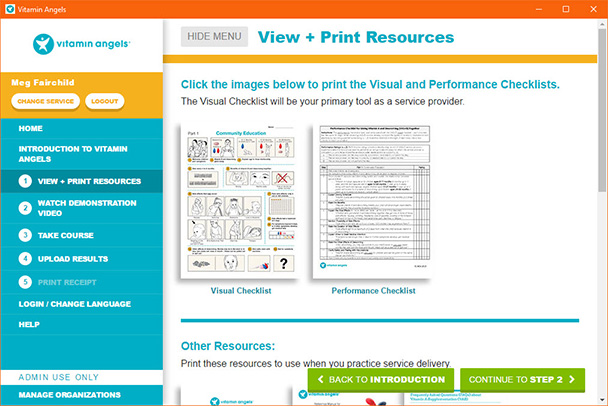
Figure 1: Visualchecklists are provided for people with low literacy; performance checklistsensure that performance assessments are conducted using consistent criteria
Vitamin Angels registers and tracks its NGO partners andfield representatives and assesses their understanding of training materialsand their performance; the ability to maintain accurate records of these activitiesis an integral element of any solution.
The challenges were daunting. TorranceLearning’s solution? Aradical twist on BYOD.
Bring your OLD device
The team at TorranceLearning code-named the solution“Project Popsicle … because everything goes on a stick,” Torrance said. Theentire eLearning solution—including the LMS—is on a stick. An eight-gigabyteUSB stick, to be exact.
A move to BYOD (bring your own device) in many corporate orstudent training environments means that eLearning is often developed to beused on a variety of devices—laptops, tablets, smartphones—and in Windows, Mac,and other operating environments. The TorranceLearning team kicked that up—ordown—a level to support old devices by putting everything the solution neededon a single USB stick.
The USB-based eLearning module supports:
- Entering user and user-group records
- Playing the eLearning course, which includesvideos and animations (Figure 2)
- Printing reference materials and job aids
- Printing proof that a learner has completed thecourse
- Storing each learner’s record, includingprogress and evaluation results
- Uploading learner records to a database when theUSB is inserted into an Internet-connected computer
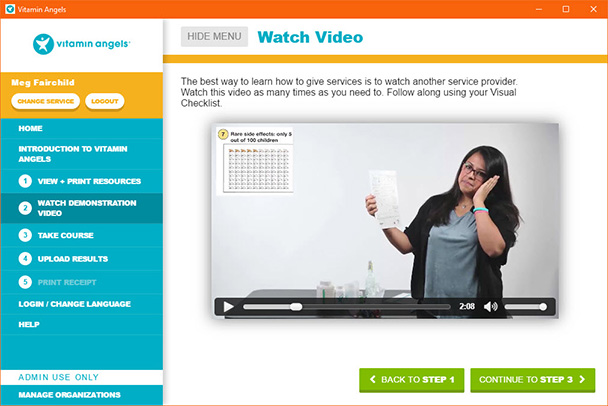
Figure 2: Much of thetraining consists of videos that demonstrate proper procedures; learners canwatch the videos as many times as they need to
Older computers, even those running Windows XP or Mac OSSnow Leopard, are supported. Old browser? No browser? No problem. The USB stickincludes a Chromium web browser and web server; it even contains a slimmed-down LMS thathandles user and group tracking and uploading the records.
The “cool part” is the LMS
The eLearning itself is fairly basic, Torrance acknowledges.It has to be simple, both to be translatable and to keep the size down. “Thecool part is not the eLearning,” she said. “It’s the LMS.”
The solution-on-a-stick is possible because it uses a“lightweight LMS” based on xAPI. As each learner creates a profile, takescourses, watches training videos, and completes assessments, the programgenerates xAPI statements. User data is formatted as extensions to the xAPIstatements.
A single USB device can store data for several towns—dozensor even hundreds of users—uploading the data at the earliest opportunity to anLRS (learning record store) that Vitamin Angels maintains to ensure that allits partner health care workers have up-to-date training. Any time the USB isinserted into a connected computer, the program asks the user whether she wantsto upload the records.
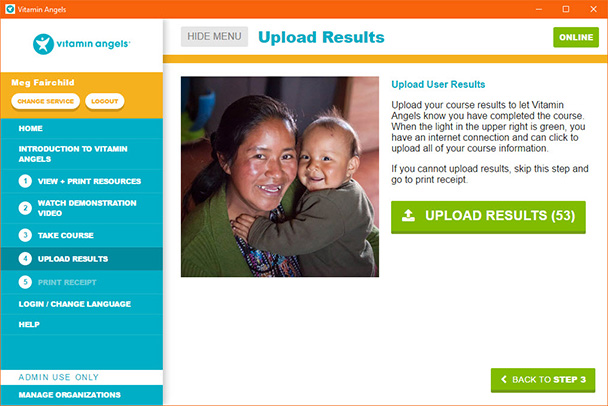
Figure 3: Any timethe USB detects an Internet connection, the user is prompted to upload thestored records to the Vitamin Angels LRS
Acknowledging the unpredictability of intermittentelectricity and network connections, the system is built to be robust andredundant. The USB can upload records quickly and verify that all have reachedthe target LRS. Each health care provider receives a receipt on completing atraining unit; these can be scanned to upload, update, or validate thelearner’s record. TorranceLearning plans to implement “language packs” todeploy the solution, on a single USB platform, in the languages needed for a geographicregion.
The TorranceLearning team chose the dominKnow Clarodevelopment tool and the UL Compliance to Performance LMS because these tools offered necessaryfeatures like easy support of multilingual training and integrated xAPIsupport. Claro is an authoring tool that creates HTML5 fixed-size pages ofeLearning content that learners can view on laptop and desktop computers andmobile devices. UL’s LMS offers global content delivery and translationsupport, including customizable portal pages, which make it easy for VitaminAngels to oversee its worldwide training efforts.
Aiming for a sixfold increase in trainees
Vitamin Angels has great hopes for its new USB-poweredsolution.
“With expert assistance from TorranceLearning to develop aunique learning solution, we anticipate reaching at least 6,000 health careproviders in just the first year of its rollout,” Ajello said.
Training results will be field-tested and validated toverify that health care providers demonstrate an ability to perform procedures.In addition to observing the performance of trained providers, Vitamin Angelsis undertaking a formal evaluation to document whether health care providerstrained using the eLearning show the same—or improved—levels of competence asinstructor-trained providers.
Meanwhile, TorranceLearning is enhancing the solution byadding languages and expanding the content. The company will also add toolsthat will allow learners to record their practice sessions, document observedassessments and performance—and record this data in the LMS via xAPIstatements. Future versions will also include performance support delivered tothe mobile phones of health care providers who have them.