



Instructional Design
Applying learning theory and design strategies to meet specific performance goals through the creation of instructional materials and formal learning experiences.
-

Connecting Employee Performance With Capability-Driven Learning
You’ll learn how to extract capabilities from job descriptions, benchmark them with competency levels, and connect them to learning opportunities. We’ll explore available tools and frameworks to help you build capability frameworks without reinventing the wheel. You’ll walk away with a step-by-step process to implement capability-based learning in your organization and drive real performance improvement. This session is ideal for L&D professionals who are new to capability-driven learning and want a practical, step-by-step approach to building a framework that supports performance and growth. You’ll leave with a straightforward method and tools to help you get started immediately. In this session…
-

Giving Technical Interns a Head Start: Why Speaker Training Matters
By Neil Thompson As summer rolls in, thousands of college students across the country start internships. These interns, especially those in technical departments, represent the future workforce. They come equipped with technical know-how, but there’s a vital piece of the workplace puzzle they often lack: soft skills, particularly communication. Engineering curricula tend to emphasize coding, algorithms, and systems design, but rarely do they prepare students to speak about their work in clear, compelling ways. The result? Interns with excellent technical aptitude but limited ability to communicate their work to nontechnical stakeholders: executives, clients, or even colleagues in different departments. This…
-

Instructional Alchemy: Turning Ideas into Learning Adventures
Traditional course design often results in passive learning. This session explores a creative instructional design approach to transform courses into engaging learning worlds that foster deep, meaningful engagement.
-

Will AI Change the Work of Instructional Designers? Maybe It Already Has
By Saul Carliner, Giuliana Cucinelli, and Samira Karim On the one hand, it seems that ever since the launch of ChatGPT in November 2022, professionals in learning and development (L&D)—including instructional design—have tried to figure out how this technology might affect the work of instructional designers. After all, some early examples of generative AI (the class of artificial intelligence tool represented by ChatGPT) include entire courses and tutoring services prepared by the software. Some writers focus on using AI; others speculate about how AI might change our jobs. On the other hand, despite the sudden appearance of ChatGPT, AI technologies…
-

Leveraging Rubrics in Instructional Design
Using rubrics can help you boost the effectiveness and quality of your training materials.
-

Making Security Training Less Painful & More Human
On May 3, 2019, I received a letter offering me my first cybersecurity position. I was ecstatic. After 16 years in Human Resources with the federal government, I had decided to make a complete career change. There was one condition I had to meet: I had to obtain my Security+ certification within two weeks of accepting the position. The endless loop of training I signed the offer letter, then I was off to the races. I had to learn massive amounts of content and pass an exam in just 14 days. Looking at how other cybersecurity professionals succeeded, I began…
-

Flipping the Classroom: A Case Study
By Dawn Peterson and Emily Tubman Introduction The Clinical Education team at Boston Scientific recently leveraged adult learning principles and a data-driven approach to redesign a Peer-to-Peer Mastery course. The following case study explores how flipping the classroom improved learner satisfaction, reduced costs, and more effectively aligned the course with how adults learn best. The challenge In a Peer-to-Peer Mastery course, expert physician faculty educate and train physician learners on the safe and effective use of medical devices for kidney stone and prostate procedures. The course was originally 1.5 days, and the format was 51% didactic lectures and 49% hands-on…
-
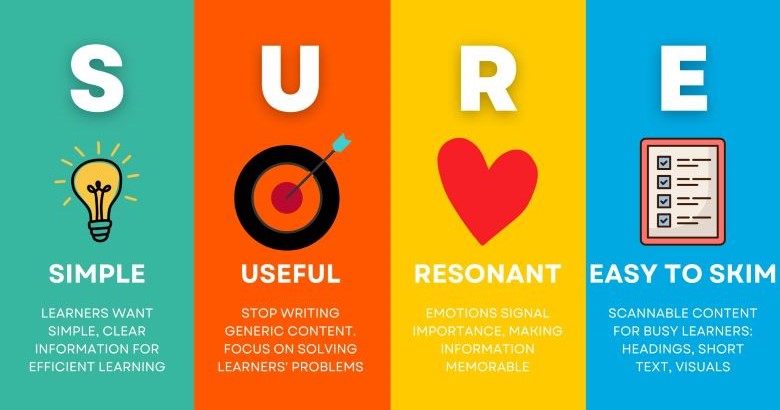
The Magic Formula for Learning Content That Actually Changes Behavior
We’ve all been victims of bad training. But what if there were a formula to create learning experiences that would not only keep people awake but actually transform how they work?Good news! That formula exists, and it’s as easy as remembering one word: SURE.
-

Build or Buy? Identifying When to Customize Your Learning
Small and solo L&D teams face a constant dilemma: Should we build custom learning, buy off-the-shelf solutions, or find a middle ground? Without a structured decision-making framework, teams often waste precious time, budget, and effort—leading to solutions that miss the mark. This session solves that problem by introducing a proven, adaptable model to make smart, strategic choices that balance impact, efficiency, and cost.
-

If Leadership Training Isn’t Applied, It Hasn’t Happened
L&D leadership training sessions often “feel” successful. A program is designed, a workshop is delivered, and employees leave feeling informed and engaged. But if that training isn’t applied in the workplace, did it actually happen? If we focus entirely on the “learning” but not the “development,” we’re wasting huge amounts of time and money. So let’s take a look at the current situation first. The reality is stark; according to Harvard Business Review: That first stat is astonishing. Only 12% applying their learning? We wouldn’t accept that return for many things in life. These numbers together expose a harsh truth—that…