



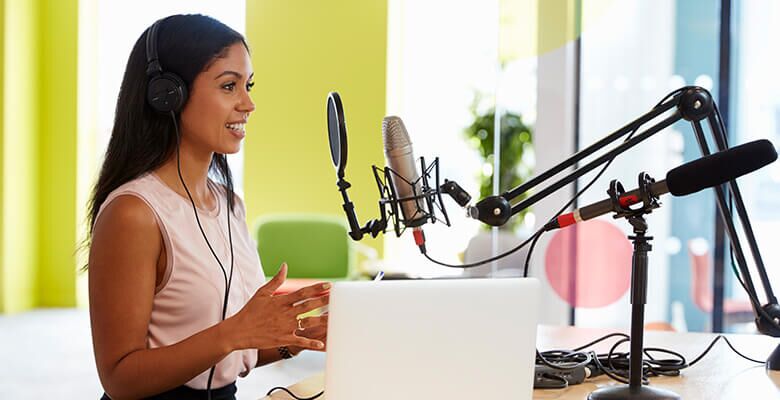
So, you’ve decided you want to make narrative podcasts.Great! The next step is to make sure you have the minimum podcasting equipmentrequired to actually record and produce your podcast. As with any electronicequipment, the range of prices and quality can be pretty vast. For our purposes, I will outline the basicnecessities needed to start creating podcasts, including the approximate pricerange for mid-level pieces of equipment. If you have a larger budget, or adesire for higher-end equipment, you can obviously purchase higher pricedoptions. The same applies if you need to go with less expensive options. Let’sdive into the pieces of podcasting equipment that are must-haves.
Microphones($50 to $100)
The most important piece of equipment you need to beginpodcasting is a microphone with which to record your character dialogue. Thereare two main types of microphones podcasters tend to use, dynamic mics andcondenser mics. Both have their pros and cons and tend to be helpful forspecific tasks.
Condenser Microphone:Condenser mics are the typical microphone used for studio recording. They areusually a little more fragile than some other microphone options, and thus arenot the best option for recording in the field. They do however tend to havedecent dynamic and frequency ranges, which makes them perfect for studiorecording. If you only have one microphone, this is the type to have.
Dynamic Microphone:I refer to these as “rockstar mics,” as they are the microphones you typicallysee musicians use when playing live shows. Dynamic mics offer sturdierconstruction than condensers, making them better suited to recording outside ofa studio. They tend to have a smaller frequency range than condensers, however,so they won’t pick up quite the range of sound that a condenser is able to pickup.
Headphones($50 to $100)
It’s also extremely important that you have a quality set ofheadphones, in order to make sure that you can accurately hear every sound thatyour microphone picked up. Most consumer headphones are designed to play musicor movies, and therefore enhance certain frequencies common in these types ofmedia. For podcasting though, you want a more accurate reproduction of youraudio, which is achieved with something called a “flat frequency response.” Thekey thing to look for when purchasing headphones for podcast production is to makesure the headphones are labeled as “studio” or “monitor” headphones. Theseheadphone types are designed to maintain a flat frequency response and willgive you a better idea of what your recorded audio actually sounds like.
AudioEditing Software (Free to $400)
The final piece of equipment required to produce narrativepodcasts is the audioediting software of your choice. This is where the majority of yourproduction work will take place. Editing software allows to you combine audiotracks, add in music and sound effects, and clean up background noises from anyof the files you recorded. There are a number of products you can use, andwhich is best for you depends on your comfort level with the software and yourbudget. Essentially, you just need to make sure that you have accessto software that allows for multiple tracks. Some popular audio editingsoftware includes Adobe Audition, Avid Pro Tools, Apple Logic, and Hindenburg.These are all purchased software and have varying cost points. If you arelooking for free audio editing software, Audacity is an excellent option, aswell as is Garage Band for Mac users.
AdditionalOptional Equipment
There are additionaloptional equipment pieces that are not required to produce narrativepodcasts but that can be quite useful if you have the budget to purchase them.The first is either a soundproof studio space or a portable sound absorber. Ifyou have a studio space available, lining the walls with sound dampening panelsor egg crate foam will cut down on the audio waves that bounce around the room,and give a crisper and professional sound to your recording files. If you donot have a studio space available, purchasing a portable sound absorber orisolation cube can help to minimize the amount of errant sounds your microphonepicks up. These tend to run around $50 to $100.
The last piece of equipment I would recommend, if budgetallows, is a portable field recorder. These are basically small, portablecondenser microphones that allow you to record multiple tracks. They areexcellent for capturing B-roll audio or ambient sounds that you may want to usewhile creating scenes in your podcast, as well as for field interviews. You canpurchase a Zoom field recorder for around $150 to $200.
That wraps up the equipment you need in order tobegin creating narrative podcasts. Once you have collected your podcasting equipment,you are ready to begin planning out your podcast. Next week we will look at theskillsets and timeframes you will need, as well as how exactly you can go aboutplanning out your podcast project.

