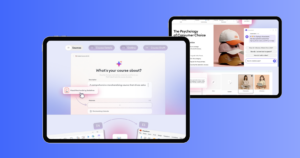
Converting face-to-facetraining to eLearning offers opportunities to fine-tune content and narrow thefocus. The eLearning Guild’s books of tips on moving to eLearning offerhundreds of suggestions, many of which cite short, engaging, and tightlyfocused modules: Microlearning. This approach might just be the right fit forclassroom training that you are transitioning to eLearning.
Remember to focus
eLearning should be short, to-the-point, wellorganized—same as an in-class course.
Randy Meredith,Huntington Bank
In a face-to-face class, an instructor might veer off on atangent, tell a story, answer several questions—and only then refocus on thematerial at hand. That’s not possible or acceptable in eLearning; learners willdisengage if eLearning is bloated, boring, or badly organized.
Microlearningis by definition narrowly focused. Each module must beself-contained—including enough information to answer a learner’s immediateneed. Yet it cannot be hours long.
Begin the process of transitioning face-to-face training toeLearning by examining the learning objectives and ensuring that each onlinelesson focuses on one or more of these well-defined goals—without meanderinginto related, but nonessential, topics. This related content can be offeredinstead as linked,curated resources.
Short and snappy
Keep your content short, snappy, and interesting. It isvery easy for online learners to get distracted and lose their motivation.
Ryan McInnes, TheLearning Rooms
While a classroom session might last an hour or two—or allday—eLearning is best consumed in smaller doses. Learners are likely to befitting in lessons between other tasks or during forced downtime, like acommute. It’s essential to create eLearning that will engage learners’attention but doesn’t require an enormous time commitment.
While there’s no set limit on the length of microlearning,the approach, which emphasizes short, engaging content, could be a great fitfor classroom training that is moving online. Some face-to-face training won’tfit this mold, which is fine: Differentmoments of learning need require different types of instruction,whether online or in person.
It’s not all video
Think minimum necessary. In a classroom, we mightbuild in more history and concepts. But make the eLearning course moreexperiential with activities that engage the learner—role-plays, quizzes,etc.—to get them to think about how to engage with and use the content.
Beth McGoldrick,RiverSource Insurance
In many eLearning professionals’ minds, microlearning issynonymous with video. But short, focused learning can take a variety offormats. And offeringlearners a choice of formats improves the accessibility and appealof eLearning.
Short videos can definitely be part of the transitionpackage, but don’t neglect other options: Chats, games, scenarios and role-playexercises, podcasts,and more. Any of these formats can be used to package microlearning.
Remember the learners
Break the learning objectives down intosmaller chunks or learning modules. Do not try to mirror the classroom contentand timing. Breaking the content down into small chunks or modules allows thelearner to maximize the benefits of eLearning. The learner can choose how manymodules to complete based on available time. The learner can easily revisit andtarget specific skills and concepts where additional review may be neededduring the program—or months or years later.
Joe Ilvento, Commvault
Learners use eLearning differently from the way they takein-person classes. Rather than expecting to cover a lot of ground in eachsession, learners might turn to eLearning modules inthe workflow, hoping to get a quick answer to a question or solutionto a problem.
Even when introducing new material or skills or teaching complextopics, learners are likely to complete smaller chunks of eLearning at eachsession than they might in a training that is held in multiple one- or two-hourclasses.
Building in this flexibility when transitioning classroomtraining to eLearning considers learners’ needs and the constraints on theirtime—making it more likely that they will engage with the training and succeed.Remember to build in a robust search function, an index or library, and an easyway for learners to build a logical progression of eLearning modules—and tracktheir progress.
Explore microlearning design
Take a deeper dive into microlearning design and explorewhether this approach is a good match for the classroom content that you aretransitioning to eLearning. Explore further at the MicrolearningDesign Summit, a co-located event with DevLearn2018 Conference & Expo, October 24 – 26, 2018, in Las Vegas.
Download The eLearning Guild’s free tips books to learn moreabout converting classroom training to eLearning from your learning anddevelopment peers: Movingto eLearning: 154 Tips on Getting Started and Movingto eLearning: 283 Tips on Shifting Content and Experiences. A third book on the topicwill be released later this year.