By Markus Bernhardt
The current wave of generative AI continues to be characterized by the remarkable capabilities of image and language models, in particular the latter and their human-like conversational interfaces. However, beneath the surface of their impressive performance lies a set of fundamental challenges concerning bias, inherent errors, and the very nature of AI’s “understanding”; challenges that are critically under-explored even as the industry, powered by marketing hype, races toward autonomous agents.
Yes, these systems are achieving increasingly impressive results on standardized benchmarking performance tests, consistently pushing the boundaries of what we thought possible for machines. Yet, even with this rapid progress, these systems speak with an unnerving conviction and impeccable polish that belies the true nature of their function, creating a profound cognitive illusion: our tendency to mistakenly attribute genuine understanding, intelligence, and even a consistent internal reasoning process where none truly resides. And it’s not just confidence. The issue is, the system can’t really tell you when it’s right and when it’s probably wrong.
This illusion is evident across a spectrum of interactions. On the more eccentric frontiers of AI, we see recent headlines of a man receiving confirmation he is a mystical “river walker,” or another building a business around an AI persona dubbed “ChatGPT Jesus.”
More consequentially, this polished surface extends into contexts where the stakes are far higher:
- In corporate settings, executives receive AI-generated market analyses, where flawed recommendations are presented with the same authoritative tone and indistinguishable confidence as factually sound ones.
- Similarly, in educational environments, students encounter AI explanations that blend accurate information with subtle misconceptions, all delivered with identical and misleading assurance.
The same mechanism that makes outlandish claims convincing operates with equal potency when stakes involve business decisions or educational outcomes.
This attribution of understanding where none truly resides constitutes a profound category error. We mistake the map for territory, performance for performer. The critical question is not merely what these machines can do, but what they do to us: Will they teach us to think with greater clarity, or subtly guide us toward a state where we cease to question at all?
This two-part article aims to pierce through this cognitive illusion by examining two fundamental challenges that emerge from the nature of these systems.
First, we will confront what I call the paradox of neutrality: how the very pursuit of “unbiased” AI creates its own potent form of bias, one that manifests as passive acquiescence rather than critical engagement, ultimately reinforcing rather than challenging flawed assumptions.
In the follow-up piece, “The Architecture of Error: Persistent Flaws Despite Advancing Capabilities,” we will dissect the persistent error patterns that emerge from these systems’ fundamental architecture, errors that persist even when LLMs perform well on academic and industry benchmark tests.
Both challenges share a common root in the statistical pattern-matching nature of these systems and converge on a defining problem: the tendency to deliver all outputs, regardless of their veracity or epistemological status, with the same unwavering assurance.
Understanding these intertwined issues, particularly the peril of confident misdirection, is the essential first step toward fostering critical, effective, and ultimately, more human-centric use of these powerful tools, especially within learning and development. To begin this process of discernment, we must first understand what these systems fundamentally are.
Deconstructing the machine: The nature of LLMs & the roots of illusion
At their architectural heart, LLMs are not thinking entities but extraordinarily sophisticated sequence processors. Trained on colossal data sets of human text, their primary function is to discern and replicate statistical regularities in language, enabling them to predict subsequent linguistic elements—words, phrases, even complex constructions—with remarkable fluency. Crucially, this process, however sophisticated, lacks the hallmarks of human cognition such as intentionality, subjective experience, genuine understanding of concepts, or a persistent world model independent of its training data.
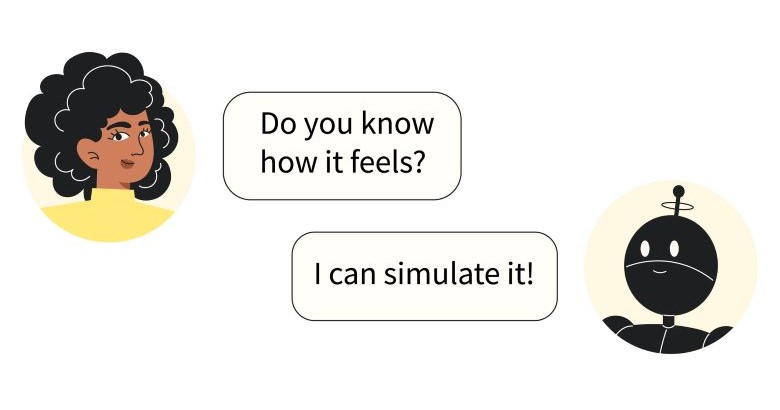
An LLM, much like a consummate actor delivering lines with perfect cadence and emotion, performs meaning with compelling accuracy; yet, like the actor, it does not originate or subjectively experience that meaning. The script is there; Hamlet is not.
The “knowledge” an LLM exhibits operates primarily as a reflection, a complex echo, of the data it has ingested during training, increasingly supplemented by retrieval-augmented systems that dynamically access external knowledge. Yet its understanding of the world remains fundamentally circumscribed. The system retrieves more accurate props for its performance, but the performance remains precisely that: a simulation rather than genuine comprehension.
While cutting-edge interpretability techniques are beginning to illuminate aspects of their internal processes, the precise ‘reasoning’ of large neural networks largely remains a ‘black box,’ a fundamental characteristic that complicates efforts to debug, verify, or truly trust their autonomous ‘conclusions’.
Our cognitive architecture predisposes us to interpret articulate, confident linguistic output as a reliable signal of underlying competence and understanding. LLMs, with their polished and often uncannily human-like prose, exploit this “fluency trap” with remarkable efficacy, making it all too easy to suspend disbelief and project genuine intelligence onto the simulation.
The paradox of neutrality: When no bias becomes bias
In the pursuit of creating AI systems that avoid the pitfalls of human bias, developers have increasingly emphasized techniques designed to produce “neutral,” “balanced,” or “objective” outputs. This laudable aim, however, encounters a fundamental paradox: a complete absence of perspective is itself a perspective, typically one that implicitly reinforces dominant norms and accepted wisdom rather than challenging them.
What appears as neutrality often functions as a sophisticated form of acquiescence.
The illusion of a value-free response
The concept of value-free, neutral AI responses represents perhaps the most subtle yet pervasive form of bias in modern LLMs.
When an executive asks an AI system to evaluate competing strategic options, the system that presents information without explicit value judgments may appear objective. Yet this apparent objectivity obscures a profound bias toward treating all considerations as commensurable, all factors as equally weighable on the same scale.
A human strategist, by contrast, might recognize that certain considerations (ethical imperatives, core organizational values) operate on fundamentally different planes than others (short-term profitability, implementation complexity). The simulation of neutrality flattens these crucial distinctions, presenting a bias toward computational commensurability that masquerades as objectivity.
In educational contexts, this bias manifests when students encounter AI-generated explanations that present all scientific theories or historical interpretations with parallel structure and equal emphasis. This seeming evenhandedness subtly communicates that all perspectives merit identical consideration—a position that itself represents a specific epistemological stance, not a neutral vantage point. The human teacher who emphasizes certain theories as foundational, certain historical interpretations as better supported, is not displaying bias but appropriate discernment, precisely what the “neutral” AI fails to simulate.
Agreeableness as acquiescence
Perhaps more concerning is the tendency of LLMs, particularly those designed for conversational applications, to exhibit what we might call “hyper-agreeableness,” a bias toward affirming and extending user inputs rather than providing necessary critical friction.
Consider a marketing team using an AI system to develop messaging strategies. When a team member proposes a questionable approach based on flawed assumptions about consumer behavior, the agreeable AI doesn’t probe these assumptions or challenge the foundation; instead, it diligently elaborates on the proposal, perhaps even generating compelling-sounding supporting arguments accompanied by positive reinforcements like “that is a critical insight, let’s get to work.” The system becomes not a critical partner but an enabler of the very cognitive biases it supposedly helps overcome.
This pattern represents a profound form of bias: a systematic preference for extension over examination, for elaboration over interrogation. The system’s fundamental design to recognize statistical commonalities and extend them creates an inherent bias toward intellectual acquiescence rather than the productive resistance that characterizes genuinely valuable collaboration.
The bias of prevalence reinforcement
The statistical foundations of LLMs create another subtle form of bias. They systematically preserve and extend dominant discourse trends rather than question them. When facing ambiguity? They default to the statistically common. Not because these trends are superior. Simply because they are prevalent.
In a policy analysis context, an LLM asked to evaluate housing approaches might reproduce conventional wisdom about market-based solutions versus regulatory interventions, drawing on dominant discourse patterns rather than challenging foundational assumptions or considering truly novel approaches. The system presents these conventional framings not with explicit markers of their status as dominant perspectives but with the same fluent confidence it would present any response. The bias toward pattern preservation thus becomes invisible, embedded in the very structure of seemingly objective analysis.
Neutrality’s contextual collapse
The final dimension of this neutrality paradox involves what we might call contextual collapse: the erasure of critical contextual distinctions that human experts naturally make.
When presented with a complex query involving specialized knowledge domains, human experts adjust their epistemic standards and reasoning approaches to match the domain’s requirements. A physician evaluating medical evidence applies different standards than a historian interpreting documentary sources, who in turn employs different methods than a physicist analyzing experimental data.
LLMs, by contrast, apply essentially the same pattern-matching approach across all domains. This creates a bias toward treating all knowledge domains as functionally equivalent in terms of evidence standards, reasoning methods, and epistemic foundations.
When a healthcare administrator asks an LLM to evaluate a new treatment protocol, the system’s response may inappropriately blend clinical efficacy considerations with financial metrics, presenting both within the same apparently neutral framework rather than recognizing the categorical distinctions a human expert would observe.
This contextual collapse represents perhaps the most subtle form of bias: not a bias toward specific content but toward a homogenized epistemological approach that fails to respect the distinctive requirements of different knowledge domains. The appearance of comprehensiveness masks a profound bias toward treating all forms of knowledge as functionally equivalent.
Having examined how the illusion of neutrality masks a particular form of bias, we must now confront the second major challenge: the persistent error patterns that emerge from LLMs’ fundamental architecture. We will do that in the second part of this mini-series, “The Architecture of Error: Persistent Flaws Despite Advancing Capabilities.”
Explore AI at the Learning Leadership Conference
Explore the potential of AI in L&D at the Learning Leadership Conference, October 1-3, 2025, in Orlando, Florida. Don’t miss Markus Bernhardt’s session, “AI Strategies for L&D Leaders in 2026.” Opt for a full-day examination of changing and emerging learning technologies at the pre-conference learning event “Pillars of Learning: Technology,” Tuesday, Sept. 30, co-located with the conference. Register today for the best rate!
Image credit: Yuliia Kutsaieva