
Introducing gamification to your organization is a large andpotentially costly undertaking. What should you know before diving in? Industrythought leaders and vendors that provide gamification solutions offer thefollowing 10 tips for executives considering implementation of a gamificationstrategy.
Ten tips for CLOs considering gamification
- Startsimple. “People tend to think gamification is very complex and that theyhave to go all in,” said Carol Leaman, CEO of Axonify,a vendor that provides gamified business solutions. “But you can start small.Pick two or three game mechanics that are easy to implement, and test out theirimpact.”
- Let it becasual. “Allow employees to play what they would otherwise recognize as afun experience to clear their brain and get them in a good mood, and attachsome piece of learning to that short experience,” Leaman said.
- Don’tworry about the access point. People play games when they have a fewmoments of downtime on whatever is most convenient—usually their smartphones. Leamanrecommends embracing the use of smartphones at work because they “will make theworkforce measurably smarter, which will lead to a positive business outcome.”
- Beware ofbiases. “A lot of folks think older people, non-Millennials, or femaleswill not be interested in or engaged by game mechanics,” Leaman said. Yet, accordingto Axonify, 48 percent of people over age 50 play video games, and 44 percentof gamers are female. The UK-based Growth Engineering concurs. In a white paper, the organization notes, “Contrary to the popular belief that gamersare generally teenagers holed up in their bedrooms … only 18% of gamers areaged 18 or under. The majority (53%) of gamers are aged between 18 and 49 yearsold, with a fair proportion (29%) aged 50 and over.”
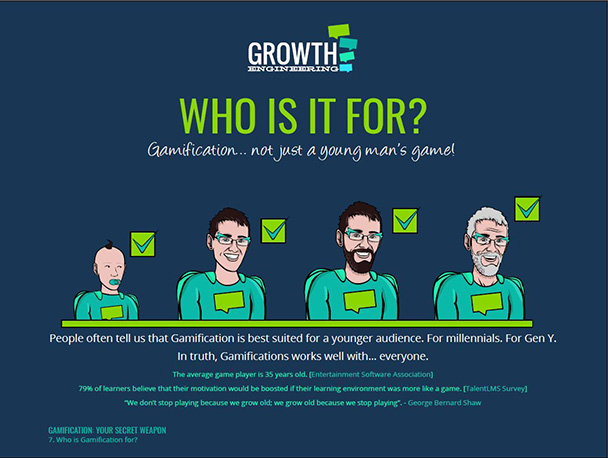
Figure 1: Gamification can appeal to the entire workforce (source:Growth Engineering)
- Nurtureengagement. A Watson Wyatt (now Willis Towers Watson) study found that firmswith highly engaged employees can achieve a financial performance four timesgreater than those with poor engagement, while a Hay Group report found thatengaged employees generate 43 percent more revenue. In addition to the bottomline, gamification can have a positive impact on retention. “We have a newgeneration [that wants to be] emotionally engaged, and if you are not makingthat connection through your training and development programs, that talentwill walk out the door,” said Juliette Denny, managing director at GrowthEngineering.
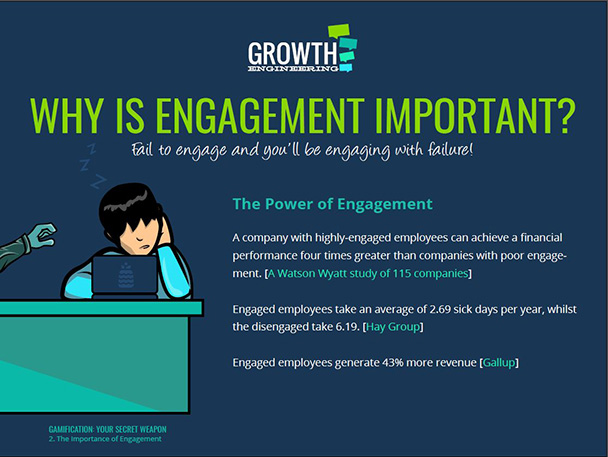
Figure 2: Engagement is crucial for business success (source: GrowthEngineering)
- Deliverwhat they want. “Learning technology solutions must be more like the thingspeople do for pleasure at home,” Denny said. This would include entertaining andinformal video delivered to employees’ mobile devices, accessible when theywant to consume it.
- Mix it up.Different games appeal to different learners. A variety of options (puzzles,word, and arcade-style games) encourage players to visit a gamified platformmore frequently.
- Addressdifferent personality types. Gamification thought leader Andrzej Marczewskimaintains that individuals can be classified into six basic personality types, eachwith distinct preferences. Bear this in mind when gamifying a system.
- Gamificationis not a universal solution. In a white paper, Bunchball notes that blindlyadding game mechanics to sites and services does not guarantee success. It can,however, successfully add an element of community, competition, and fun that willengage users.
- Use it tostand out. According to Bunchball, gamification can be a truedifferentiator for your site, service, content, community, or campaign, and itcan improve key metrics such as time on site, page views, and return visits.Based on your vertical, this can translate into subscriptions, customeracquisition, or products sold. It can also provide real-time, actionable data.