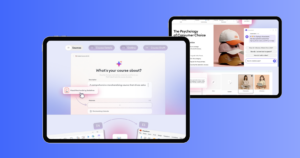
Mobile-based microlessons offer a new paradigm for trainingdeskless workers. Consider:
- Brandi works as an occupational therapist,paying home visits to patients following surgery or an injury. She guides themthrough rehabilitation exercises and assists them with adjusting to daily tasksthat are more difficult as a result of a temporary or permanent disability.
- Jamila manages the garden center of a busy homeimprovement store. Pallets of trees coming in for spring planting must beunloaded and arranged; managers constantly track inventory; customers on thefloor require assistance.
- Teo has been a driver for FedEx for 15 years. Heknows many of the residents along his route, and has watched paper forms giveway to technology as he’s trained dozens of temporary and seasonal drivers andassistants.
What these individuals—and millions of other workers—have incommon is that they are nomads on the job. They have no desk, no physical base.A key characteristic their jobs share is that technology is taking on a largerand larger role. Brandi fills out patient charts and tracks medication andappointments using a tablet. Jamila uses inventory and scheduling software totrack incoming and outgoing stock, schedule employees, and more. The entiresales system, not to mention the phone system and staff paging system, runs onconstantly changing technology. And Teo has seen paper lists and receipts giveway to trackable packing slips and electronic devices for collecting deliveryverification signatures.
Doug Stephen, senior vice president of the learning divisionat CGS,in New Brunswick, Canada, defines deskless workers as workers who “do not havefull access to a computer while they are doing their work.” They can be in anyindustry; recent research at CGS found that 20 percent of the 5,000 workerssurveyed identified themselves as “deskless workers.” Some have access tophones or tablets while they work; others do not.
The common denominator that CGS focused on is that theseemployees need regular training—to learn to use new technical devices andprograms, to keep up with changes, to master safety procedures, and to completetasks critical to their work performance. Stephen said that lack of training isa significant factor in employee turnover. Many companies, he said, have a“sink or swim attitude” and employees “want to be able to feel secure andcomfortable that they can succeed.”
Managers could pull them away from work, along with groupsof their colleagues, for instructor-led training or require that groups ofemployees log into virtual platforms for synchronous training. But that optionis not feasible for many businesses, both because of the cost of pulling largenumbers of employees away from their jobs during work hours and the logisticsof covering vital ongoing work during group class times. For ongoing trainingand skills refreshers, it doesn’t make fiscal sense to pull groups of desklessworkers off the job.
This is a use case built for mobile learning.
“When people take a job, they want to do well,” Stephensaid. “And in this environment, where things change very quickly, you can’ttake people and put them in a classroom environment for extended periods oftime. But there has to be something where people can be fed.”
The solution that CGS has developed is a form of continuous“performance training” based on feedback and continuous improvement—essentiallymicrolessonsthat managers offer as part of regular interactions with employees.
“The manager has a tablet and they basically do this ‘overthe shoulder’ review of how a person is doing. What’s really cool is, they comeback and say ‘you’re doing this great’ or ‘you might need a little bit ofhelp—oh, and by the way, take my tablet; here’s a one-minute video on how to doit,’ ” Stephen said.
The one-minute videos are essentially short coachingsessions. CGS works with their clients to identify areas where many employeesneed coaching, identify high-performing employees, and create the short videosof the high performers talking to their peers. This approach motivates all involved: “Your peers are being recognizedas top performers, so they’ll want to get better at it. The people who aregetting the tips from those peers want to be in those snippets. It just createsthis really fantastic, ongoing thing. People want to be part of it,” Stephensaid.
The regular feedback and continuous development has proveneffective in improving skills and performance, Stephen said. “They’re gettingfantastic training because they’re getting continuous review, they’re gettingrehabilitation, they’re getting it in small chunks. We see the efficiency ofthat worker getting better.” CGS tracks the results using established industrybenchmarks as well as individual company history. Data from learners’activities can be correlated to measures of individual and store performance.
Benefits of mobile learning for deskless workers
Mobile microlearningoffers several benefits to both the employers and the workers:
- Workers can complete training on their ownschedules—during a quiet time of the day.
- Workers can complete training on their owndevices or on a manager’s device, during their work day and in the workflow.
- Training can be adapted to the needs ofindividual workers, rather than requiring people to sit throughone-size-fits-all training that includes content that is not relevant or thatthey already know.
- Training and job aids can focus narrowly onspecific needs—product information updates, answers to specific questions,instructions for processes—that workers encounter while doing their jobs.Stephen said first-person vignettes—perhaps about how a worker solved a problemor dealt with a challenging customer—are especially effective.
Mobile training fits digital learners
Short video stories are not the only option managers canoffer their deskless teams. Mobile training encompasses a vast variety offormats and approaches to teaching employees skills and supporting them intheir work. Much training is now designed and developed for exclusive use onmobile devices, such as smartphones or tablets, to suit the way digitallearners seek and consume information.
This training—for microlearningand performance support—can use video, audio, text, and graphics and take anyform:
- Short videos
- Podcasts
- Games
- Chatmessages
- Microlessons
- Flash cards
- Quizzes
- User-generatedcontent to verifyskills application
- Beacon-triggered(location- or context-specific) content
- Immersive simulations
Deskless workers aren’t the only learners to want andbenefit from mobilelearning. Learner behavior is shaped by consumer behavior—which isincreasingly oriented around using mobile devices to find information and solveproblems. Mobile microlessons that learners can use anywhere can supportworkers and managers in a huge variety of roles.