Bill Donoghue became the chairman and CEO of Skillsoft inJanuary 2016. Skillsoft is the largest eLearning company in the world; itsclients include 65 percent of Fortune 500 companies, according to Donoghue.Skillsoft offers more than 100,000 online courses, books, and videos, as wellas offering content delivery and human capital management platforms. Donoghuecame to Skillsoft from TES Global, where he spent five and a half years as COO.TES Global is a digital education company, supporting educators in both K-12and higher education. We recently spoke about where Donoghue sees the industryheading. The interview has been edited for length and clarity.

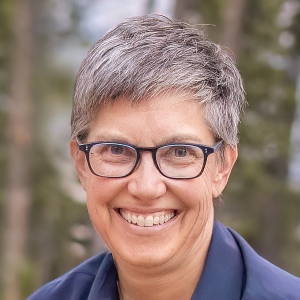
Figure 1: Bill Donoghue, Skillsoft CEO
Pamela S. Hogle: Canwe talk for a few minutes about where the eLearning sector in general andSkillsoft in particular are headed?
Bill Donoghue: From a learning perspective, the demands noware greater than ever. The sector needs to change. The Millennial generationhas an appetite for the consumption of learning and an appetite for theconsumption of content that is much greater than it ever was.
Traditional learning—where people were in long courses—ischanging. The demand for shorter courses, video, and more user control isgreater.
PH: This sounds likean approach that is used in educational environments—adaptive learning. Yourbackground, before moving to Skillsoft, was with educationally focusedeLearning companies. Can you talk about how that approach might work in thecorporate environment?
BD: I worked in the K-12 environment primarily; there aremany parallels. We had a huge online platform supporting eight millionteachers. They could share resources, lesson plans. There are over a milliondownloads a day from that platform.
I can give you an example from that experience. In math,everyone has to learn the Pythagorean theorem. But in an adaptive learningapproach, we know that one size does not fit all. Our platform had more than 200lesson plans on how to teach the Pythagorean theorem. People would ask, “Why doyou need 200 lesson plans?” The answer is that every child, or every group ofchildren, has different needs. The lesson needs to be adapted.
The parallel in the corporate world is that users want toadapt learning for themselves; they want control over the experience.
PH: How might thatlook in a corporate training program?
BD: People used to do courses over a long time period—severalhours. The user wants to adapt the experience, maybe spending a few minutes ata time rather than hours on the course.
PH: So, in the corporate environment, adaptive learning is more aboutadapting the experience than adapting the content?
BD: It can be both. There are many ways to teach someone howto do a pivot table in Excel. One person might read a book; another might watchan animation or a video showing how to do it. Our content delivery platform canoffer different options for learning the same skill.
PH: What are some keydifferences in applying adaptive learning to a corporate environment over aneducational environment?
BD: In K-12 education, we’re talking about children. Incorporate learning, the users want more control over both how they consume contentand how and when they learn.
PH: How is Skillsoftresponding to these demands?
BD: In Las Vegas [at Skillsoft’s 2016 Global User Conferencein May], we announced our new content delivery platform, code-named ProjectArtisan. It focuses on the user experience—providing what users expect as anexperience. It will offer much stronger search and discoverable capabilities andadd social interaction and collaboration tools.
Artisan will go way beyond traditional discussion boards; itwill allow employees to set up virtual learning groups or projects. It willalso offer the features of tools we use in daily life to share information.Employees will be able to share and communicate information and also tocollaborate on projects.
We’re also doing a complete refresh of our business-skillscontent this year. We originally had a five-year plan, but we decided to do itall this year. Millennials consume content differently. Most of our content isin 90-minute videos. The new content will be in three- to five-minute videos.They will also have a fresh, more contemporary look.
PH: In addition to giving users more control, what other changes do yousee coming in the next few years?
BD: Well, the chatter—when talking about technology—thechatter is that VR, virtual reality, is the next big thing in learning. Iactually think it’s a bit farther out than the next few years and thateLearning won’t be the first sector to adopt VR. Maybe in R&D … but in thenext 10 years, I expect to see VR in eLearning.
PH: VR is also talkedabout in terms of the gaming and entertainment industries. And gaming, orgamification, is something that is getting a lot of attention in the eLearningsector.
BD: Yes, that’s true, particularly in compliance. That isone area where I see a lot of opportunity for animations. Compliance content isoften seen as the “boring” end of the eLearning spectrum. It’s often mandatory.I’m not talking about harassment or ethics compliance—more like how to operatea piece of equipment. The content can be considered “boring,” and animationmakes it more fun.
PH: So they will stayengaged and complete the training?
BD: Exactly. Games and animation can keep people interested.
PH: What otherdevelopments are you looking forward to?
BD: Skillsoft is a great company. It is a young company,only 18 years old, but it has a long heritage in eLearning. It’s been therefrom the beginning, essentially, and is a pioneer in the sector. And it’s anexciting time to be in learning and human capital management. The Millennialgeneration really shook the industry. They are more open and transparent, andmore vocal about what they want and—more importantly—what they don’t want. Oneof our investors said to me that as employees we just do what we’re told when it comes to learning and development. AndI responded, “Not if you’re 22!”
I’ve been most impressed that our clients—these are hugeglobal brands—are changing their cultures. They are changing to allow employeesmore control over their destiny, more mobility.
Twenty or 30 years ago, people thought they’dhave maybe two or three careers in their lifetime and in their 50s or 60s,they’d retire. Now, we’re thinking well beyond that; people expect to havemultiple careers over an extended period. And our clients are thinking aboutthat, about how to change.