The modern learning ecosystem framework is asimple, consistent method for addressing workplace learning and performanceneeds. It helps employees understand how they are supported in gaining theknowledge and skills needed to do their jobs. I think of this framework in thesame way that I think of the municipal code for plumbing: It makes thingspredictable.
Have you seen Arun Pradhan’s “If Learning Was Water” infographic from last year?

Figure 1: “If Learning Was Water”by Arun Pradhan
No? Well, stop reading this and check it out here. I’ll wait.
(Quietlyhumming “All by Myself” by Celine Dion…)
Welcome back! I mentioned Arun’s infographicfor two reasons. First, it’s awesome! Second, I’m going to somewhat borrow hiswater metaphor to tell my own story. I just wanted to make sure you knew whodid the water/learning thing first (and better).
Imagine you’re building a new house. Afteryou’ve decided on your location and general design, you must determine thelayout of the rooms within the house so the major foundational components canbe installed. Where do you want the bathrooms? How about the kitchen? Thelaundry? Once you’ve made these choices and the plans are finalized, plumbersknow where to run pipes for the rooms where you’ll typically need water.Fast-forward to move-in—you can just turn on a faucet and access water whereveryou need it. You don’t have to guess when and where the water will show up. Itdoesn’t move around or come from unexpected places (at least you hope not).Plumbing is a foundational, predictable part of home living.

Figure 2: Plumbing ispredictable—something you can rely on (Pixabay)
Unfortunately, many L&D pros would makehorrible plumbers. That’s because we often fail to establish the samefoundational, predictable parts of our strategies that are so important whenbuilding a stable “house.” Sure, we have some tools (cough, LMS, cough) that weuse over and over again. But, in real life, the application tends to shiftbased on the project. The company releases a new product today, and we provideemployees with an eLearning module. Then, the company releases a similarproduct in six months, but we schedule everyone for an instructor-led session.Rather than focus on the consistent needs of the employee, we subject the sameperson to varying L&D methods based on capacity, timing, stakeholderrequest, and/or available talent. If L&D had built the house (strategy) Imentioned earlier, the water (support) would be flowing at random from room toroom regardless of where or when it was needed.
L&D may find itself constantly chasing“the business,” but there’s no excuse for forcing the employees to chase us toget the help they need to do their jobs. This must be addressed as afundamental consideration in our effort to “modernize” our practices and evolveworkplace learning. (See “How Is Instructional Design Changing for Today’s Practitioners?”) You shouldnot be repeatedly forcing employees to “relearn how to learn” as part of yourorganization. Rather, you should provide them with a consistent, simple,familiar set of tools and resources to help them solve problems and grow theircapabilities.
To effectively install your L&D plumbing,you’ll need three components: framework, tactics, and process.
Framework
If you’ve ever seen me present at an L&Devent, odds are that I mentioned something called a “modern learning ecosystemframework” (Figure 3). I developed this method for addressing workplacelearning and performance needs during my time with Kaplan and continue to applyit in my work with Axonify.
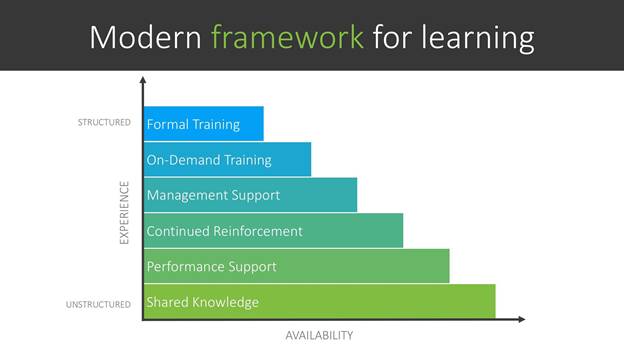
Figure 3: Modernlearning ecosystem framework
While it’s inspired by popular L&Dconcepts such as Mosher and Gottfredson’s Five Moments of Needand Jennings’ 70:20:10, this framework is also just pure common-sense problem-solving.How do you overcome challenges at home? First, you probably Google the issue.Then, perhaps you ask someone for help. If it’s a recurring challenge, you maypractice over and over. You likely only take a class for your most complicatedskill needs. This framework applies added workplace context to our everydaylearning sensibilities.
You apply the framework by starting at thebottom layer and moving up—but only as far as needed to address a specificlearning and performance challenge.
- Shared knowledge: Make comprehensive information easily accessible, including the “nice to know” details
- Performance support: Provide the option for employees to “raise their hands” and request help
- Continued reinforcement: Ensure “need to know” information is retained long-term
- Management support: Enable managers to coach to related behaviors
- On-demand training: Provide structured “pull” learning experiences
- Formal training: Push training content only when necessary
If a problem is super complex or highlyregulated, you may need to apply multiple layers and move farther up theframework (example). If it’s a simple or timely issue,you can reduce the complexity of the solution and apply only the foundationallayers.
This framework provides a consistent, scalableway for L&D to address the ongoing needs of the business withoutcontinuously re-creating the wheel. On the flip side, employees can apply theirfamiliar problem-solving and skill development behaviors more freely becausethey implicitly understand how they are being supported. To return to ourearlier metaphor, the framework is the plumbing schematic that will help youposition the right pipes (tactics) in the right places to ensure consistent,accurate water (support) flow.
Tactics
While I have introduced the modern learningecosystem framework to many organizations, the application always looks verydifferent. That’s because the tactics that fit within each layer of theframework vary considerably. For example, when I was with Kaplan, sharedknowledge most commonly referred to our Confluence wiki, where all referencematerial was stored. In other organizations, shared knowledge may include anenterprise social network, intranet, and/or content management system. As longas users can leverage the tool as indicated within the framework set up, theactual tool(s) applied do not necessarily matter.
L&D pros are already applying a variety oftactics in their work. However, the framework asks you to establish clear,purposeful channels for learning and support using only right-fit tactics. Thismay force you to consider new tactics and/or challenge you to retire othersthat don’t fit this structure. The “traditional” tactics, such asinstructor-led training and eLearning, likely won’t go away. Rather, they areslotted into the appropriate layer(s) and applied when they are determined tobe a right fit (example) and in synchronization with the restof the framework.
We’re about to hit the limits of my plumbingknowledge, but I’ll give the metaphor another try anyway. While the frameworkprovides the schematic for where the plumbing needs to go, your tactics are thedifferent types of pipe that will carry the water (support) to various areas ofthe house for specific uses.
Process
My big rule for L&D at Kaplan was: “We won’tbuild any instructional material on a topic until the information is shared ina searchable way.” This was my initial way of process-orienting our framework,as shared knowledge is the foundation on which everything else is based. Afterall, no one goes back into the eLearning from six months ago to find one pieceof information they forgot. While I’m firmly against handcuffing L&D withpiles of red tape, process is critical for the consistent execution of this approach.
We require that plumbing follow code; L&D mustdo the same
To go back to the plumbing metaphor one moretime, processes are the valves that turn the water on and off as needed inorder to provide water (support) to the right areas. L&D must be consistentin its framework application in order to provide a familiar, predictableexperience for each employee. The purpose and intended use of each tactic mustbe clearly defined and followed to protect the user. As is true of the entireframework, these processes should evolve over time with the needs of theorganization.
Of course, one strategy cannot solve everypotential workplace problem. That said, deviations from the standard should bea purposeful exception, not the ever-annoying rule. By applying a consistentframework enabled through right-fit tactics and meaningful process, L&D caninstall the plumbing necessary to make workplace learning a familiar, agile,well-regarded business strategy.
Unfortunately, this is the second consecutive month inwhich I’m compelled to conclude my column with a call to action in the wake ofhuman tragedy. But such, it seems, is the state of our world today. United for Puerto Rico is collaborating with the private sector to provide aid and support tothose affected by Hurricanes Irma and Maria. The situation remains dire, and Iask that you give whatever you can to support my fellow American citizens intheir time of need. It will be a long road back, and every little bit helps.Thank you. —JD