
I love musicals! Well, not every musical (I’mlookin’ at you, An American in Paris).Regardless, I’m a big fan of the theater. If I weren’t scared to death ofpublic speaking as a kid, I’m pretty sure I would have been a theater nerdgrowing up. Instead, I was just a standard geek.
I go to six or seven shows every year as partof the Broadway in Orlando series.I’ve seen everything from The Book ofMormon (hilarious) to The Phantom ofthe Opera (meh). My favorite is AGentleman’s Guide to Love and Murder. If you’ve never seen it, you may havecome across its well-known door sequence. But the show that really sucked me into the world of musicaltheater in a big way was Wicked. I’veseen it four times in four different cities, so far.

Figure1: My favorite musical, A Gentleman’sGuide to Love and Murder
The best part of a night at the theater iswhen I get the chance to go backstage and see how the show really works. Whatsurprises me every time is just how simple (and downright cheap) most of themechanics really are, considering they pull off what looks like a miracleonstage. Every successful show has been engineered and re-engineered to ensurethe simplest solution is applied to bring about the desired end result nightafter night. Meanwhile, the performers trust—often with their physicalwell-being—that the people behind the scenes are making the right decisions atthe right time so they can focus on bringing their roles to life. Now whereelse could we apply these same principles? Hmmm…
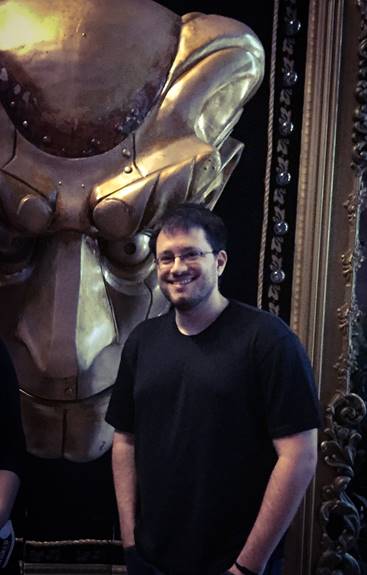
Figure 2: Backstage with theWizard’s mechanical head from Wicked
L&D pros must become the stagehands of theworkplace. We’re not the director (executives). We’re not the stage manager(frontline managers). We’re not the orchestra (not sure who that would be inthis metaphor). We toil in the shadows to provide simple, timely, purposefulsupport to help people do what they do—day in and day out. We’re not theheroes. Rather, we are successful when we help other people become the heroes.
My theater metaphor only works if the peoplewe support actually see us as playing this critical behind-the-scenes role.After all, Elphaba can only defy gravity if shetrusts her crew and the mechanisms they’ve put in place to raise her 20 feet inthe air mid-song. In real life, would employees put this kind of faith in yourlearning and support offerings? Do they believe you can get them to the heightthey need to maximize their performance on a consistent basis?
Before we head down the path of the innovative and unfamiliar (VR, AR, AI, etc.), we must establish and build trustbetween L&D and our audience. Rather than getting more and more gimmicky insearch of engagement, we should foster an assumption—that dedicating time andeffort to available resources will provide value and help them do what theycare about doing. We’re never going to be 100 percent. Not every Casey Neistatvideo (plug) is equally awesome. But I still watch everything he publishesbecause he hits a lot more often thanhe misses. I trust him as a value-add content provider.
So how do we build trust in an audience thatmay have been disappointed by past L&D offerings? Tactics and focus willvary by organization and audience, but the starting point is the same. We haveto get back to basics and build a foundation on which future complexity can bebased. This realization was the origin of the modern learning ecosystem framework I introduced in my last column. I recognizedthat my well-thought-out learning strategies would continue to fall flat aslong as people couldn’t look up simple information they needed to do the jobevery day. So I adjusted the way we made decisions when responding to businessneeds. Over time, my reputation within the company shifted from “the guy whobuilds the training” to “the guy who helps us do our jobs.” The former was atask-based identity. The latter was a meaningful purpose.
Here are a few iterative suggestions forfostering an assumption of value (aka trust) with your audience:
Solve the small, nagging problem. Everyoperation has that tiny but constant issue that never gets high enough on thelist to be formally addressed. Find a way to eliminate that problem as a signalthat you are listening to employees’ needs and capable of quick action.
Connect people with expertise. Solvingworkplace problems can be a constant game of telephone. Work to eliminatemiddlemen and connect people who need with people who know. This could be donein a variety of ways, from integrated social tech to simple, accessible,accurate SME lists.
Be economical. Take only the time youabsolutely need to get the job done. For example, strip your eLearning contentdown to the minimum (no learning objectives, redundant messages, or extraclicks) in order to limit the time and effort required by the employee.
Be honest. We’re often pushed to delivertraining that isn’t quite up to our own standards. In these cases, don’t try toput lipstick on a pig. Tell your audience what’s going on. If a two-hour seattime is required, be honest about this requirement and maximize the potentialvalue.
Let go of ego. It doesn’t matter who came upwith an idea or created a piece of content as long as it helps people do theirjobs better. Get off the stage and shift the focus to the people you support. Establish your identity through impactrather than publicity.
Celebrate success. Many employees only hearfrom L&D when they haven’t done something. Make the effort to recognize thegood, too. Highlight employees who are demonstrating proficiency, and rewardthem for their effort in culturally appropriate ways as a signal to theirpeers.
It’scliché to say that building trust doesn’t happen overnight, but it’sinescapably true. It took months to shift my L&D identity in my past role.I watched dozens of Casey videos before I decided he was worth my time everyday. And Elphaba surely worked through weeks of rehearsal before she learned tofly with ease. But once you’re there—once you’ve established an assumption ofvalue—you can build on this trust and take your efforts to the next level.