You’reworking on a project and your boss or client wants to see a prototype withphotos and vector art 10 minutes ago.
Noproblem. A couple image searches on Google or Bing, download the ones you like,pop them into the modules, done! No problem, right?
Surelyit’s OK to use a photo in a demo you found in an open search? I mean, as long you’reusing it behind a firewall, who’s going to find out or care?
Don’tanswer right away. (And try not to eye roll, either.)
The five-second rule

CC Attribution (CC BY) by internets_dairy |
Let’sfirst take a look at another question: Is it safe to eat food that’s fallen onthe floor for less than five seconds? You scoop it up, you’ve managed to eludeall forms of icky and apparently slow-moving bacteria.
Is the five-secondrule for food a myth? Well, yeah. The results, studied at universities and evenin an episode of MythBusters, areclear. The amount of bacteria transferred to food has nothing to do with time and everythingto do with the amount of bacteria already living on the floor.*
OK, mythbusted, yet that knowledge doesn’t stop us from eating a dropped chocolate-coveredalmond (although we may give pause before rescuing chocolate-covered broccoli).
That’sbecause we analyze the risk and make a choice. Benefit clearly outweighs risk.
Samething happens behind a firewall. We tend to believe that we can post or email workthat contains copyrighted content without risk as long no one knows, despite thefact that we don’t have rights to use the work to begin with.
Sadly,that is also a myth.
The legalities
Therights attached to a photograph remain with it no matter where you post it orin what country you’re working. Copyright in the U.S. attaches to a work assoon as it is fixed in a tangible medium, such as clicking a camera shutter. UScopyright law grants a bundle of six exclusive rights to copyright owners, includingthe right to copy, distribute, and create adaptions (such as making a derivative work, like a presentation or prototype).Using protected works in a prototype sets the infringement fires aglow forthose three rights alone.
Photographersand graphic artists can license any or all of these rights to a distributor,such as Getty, Shutterstock, or iStockphoto.
When youdownload an image legally, you enter into a license agreement regarding use of thatcontent. This is true whether you pay for content from a stock media provider,or abide by the terms set in a Creative Commons or other open-access license.
Conversely,when you download from image search results, no matter your intended purpose, youhave no license and you are not cleared for any use whatsoever.
Hey, what about fair use?
Good News: The fair use doctrine is an exceptionto copyright protection and is built into the law.
Bad News: There is no “Draft—for InternalUse Only” exception to copyright protection.
Fair useallows limited use of protected works under certain circumstances withoutpermission from the copyright owner. Justice Ruth Bader Ginsburg has calledfair use a “First Amendment safeguard,” as its purpose includes commentary,criticism, and parody, all of which transformthe original by adding new purpose, value, or meaning.
Examplesof transformative uses in eLearning often occur in nonprofit educational institutions,where fair use is designed to give educators and students a wider berth inusing protected works.
Even ifyour use is educational in the broad sense (such as training), the chances areremote that you would have success arguing fair use for using a protected photoyou downloaded from an Internet search. Most importantly, whether your use isfair is decided by the courts. That means intellectual property lawyers—andtheir “unfair” hourly rates, which may include those of your adversary’sattorneys—are ensconced in the mix.
The essentialquestions you need to ask about your use are: (1) Is your work new evidence of anadditional purpose from the original, or is it just a copy, and (2) Does youruse cause the copyright owner to lose money? You could argue that you’re not reallymaking any money from a photo in a prototype, but regrettably, even if youdon’t make money, it doesn’t mean that the rights holder isn’t caused a loss byyour misappropriation.
The risks, or … the politics of reality**
Good News: You may not get caught. Infact, some argue you probably won’tget caught. If you do, expect to receive a cease-and-desist letter that will (1)require you to stop the infringing activity (quit using the protected work andthen delete or destroy any and all copies in which it appears) and (2) threatenlegal action if you do not. (Note:Take cease and desist letters very seriously.)
Bad News: This ain’t Vegas. What happens withinyour company behind the firewall or in the cloud doesn’t always stay there.That’s reality.
Otherheadaches could relate to the specific image, such as a model release orproperty rights.
You may alsobelieve that ignorance is your best defense, or that it is better to ask forgivenessthan ask for permission. Many of us have found that to be proven a successful strategyfor evading a traffic ticket, but copyright law doesn’t work that way.
It’s notabout whether you:
- Haveany evil intent
- Onlyuse part of it
- Makemoney from it
- Willtake it down if asked
- Willgive credit to the photographer
- Don’tknow it is protected by copyright
- Personallypost it
If you arefound to have used a protected work without a license, legal exception, orother permission to do so, you may be liable for copyright infringement.Legally. End of story.
Formany, perhaps the easiest solution is to download low-res images and othermedia embedded with a watermark from stock sites such as iStockphoto,Thinkstock, or Shutterstock.
Ethics, integrity, and walking your walk
Ascreative professionals, we’re all in this boat together. Entomologist andphotographer Alexander Wild says that “copyrightinfringement for most artists is death by a thousand paper cuts.”
Manybusiness decisions involve some type of ethical judgement. We can think of ethics as following an external code orset of rules. Integrity, on theother hand, is our individual andinternal set of principles.
When youcombine the words “copyright law” and “client” in the same sentence, it mayhelp to consider downstream consequences. In the first instance, maybe yourclient begins to question whether you will be as cavalier with their content asyou are with the media you placed in their presentation or prototype. On abroader canvas, maybe your arch rival competitor figures they can rip off yourcontent to impress potential clients.
Objectively,most probably view those businesses more favorably whose practices reflect boththe law and ethics. By implication, those practices also reflect stakeholderinterests. The Josephson Institute for Business Ethics developed a core-values modelyou can use to estimate the downstream effect of your possible infringementupon various stakeholders, shown in Figure 1 below.

Concepts from the Josephson Institute for Business Ethics
Figure 1: Core Values for Ethical Decision Making
Where do we go from here?
Everybusiness, whether a sole proprietorship or large corporation, should create acopyright policy and educate staff on how to apply the policy in practice. Itcan be a very simple set of guidelines for how one is to handle copyrightedwork in your organization.
On theother hand, if Figure 2 below is your current copyright policy, it might betime to consider whether or how it is serving you.
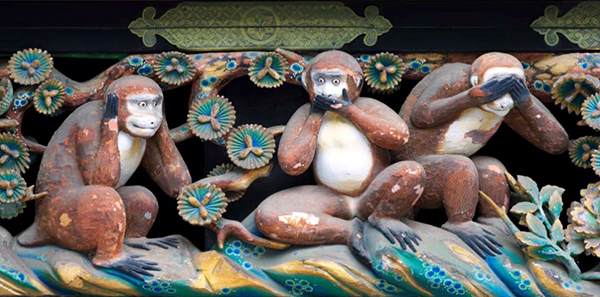
Image courtesy ©Tomo.yun (www.yunphoto.net/en/)
Figure 2: Not an effective copyright policy
MariaPallante, United States Register of Copyrights, describes copyright as acontemporary professional life skill, like using learning analytics or processingbig data. I couldn’t agree more.
It iseasy to incorrectly link respecting intellectual property law with limitationsand constraints that translate to being a financial or creative burden. Instead,the cost of not understandingcopyright exposes your company to consequences that transcend merely unpleasantor monetarily damaging legal action.
In mynearly 10 years as a copyright and finding media educator, I’ve discovered afascinating dynamic. Once people replace their confusion about copyright lawwith a working knowledge of the law and how to apply fair use, they are betterable to manage risk and operate on an ethical, moral, and financially realisticbasis. A creative marketplace such as eLearning demands no less.
* Specifically, transfer is influenced by the amountof bacteria and the type of floor surface. See https://www.discovery.com/tv-shows/mythbusters/mythbusters-database/5-second-rule-with-food/
** With apologies to philosopher Marilyn Frye.
From the Editor: Want to learn more about copyright?
Barbara Waxer will present Session 410, Copyright Trends and Finding Media Gems, at The eLearningGuild’s Learning Solutions 2016 Conference & Expo, March 16 –18 in Orlando, Florida.
Premium Members of The eLearning Guild may be ableto attend Learning Solutions Conference & Expo free! Learn how here. For all others, registerby Friday, January 29, 2016 to receive a $100 Early Registration Discount.Other individual and organizational discounts may be available to eLearningGuild Members and Members-Plus, to employees of nonprofit, government, andaccredited academic institutions, to groups of three or more persons from thesame organization, and to current, full-time students at any accrediteduniversity that has an established relationship with The eLearning Guild.Details are on our Registration page (see link above).