



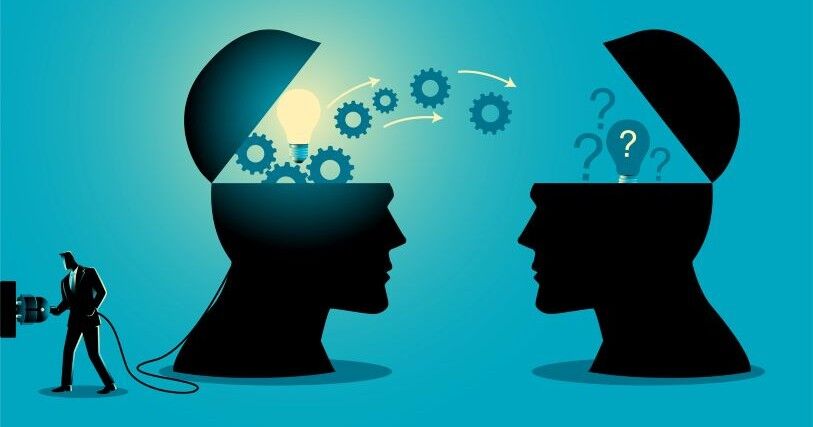
While organizations are investing heavily in artificial intelligence, success ultimately depends less on the technology itself and more on the people using it. Research consistently shows that AI delivers value through increased productivity, improved customer service, and the reduction of repetitive tasks and human error. However, these benefits only materialize when companies invest in the right foundations: talent, training, strategy, and clear objectives.
Human Skills vs. Machine Capabilities
For AI to succeed, organizations must align around a few essential priorities. This includes investing in employee training and skill development, establishing a clear AI strategy, carefully evaluating technology partners and solutions and defining measurable objectives. Encouragingly, many leaders already recognize the importance of these elements—the real challenge lies in execution.
AI can be integrated across every level of work, but despite rapid advances, AI still struggles to replicate inherently human capabilities, such as emotional intelligence, critical thinking, leadership, and complex problem-solving. These skills are irreplaceable and increasingly valuable in an AI-driven workplace. As a result, organizations must clearly distinguish between routine tasks that AI can handle and higher-level thinking that requires human judgment.
The Risks of AI
AI introduces significant risks when used without proper oversight. One of the most well-known challenges is hallucination—instances where AI generates information that appears credible but is entirely false. For example, AI tools may produce realistic looking citations that do not actually exist, which has already led to serious professional consequences in fields like law.
AI can also create legal and ethical issues when systems provide incorrect guidance that users act upon. In some cases, organizations have been held liable for inaccurate information delivered by chatbots or AI-based solutions they delivered to customers without proper testing. In Moffatt v. Air Canada, Air Canada’s website chatbot incorrectly told a customer that he could purchase a regular ticket and apply for a bereavement fare refund after travel. The airline’s actual policy required customers to apply for the bereavement fare before flying.
The customer relied on the chatbot’s information, purchased the ticket, and was later denied the refund. Air Canada argued that the chatbot was a “separate legal entity” responsible for its own statements. The tribunal rejected that argument and held that it should be responsible for all the information on its website.
Intellectual property concerns add another layer of complexity, as AI models are trained on vast datasets that raise questions about ownership and rights. Additionally, employees may unknowingly expose proprietary information when entering it into AI systems.
Perhaps most concerning is the rise of deepfakes and AI-enabled fraud. There have already been cases where employees were deceived by highly realistic AI-generated video calls impersonating executives, resulting in significant financial losses. In one widely reported case in 2024, a finance employee transferred approximately US$25.6 million after fraudsters used AI-generated video and audio to impersonate company executives during a video conference, demonstrating the growing sophistication of AI-enabled social engineering attacks.
The Growing Importance of Critical Thinking
As AI becomes more powerful, the need for critical thinking increases proportionately. As technology advances, human capabilities such as reasoning, judgment and ethical decision-making must evolve alongside it. In fact, research suggests a clear pattern: The more technology increases, you need a matching increase in critical thinking skills and emotional intelligence.
The Six Stages of Critical Thinking
Critical thinking develops over time through a progression of stages:
- It begins with unreflective thinking, where individuals accept information at face value.
- The second stage is the challenge stage where people begin to question beliefs and ideas, but may not fully recognize the extent of errors of thinking.
- At the next stage, individuals begin to examine assumptions and beliefs, review sources and begin to question the credibility of that source.
- As individuals advance, they practice analyzing their own thinking, seek truth even when it challenges their existing views, and ultimately reach a level where they continuously refine their perspectives based on new evidence. Most people don’t make it past the practice stage.
- At the advanced level, individuals value intellectual integrity and want to see the truth no matter what. The individual begins to see things from other people’s perspective and sees why those people might view things another way.
- At the master level, a key distinction emerges: Weaker thinkers look for evidence that confirms their beliefs, while advanced and master thinkers welcome the challenge to their way of thinking. A master thinker does all of the above all the time and constantly updates their own thinking based on new information and ideas.
Most people operate in the middle stages of this spectrum, with fewer reaching advanced or master levels.
Building a Culture that Supports Critical Thinking
Ultimately critical thinking is built on five key skills: observation, analysis, inference, communication, and problem-solving. These skills enable individuals to notice patterns, interpret information, draw informed conclusions, share insights effectively, and apply their thinking to real-world challenges.
Organizations can develop these capabilities by embedding them into everyday work through activities such as data analysis, case studies, simulations, and collaborative problem-solving exercises. Rather than teaching critical thinking as a standalone concept, it is often most effective when integrated into existing training programs and workflows. For critical thinking to thrive, organizations must foster a culture that supports it. There are five concrete actions leaders can take now:
1. Teach employees to question assumptions
Use everyday statements as exercises. Instead of accepting statements like:
- Remote work is less productive.
- AI will replace human jobs.
Ask employees:
- What assumptions are being made?
- What would have to be true for this statement to be accurate?
- How are key terms being defined?
- What evidence supports the claim?
2. Train employees to verify AI output
AI should be treated as a starting point, not the final answer. Leaders should teach employees to:
- Verify facts
- Check citations
- Confirm sources
- Validate policies before acting
- Never assume AI is correct
3. Teach source evaluation
One of the most practical skills leaders can teach is evaluating information quality. Employees should incorporate source evaluation into everyday workflows using the CRAAP Test developed by librarian Sarah Blakeslee.
- Currency: Is the information current? Has it been updated?
- Relevance: Does it apply to this problem? Is it intended for this audience?
- Authority: Who wrote it? What expertise do they have?
- Accuracy: Is there evidence? Is it supported by reliable research?
- Purpose: Is the goal to inform? Persuade? Sell something?
4. Teach employees how misinformation works
Use real-world examples from media, marketing, and business discussions to practice identifying flawed reasoning. These examples can help employees recognize potential flaws:
- Logical fallacies
- Misleading arguments
- Bias
- Weak evidence
- Emotional manipulation
Examples include:
- Ad hominem attacks
- Strawman arguments
- Red herrings
5. Embed critical thinking into existing work
Rather than treating critical thinking as a standalone course, integrate it into normal business processes. Ask employees to evaluate evidence as part of the work they already do.
Examples include:
- Sales competitive analysis
- Marketing campaign reviews
- Customer service
- Project management
- Engineering
- Legal reviews
- Procurement
- Strategy discussions
The Path Forward
Employees should feel comfortable navigating ambiguity and understand that not all problems have clear-cut answers. At the same time, organizations must emphasize the importance of evidence-based decision making and ensure that diverse perspectives are valued and heard. These cultural elements create conditions where critical thinking can flourish.
AI represents a fundamental shift in how work is done. Organizations now face two paths: One is focused on automation, where AI replaces human tasks, and the other on augmentation, where AI enhances human capabilities. The most successful organizations will choose the latter. By using AI to reduce routine work while investing in uniquely human skills, they can unlock greater value and innovation. In this new era, the true competitive advantage is not AI itself, but the people who know how to think critically while using it.
Image credit: rudall30


