By Maggie Sass, PhD
I start meetings with one simple question: “How’s everyone doing?” Not “What’s the agenda?” Not “Where are we on the numbers?” But, “How are you?”
It sounds small. It isn’t.
In today’s ever-changing business world, it’s clear that traditional leadership traits such as strategic vision and technical ability are no longer enough. Leaders must not only build real relationships at work, but also cultivate a toolbox full of people-first strategies that support employees’ personal growth, interpersonal dynamics and overall workplace well-being.
The newly released TalentSmartEQ 2026 State of EQ Report makes the message even clearer: In an AI-driven economy, human skills, not just technical skills, are the strongest predictor of organizational performance.
While companies race to adopt AI, many lack the human capabilities required to make it work effectively. The 2026 State of EQ Report draws on insights from nearly 700 leadership, HR, and L&D professionals, and uses EQ assessment data from more than 23,000 individuals. The findings reveal that emotional intelligence sits at the center of what the report calls the “human skills stack.” These are the essential capabilities that allow technology investments to translate into real results.
The report identifies four defining themes shaping companies’ future performances.
1. Building the “Human Skills Stack”
When asked which skills matter most for success, respondents ranked technology first, followed by adaptability to change, critical thinking, emotional intelligence (EQ) and communication. Together, these form the “human skills stack.”
At the center is EQ. It determines how leaders respond when priorities collide, when feedback is difficult, and when decisions must be made with incomplete information. Technical capability creates opportunity, but only human capability converts it into sustained performance.
2. Uncertainty and Change Test Leaders
Economic uncertainty is now the top anticipated business disruptor. Organizational change is also accelerating: 54% of organizations report frequent or constant change, up from 45% in 2025. Yet only 41% say they are well-prepared to handle disruption.
This gap highlights a critical leadership challenge: the ability to regulate emotions, communicate clearly under pressure, and maintain trust during uncertainty.
3. Internal Alignment Is a Hidden Performance Constraint
While external pressures dominate headlines, the report finds that internal misalignment is often the real barrier to execution. Misalignment erodes trust, slows decisions, and weakens outcomes. Leaders with strong emotional intelligence are better equipped to foster alignment by encouraging open dialogue, navigating conflict constructively and building shared understanding.
4. Leaders Are Working on the Wrong Things
The report reveals a disconnect between leadership intent and actual impact. Fewer than 5% of leaders share the same top three development priorities as their raters. Additionally, 45% show no overlap between the behaviors they want to improve and the behaviors their teams say limit their effectiveness.
This misalignment means that even well-intentioned leadership development efforts often fail to produce performance gains—unless they incorporate accurate feedback and emotional intelligence.
Emotional intelligence is the ability to recognize, understand and manage one’s own emotions, while also recognizing and influencing the emotions of others. It includes four core competencies: self-awareness, self-management, social awareness, and relationship management. Together, these skills empower leaders to develop workplaces where employees feel seen, valued and motivated to perform at their best.
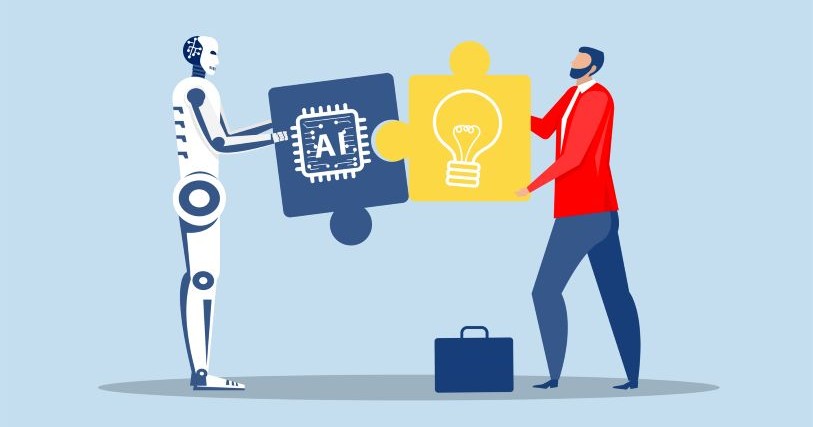
The 2026 State of EQ Report reinforces this evidence in today’s AI context: Human skills amplify technological performance. Leaders who lack adaptability, empathy, and emotional regulation struggle to translate AI adoption into measurable business outcomes. This data sends a clear message: In an AI economy, human skills are the competitive advantage. Technology may power transformation, but emotional intelligence determines whether that transformation succeeds.
So the next time you walk into a meeting, pause before you dive into deliverables. Ask the human question first: “How’s everyone doing?” Because in the AI economy, the leaders who elevate performance will be the ones who elevate humanity.
And that’s not small. That’s smart.
Use AI to Improve Your Learning Design
Don’t miss the Learning Guild’s AI & Learning Design online conference, August 26-27, 2026. Keynoter Beth Ridley will share ways you can use AI as a catalyst for intentional connection, creativity—and leadership. Across two days, we’ll explore how AI is changing workflows and demanding complex choices about what to automate and where human expertise is still needed. The six sessions move beyond exploring AI-driven tools into probing decisions about quality, trust, accessibility, and ensuring that learning experiences are engaging and meaningful.
Join this online event to learn how to use AI safely in regulated or secure contexts, streamline development, retain the human connection, and more. Each day, you can join our new ThinkSpaces to chat with speakers and other attendees at virtual roundtable discussions.
Registration is open—and it’s free for Professional members!
Image credit: useng