



Instructional Design
Applying learning theory and design strategies to meet specific performance goals through the creation of instructional materials and formal learning experiences.
-
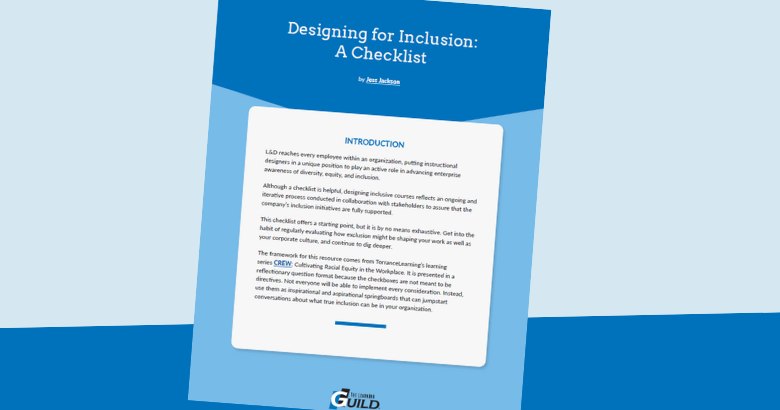
New Checklist: Designing for Inclusion
Download this checklist and get a thorough guide on how to reach employees and advance awareness of diversity, equity, and inclusion.
-
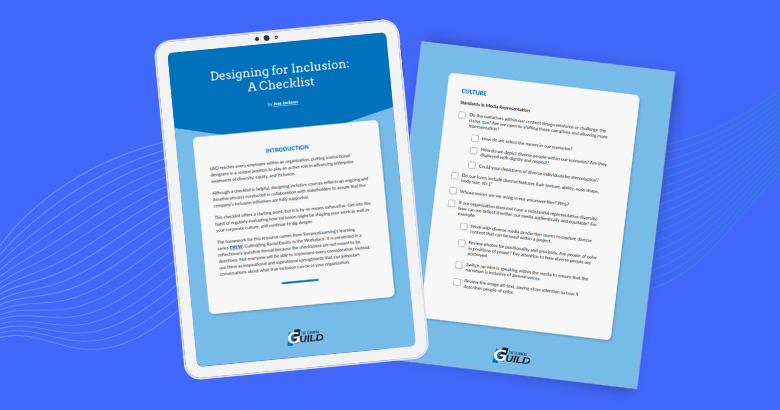
Designing for Inclusion: A Checklist
Download this checklist and get a thorough guide on how to reach every employee and ensure advancing awareness of diversity, equity, and inclusion.
-

What Can You Do With an Instructional Design Degree?
The instructional design field is fertile ground for eLearning developers, instructional designers, and training and development specialists. Find out more!
-

5 Tips to Reinforce Your Conference Learning
Explore how you can take your learning to the next level in the weeks following Learning Solutions 2022.
-

Book Review: The Guide to Working With Subject Matter Experts
Michele B. Medved’s collection of great tips is an excellent, concise guide to the most important elements of working with subject matter experts.
-

Which One Is Mobile: The Learning or The Learner?
Should the instructional designer think “mobile first” or are there other factors?
-

Cognitive Science in Instructional Design
In the information age it’s believed more is better. However, when it comes to learning we often find the opposite: less can be more. Because of the cognitive load limits of learner’s memory, we’re only able to focus on and learn a finite number of any given items on a screen, slide, or page. The problem for most instructional designers is finding balance. In this session we’ll discuss the role cognitive load plays in how people learn and retain information. We’ll start with a baseline discussion about what cognitive load is and why it’s important to consider in instructional design.…
-
Using VR to Create a Psychologically Safe Space for Learning
Learning can come with costly mistakes. Whether learners are expanding their understanding of diversity and inclusion or working in hazardous environments, on-the-job missteps can damage relationships or even cause injury. How do we create space for learning while still protecting individuals from dangerous repercussions? Virtual reality is one solution. In this session, you’ll explore how VR can enable your learners to have tough conversations, tackle risky situations, and enter dangerous landscapes. We’ll examine several case studies of VR training in action across the globe. These examples will demonstrate how VR training can positively impact trust and personal safety. Then, we’ll…
-
Recapping the Research: What’s Going on with Adaptive Learning in L&D?
Adaptive learning is an emerging technology gaining traction with organizations looking to leap ahead and improve their audiences’ experience and enhance learning outcomes. While many products are now adding this feature to their offerings, it can be tough to determine what the end goal is and if this new technology solves the issues at hand. The recently released “Adaptive Learning Research Report” from The Learning Guild offers a wealth of information on this topic. Let’s take a deep dive into the report and discuss the core benefits that adaptive learning brings to the table.
-
Taking a Systems Approach: Designing Comprehensive Solutions
Every learning and development person has gotten that request. The one where you immediately want to ask: “Are you sure that’s a training problem?” But you can’t always make that case to stakeholders who have come to you with a training solution already in mind. There are a number of different ways to address this challenge, and having concrete methods to analyze the underlying issues can make all the difference in persuading stakeholders and in solving actual business problems. In this session you’ll find out how systems theory and systems mapping are additional tools that you can use to address…