Many media outlets, from theBBC to Forbes magazine, predictedthat 2016 would be the year of virtual reality (VR). VR is no new kid on theblock, but advances in hardware and software, as well as a drop in prices ofthe associated technology, are bringing VR into the mainstream.
The last 10 years have seenmany projects harnessing the power of VR for education and learning, butprojects are stepping outside the confines of research and becoming part of thelearning mix. From medical and manufacturing through to retail and hospitality,VR can offer a more immersive, engaging, and contextual learning experience.
Consider recent articles thathave highlighted VR and its uses, with headlines such as “Deloitte predicts 2016 will see VR have its first billion-dollaryear.” The most common types of VR are likely to be “full-feature” (high-resolutionscreens for use with compatible devices) and “mobile” (incorporated intohigh-end smartphones).
Tech trend or techtrajectory?
One of the most commonquestions that customers who want to know more about virtual reality ask mycolleagues and me is whether VR is really worth the investment—is it a trend,rather than a medium that is here to stay?
Well, VR isn’t new, and anyonewho has worked in aviation knows this. However, VR hardware is now in the reachof the retail market that puts it in the hands of a much greater audience. Youjust have to cast your mind back to the first cellphones, or the price of thefirst HD TVs, to see how quickly the price drops and the next level ofsophistication and refinement comes along. Along with this, the skills base todevelop VR-ready content is growing rapidly, which is opening up a hugeopportunity for organizations to benefit from the deep engagement that VRbrings.
Transforming thelearning experience
For synchronous activities—suchas product demonstrations and launches—it provides the opportunity for peopleto experience the product and ask questions of a live trainer or subject matterexpert. Product developers, designers, and marketing can use VR to ask staff orconsumers to interact with products and make observations that will informproduct design and promotions. To support global collaboration, why not createa virtual “hackathon” space? Your VR environment can include informaldiscussion spaces, creative spaces, and more.
Further applications for VR insoft-skills training are gathering pace. As companies such as Microsoft Labscontinue to refine their “holoportation” technology, you’ll no longer need tochoose an avatar—cameras will capture your image and “transport” you to sharedspaces. It’s not quite time travel, but as hardware and software performanceimproves, the experience is really compelling and very smooth, helping learnersreally throw themselves into the environment.
But is it reallyworth it?
Like all learning solutions, virtualreality is only as good as the clarity of purpose, the context, and therelevance built into it. Peter Pashley, head of development at ustwo, made an interesting observation in the April 2016 issue of Wiredmagazine: “For VR experiences to be worth putting the headset on, it’s got tobe something that makes the most of you being somewhere.” So a quick video andhow-to guide is a more sensible suggestion to learn how to create a pivottable! VR, like any learning technology, must be driven by the need and itsrelevance to the learning outcome, the learners’ preference, and the organizationalcontext.
You need to be led by thebusiness need, not the technology. If you apply a model such as Cathy Moore’s Action Mapping approach, the questions you would ask in thatprocess could be applied to creating a VR learning experience just as well asan eLearning module. Understanding the actions people need to take to meet thebusiness goal is a critical element of the model—Moore argues that it’s notabout the knowledge people need, but the actions they take. For criticalbusiness areas, VR could provide a more effective environment to test outactions, observe actions, and identify actions you may not have expected.
Donald Clark, in a blog post from 2013, makes an interesting related point—you can makemistakes in a 3-D environment. The learners have more control over the routesthey take or the actions they perform, so we may observe learners using orneeding information we hadn’t even considered in the planning phase.
So to get started with VR, Iwould recommend starting with the board’s strategic objectives—what are thecritical shifts that we, as a business, need to make to see real performancechange? If the need is important enough, then it warrants the investment increating learning experiences that capture attention at a deep sensory level.
But how do we know what’s importantenough or relevant for treatment using VR?
My colleague Debbie Lawley and Ihave developed a model for analyzing dimensions of the learning need and howappropriate VR would be as a solution (Figure 1).
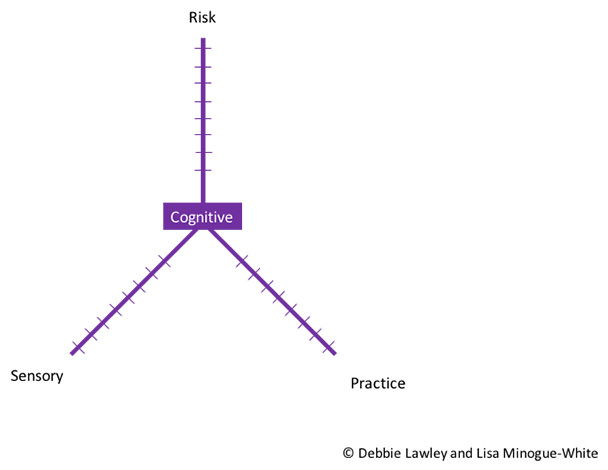
Figure 1:Mapping the learning need against these three cognitive dimensions can helpidentify how appropriate VR would be as a solution
This model focuses on three cognitive dimensions (thought, experience, andsenses, reframed as Risk, Practice, and Sensory) to bring VR into the learningand performance context. By mapping different learning needs onto eachdimension, you can see how virtual reality fares as a suitable solution.
Risk is fairly self-explanatory, and it demonstrates whyapplications such as learning to fly a commercial plane are common cases forVR. In contrast, not adjusting your chair carries some long-term risk, but it doesn’twarrant a simulation using VR (and anyway, give it a few years and the Internetof Things will have that covered—your chair will be able to adjust itself!).
Practice, again, is fairly clear—take, for example, learning to useExcel. Although with some practice the functions become second nature, it isnot an activity that requires lots of performance rehearsal. You can easily fillany gaps in knowledge with some basic performance support materials. You don’tneed to simulate Microsoft Excel; you can just use it! However, for skills suchas conflict resolution or presentation, the ability to practice and test yourresponse in different outcomes can be very effective indeed.
Sensory relates to a factor highlighted earlier—the importance ofsensory feedback from the environment. This can be in the form of hapticfeedback (user feedback based on touch, as used in devices such as the AppleWatch). One new device, the HTC Vive,includes haptic controllers with the headset. This can help with deeper levelsof engagement or provide feedback on physical activities, using varying levelsof pressure and touch feedback in response to an interaction with an object orthe environment.
Sensory can also be interpretedas emotional engagement. Scenarios such as diversity training, as currently being tested by the NFL and Stanford University, useimmersion experience in VR to give learners a perspective different from theirown. Seeing the world through another’s eyes can be a deeply powerful emotionalexperience; and because the visual, auditory, and kinesthetic stimuli of a VRenvironment are so immersive, VR gets you very close indeed to truly seeingthrough someone else’s eyes.
To help demonstrate the model fromFigure 1 in action, here’s an example:
Contract negotiations
In a situation such as contractnegotiations, the risk is high, the need for practice (depending on experiencelevel) could also be high, and certainly a successful outcome will benefit fromadequate preparation. Plotting this onto the model in Figure 1, we get Figure2. At lesser levels of experience, VR could provide negotiation practice in arisk-free environment.
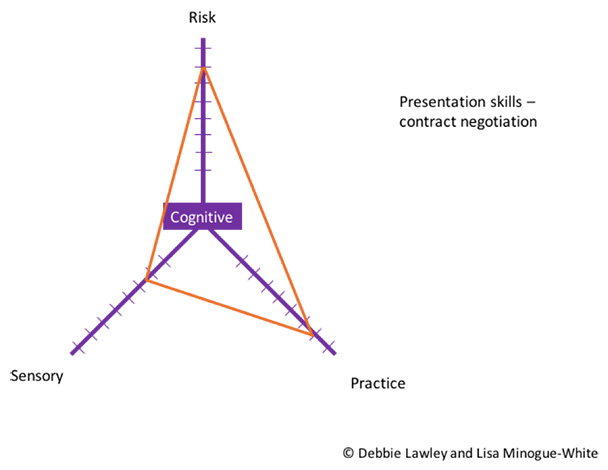
Figure 2: Contract negotiation plotted onto the cognitivedimensions
One of the most common methodsdeployed in presentation skills training is role-play—however, for those whoare not comfortable presenting or are lacking in confidence, a role-play can bea very unpleasant experience. That’s not to underplay the importance ofpractice; in fact, it’s vital. So, if you contrast that with watching examplesof good presentations, it may be easy to identify what works and what doesn’t;but translating that into your own practice is a whole other matter.
Observing others givingpresentations doesn’t mean that a learner will move from “they do that” to “Ican do that,” while the crushing embarrassment of a role-play in front of peersalso may not be the most conducive environment for personal growth.
Virtual reality can provide anideal environment for practice, feedback, and observation, all housed in a safebut realistic setting. With effective learning design, you can simulatedifferent scenarios, adopt the perspective of different audience members,observe others, and receive feedback. There are already some great examples ofapps and scenarios being built to tackle the subject, including Public Speaking for Google Cardboard.
VR isn’t the solution for allthe performance needs in your organization—no one particular approach ever is. However,it is becoming an attainable and practical solution that can now be put intothe mix when the need warrants it.
References
Clark, Donald. “Oculus Rift: learningmachine that will blow your mind!” Donald Clark Plan B. 8 October 2013.
https://donaldclarkplanb.blogspot.co.uk/2013/10/oculus-rift-learning-machine-that-will.html
della Cava, Marco. “Virtual realitytested by NFL as tool to confront racism, sexism.” USA Today. 10 April 2016.
https://www.usatoday.com/story/tech/news/2016/04/08/virtual-reality-tested-tool-confront-racism-sexism/82674406/
Franklin-Wallis, Oliver. “What’s thefuture of VR? We asked the experts.” Wired.23 March 2016.
https://www.wired.co.uk/article/virtual-reality-future-gaming-crytek-ustwo-oculus-rift
Moore, Cathy. “Action mapping: A visualapproach to training design.” Cathy-Moore.com.
https://blog.cathy-moore.com/action-mapping-a-visual-approach-to-training-design/
https://vrscout.com/projects/overcome-fear-of-public-speaking-vr/