The San Francisco Bay Area chapter of the Chinese Instituteof Engineers/USA held its annual conference on February 27, 2016 at theComputer History Museum in Mountain View, California, with a meeting focused oninnovation and the maker movement. In the afternoon session, seven speakers providedmultifaceted perspectives on the theme “We Are Makers.” The evening banquetfeatured a keynote titled “My Encounter with Innovation” from Dr. Chenming Hu,professor emeritus at the University of California, Berkeley. Dr. Hu is also a recipientof the National Medal of Technology and Innovation, presented to him inDecember by President Barack Obama.
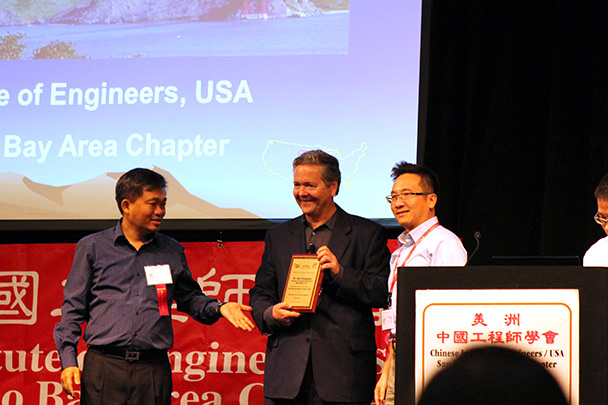
Figure 1: Dale Dougherty, founder and CEO of Maker Media, receiveda plaque for his contribution to the CIE conference
Dale Dougherty, founder and CEO of Maker Media, kicked offthe conference with a keynote about how the maker movement is shaping the nextgeneration of engineers, designers, and innovators. Dougherty attributed therapid expansion of the maker movement to the experimental, expressive, andsharable experience of the maker mindset.
Dougherty explained, “Making is simply starting with someidea in your head and beginning to work it out, bringing it out of your head,and making it through some sort of process through tools and materials. It isour own process, and it’s really satisfying to take something that you weren’tsure about and to begin acting on it. Making is something that we all do, notjust a few, or just at work, but something we can do in our garage andcommunity.”
Dougherty’s speech emphasized how the iterative and creativeprocess of making fosters many attributes in children, and even adults, that aren’talways readily accessible through the current learning curriculum. He says, “Youget better at doing it repeatedly; you have different abilities to continue tomake. In schools, we can’t have enough time to practice and improve—we learn insuch small doses in schools that we don’t have the ability to practice andimprove.”
Dr. Weixun Cao, founder and CEO of BitLab, recognized theimportance of sharing the maker mindset and process with students. Dr. Caopresented his experience in establishing more than 200 makerspaceclassrooms in over 20 provinces in China. Educational approaches in Chinadiffer vastly from approaches in the United States—where the maker movementstarts bottom-up within communities in America, it is the reverse in China. Educationalapproaches and mandates come top-down from the Chinese government.
Dr. Cao explained that Chinese educational culture revolvesaround obtaining the best examination scores to get into university, a process thatis inherently focused on the individual. In 2010, China passed the Outline of National Plan for Medium andLong-range Education Reform and Development (2010 – 2020) in order to shiftfrom caring about the “cold score” to the “living person.” This reform, alongwith Chinese Prime Minister Keqiang Li’s statement that everyone should be anentrepreneur and innovator, has sparked national interest in the makermovement.
Dr. Cao took this new national interest as an opportunity toimplement his vision for BitLab. His purpose is to get students focusing oncreating a product using the three Ps—passion, product, and projects. He’s cultivating the youth mindset to utilizeinnovation, creativity, and teamwork by developing products that could better helpsociety and bring us into the future. These colorful spaces (Figures 2, 3, and4) are designed to foster effective problem-solving skills under the traditionallearning environment of a classroom. Dr. Cao worked with policymakers in Chinato approve and create classrooms that were fully DIY (do-it-yourself)—from thechairs and furnishings to the décor. Tables and chairs come in kits thatstudents are able to assemble. They are modular,easily pushed together to encourage teamwork. Table surfaces are transparent,allowing students to follow along with a textbook or their tablet computerunderneath the surface while they create and experiment with projects on top ofthe desks.
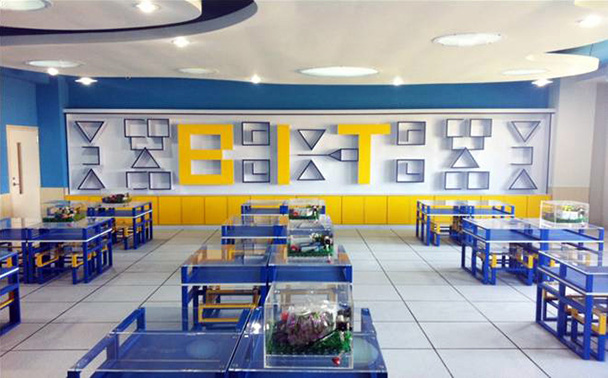
Figure 2: A BitLab makerspace in China
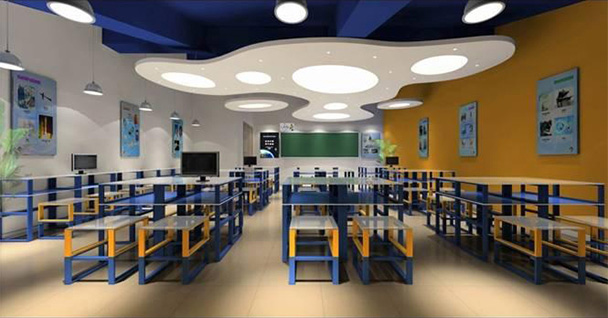
Figure 3: BitLab makerspaces are colorful
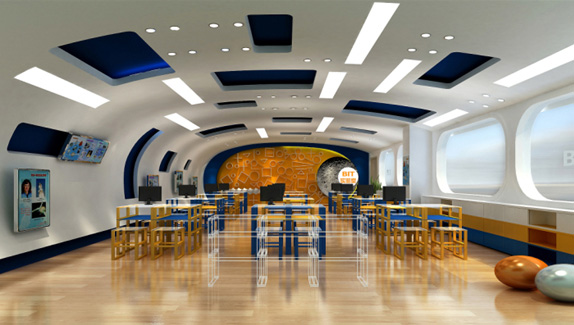
Figure 4: BitLab classrooms with modular tables and chairs
Curricula of the BitLabs include four main components: learningthe history of inventors and scientific discoveries, building electronic sensor–basedsystems, assembling 3-D prototypes, and presenting and public speaking. Students utilize a variety of sensors (includinglight, sound, ultrasonic, and motion sensors) in geometrically shaped housings,as shown in Figures 5 and 6, to create products that can have a variety ofapplications ranging from smoke alarms to pedometers. The end product is up tothe students’ imagination.

Figure 5: Sensors that students use to create products
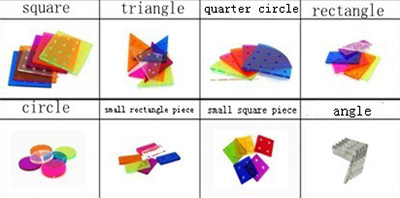
Figure 6: Geometric shapes used to house the sensors and createprototypes
Each session is 45 minutes on a weekly basis, but resultshave been positive in increasing students’ creativity, observation, and confidence,among many other qualities. At the beginning of each class, students fill out aself-evaluation of 10 abilities, and after the completion of the semester, theyfill out the same evaluation. Dr. Cao noted that the students’ progress was notlimited by their traditional gender scopes; for example, the improvement ofboys in their sensitivity to beauty was much higher than the girls’ improvement,and the girls’ progress in leadership was higher than the boys’ (Figures 7 and8).
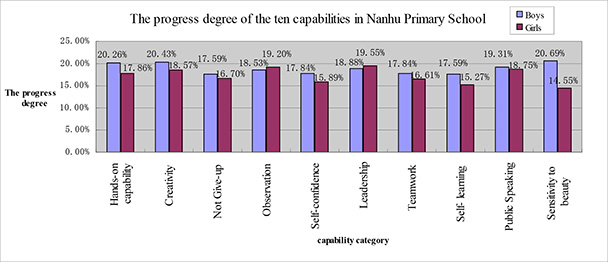
Figure 7: The progress degree of the 10 capabilities in NanhuPrimary School
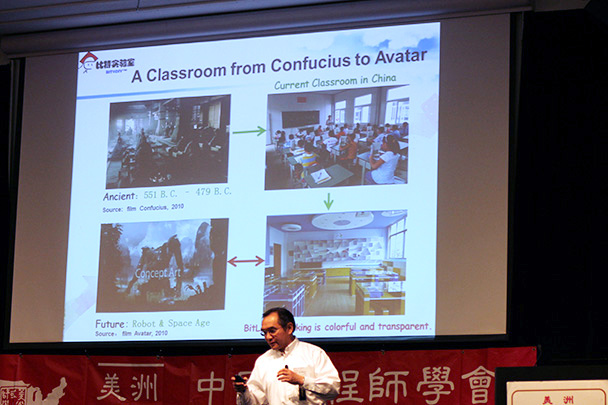
Figure 8: Dr. Weixun Cao explained the evolution of traditionalclassrooms to makerspace classrooms
Dr. Cao’s BitLabs illustrate the power of the maker mindsetto break barriers across continents. His classrooms demonstrated Dougherty’svision, as the Maker Media founder described in his opening speech: “Theincredible thing about the maker movement is that it connects all forms ofinterest people have. Part of what I wanted to do is to bring people togetherand introduce them to the practice of making again in an ordinary way.”
As the evening wrapped up, Dr. Hu presented a keynotedescribing what innovation meant to him. The UC Berkeley professor emeritus summedup innovation as “solving problems that matter.” Dr. Hu explained that we oftenneed to re-examine the original problem and to look at it from differentperspectives to get to the right answers, as the best answers are not the onesthat we arrive at first. His focus on the iterative process toward innovationand problem-solving was echoed by Dougherty’s viewpoint on making: “It is apractice. It’s not something you do once and you complete. You get better atdoing it repeatedly; you have different abilities to continue to make.”
The Chinese Institute of Engineers/USA willcelebrate its 100th anniversary in 2017.