Our newest Guild Research case study focuses on innovative usesof interactive video for medical device training. However, its lessons learnedextend far beyond the realm of health care and medical device training.
We have made thepoint in other case studies that the learning and development community isfully awakening to the power of interactive video. In a recent article, “Interactive Video and the Changing Face of Training,”Jack Leigh pointed out that in 2015, 86 percent of eLearning customers “expressed some level of desire to access interactive visual content on demand. … The amount of people who strongly agreedthat they wanted interactive video increased from 34 [percent] in 2013 to 46 [percent] in 2014.”To many of us, it is becoming increasingly clear that understanding and usinginteractive video is an essential knowledge and skill area for today’seLearning leaders and practitioners.
This case study describes how a pharmaceutical companysuccessfully overcame substantial learning challenges and created aninteractive video solution for users of its new medical device, as part of theapproval process the device is still undergoing (as of the publication date ofthis case study).
Using interactive video to support transformative producttraining
Headquartered in Lexington,Massachusetts, USA, scPharmaceuticals (hereafter scPharma) is abiopharmaceutical company that develops transformative pharmaceutical productsfor subcutaneous delivery of widely used generic drugs. Subcutaneous (under theskin) delivery enables convenient “anytime,anywhere” use—for example, in an outpatient setting instead of theemergency room or other inpatient settings. In addition, subcutaneous deliveryoften eliminates the need for catheters, which can be associated with seriouscomplications, frequent adverse events, and high medical costs.
The use of interactive video is an integral part ofscPharmaceuticals’ user training program for a drug-device combination enabledby the sc2Wear pump, a proprietary patch pumpfor subcutaneous administration of drugs (Figure 1).

Figure1: An sc2Wear pump delivers medication
When patients, caregivers, and healthcare providers (HCPs) really know what they are doing, subcutaneousadministration is often easier, less painful for the patient, and can beperformed by patients themselves, caregivers, and non-certified health care professionalssuch as medical assistants, as well as HCPs. However, the challenge was todesign and deploy training that would enable all three of these constituenciesto effectively use a device such as the sc2Wearpump.
Design challenges facing the training team
The scPharma team had two critical building blocks fordesigning its interactive training video:
- Instructions for use (IFU). The initial set of device useinstructions (80 pages in length) was too long, too complicated, and requiredtoo many steps.
- Quick reference guide (QRG). On the other hand, the QRG (at two pages) was too short to providea clear understanding of the entire process.
Theinformation contained in both of these sources was critical, but the teamneeded to present these detailed, step-by-step instructions at each learner’space of comprehension and in a non-intimidating, “high-touch” manner. Further,it was important for the training to enable device users to successfullyperform a number of cognitive functions, for example:
- Perceiveinformation from the device
- Interpretthe information sent by the device and make decisions about what to do next
- Manipulatethe device, its components, and its controls as required to respond to visualand audio cues, replace a component, or stop the device
- Interactwith the device by sending input and preparing the device for use (e.g.,unpacking, setup, calibration), using the device, or performing maintenance(e.g., cleaning, replacing a battery, making repairs)
- Perceiveother types of instruction or feedback from the device about the effects ofuser actions
Equallyimportant, learners needed to provide a positive affirmation at each step ofthe way in order to ensure that they understood all the steps. It was alsoimportant to provide a means for learners who had trouble understanding theinitial detailed instructions to jump back to previous steps in the process andpractice any steps they felt unsure of.
Other audience analysis challenges
Inaddition to these training design challenges, the scPharma team was confrontedwith a number of other challenges related to its target audience, whichincluded three very different types of device users:
- Patients. Patients can apply the device tothemselves, but only after being trained by a health care provider such as aheart failure nurse. Video instruction for patients is provided for thestanding-up position rather than the lying-down position.
- Lay caregivers. These are typically family members orothers who take care of the patient on a regular basis. Video instruction forlay caregivers is provided for the lying-down position so that the caregiverunderstands how to apply the device to a prone patient.
- Health care providers (HCPs). This group includes health careprofessionals such as physicians, heart failure nurses, and pharmacists who mayapply the device during a patient’s hospital stay or office visit, or who mayotherwise train the patient (or lay caregiver) to apply the device.
Obviously,it was critically important to both carefully analyze the audience andunderstand how to speak to each of these constituencies. An essential componentof this understanding was to establish and define a general level of medicalknowledge that could broadly apply to each of these groups.
Testing any type of detailedtraining is always difficult. But in the case of training for new medical devices, successful testing is literallya life-or-death requirement. Testing was necessary in order to eliminateunconscious errors; make all aspects of the process easy and visible; simplifyoverall device operations; avoid reliance on memory; and make it easy for thedevice user to catch and reverse an error.
Kathy Taudvin, director of corporate development for scPharma, explainedthese challenges: “Operating the sc2Wear device is actually not complex. Rather,I would describe it as a novel device with many critical steps. Missing orincorrectly completing any of the steps leads to errors, very few of which areconsidered ‘high risk.’ Though there are very few high-risk errors, any errormay result in the unit not functioning and the patient not receiving his or herdose. However, due to the type of pharmaceutical compound being administered(e.g., cardiac medications, antibiotics), the patient would know that the doseappropriate for that compound was not delivered if audio and visual cues[provided by the device] were missed.”
scPharma’s technology approach
Given thedesign requirements imposed by this learning challenge, the scPharma team, ledby president and CEO Dr. Pieter Muntendam, evaluated several learningtechnologies and quickly came to the conclusion that interactive video was theonly learning approach that adequately met all of the design criteria.
This was notthe company’s first venture into video learning. scPharma had previously usedvideo as a way to demonstrate the capabilities of the sc2Weardevice. But this type of linear video, often used within static web courses,could not deliver the degree of interactivity that the new device trainingrequired.
At the beginning, company decision-makers intuitivelyconcluded that video would be a better learning solution for this medicaldevice than paper. Although (at first) they did not have a clear sense of howto use interactive video, they knew that the biggest challenge of using a novelmedical device was user error and that effective communication was critical tosuccess.
Video navigation and user interface
Withinteractivity and patient engagement in mind, Dr. Muntendam looked at a numberof interactive video tools and providers and ultimately decided topartner with Boulder, Colorado-based Rapt Media. Founded in 2011, Rapt Media provides a cloud-based, interactive storytelling technology that combines personalized narrativewith data integration. Its HTML5 mobile-native video platform can navigate alarge number of individual videos. As the website CrunchBase notes, “The company also offers solutions in the areas ofcreative services, branching, link outs, site pairing, and strategy aspects.The videos are available on browsers, tablets, and handheld devices.”
The scPharma and Rapt Media team members used the followingdivision of labor to accomplish their project objectives:
- ThescPharma team created paper-based curriculum designs for learning content andnavigation paths. At the core of these designs were the IFU (instructions foruse) and QRG (quick reference guide) for the sc2Wear device.
- Another critical component of the curriculumdesign was a detailed audience analysis, which identified the variety oflearning, comprehension, and word-use issues unique to each of the targetaudiences.
- Although scPharma had a good structure for thelearning content and curriculum navigation, it did not have the in-house technicalresources to build the type of videos the team envisioned. Rapt Media providedthese technical skills and also subcontracted with a Boulder-based videoproduction company to provide the acting talent and shoot all the individualvideos that would be placed within the platform library. Rapt Media alsoprovided project leadership and coordination for all aspects of the initiative.
- Using the Rapt Media Composer, a cloud-based creative tool and editing suite, RaptMedia then built the interactive video application that navigates throughoutthe scPharma video library, and the team created flexible and personalizedlearning paths for each of the three learner constituencies (i.e., patients,lay caregivers, and health care providers).
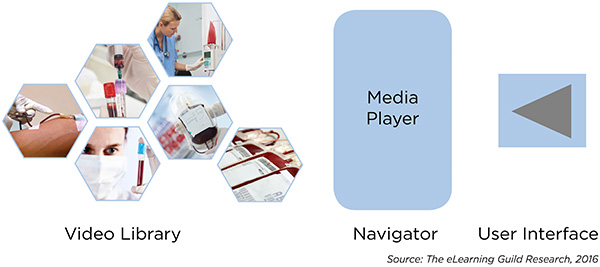
Figure2: Interactive video librarynavigation
- The scPharma videolibrary and interactive navigation video engine was launched using thecloud-based Rapt Media Player. Asshown in Figure 2, this tool satisfied scPharma’s need to easily and quicklynavigate and branch within a large library of video content, and the tool couldenable easy jumping to specific content segments or other device information.
- ThescPharma team then began work on US Food and Drug Administration (FDA) humanfactors testing of the interactive video training, including formative and summative testing as acomponent of product development (no deployment, yet). Briefly, “formative”testing is typically done during thecourse of a lesson or other type of process (e.g., a midterm exam). Incontrast, “summative” testing is done at the endof an instructional unit or other type of process, by comparing test resultsagainst some grading standard or benchmark (e.g., a final exam).
Snapshot of the interactive video solution
The sc2Wear training is not linear, but it does begin with amain video page (Figure 3) from which viewers can select the audience-specificlearning path they wish to take. Remember that three different learningconstituencies start from this point but diverge soon after receiving anintroduction and instructions (Figure 4).
The scPharma team originally began with a single video thatasked viewers to identify themselves with the initial branch of training theywished to pursue. Due to the size of the training videos, a single video wastoo big for the video platform. As a result, the team changed the initialdesign so that viewers can now identify themselves before entering theirselected training program.
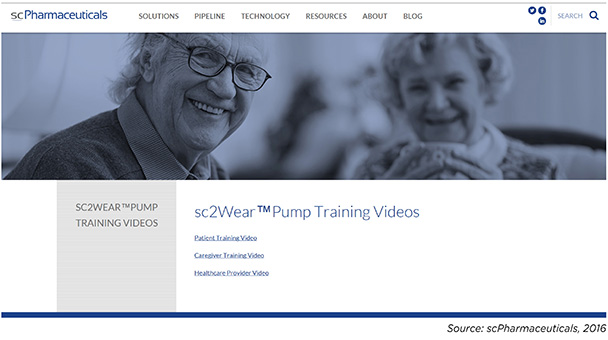
Figure3: sc2Wear pump training: main video page
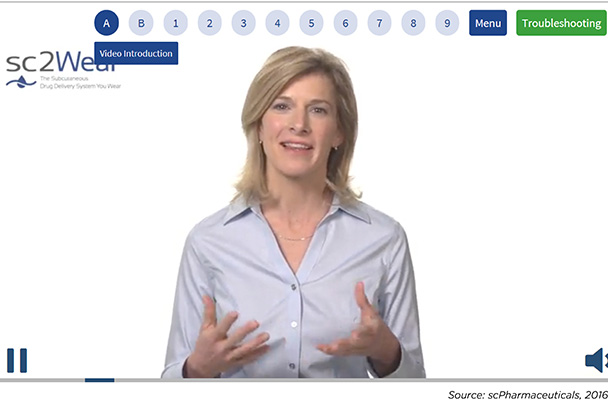
Figure 4: sc2Wear pump training: video introduction
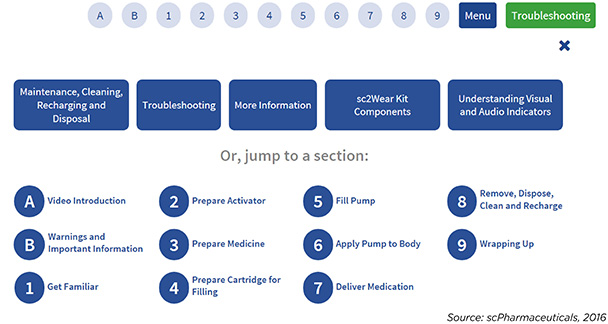
Figure5: sc2Wear pump training: menu
Although video learners can navigate throughout varioussections of the video using the main menu (Figure 5), one of the most importantlessons they will encounter is a demonstration (Figure 6) of how the device isto be properly applied, either by a caregiver or by the patient (aftersufficient training).
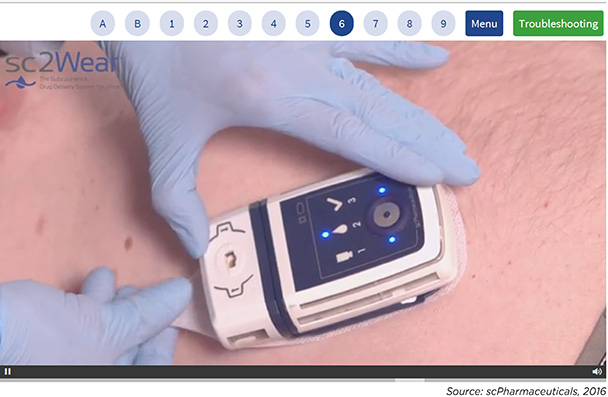
Figure6: sc2Wear pump training: Lesson 6 (“Apply pump to body”)
The video concludes with a wrap-up, and then viewers canwatch the troubleshooting segment if they have problems with using ormaintaining their device.
The enduring importance of learner engagement
A high degree of learner engagement is always important, butit is absolutely critical for effective interactive video training. Jen Bergen, blogging forRapt Media, writes:
“As Forrester’s ‘Move Beyond Awareness with InteractiveVideo’ report points out, ‘turning video from a lean-back to a lean-forwardinteractive experience redefines what is possible with the medium.’ And forvideo advertising, a medium with an industry standard click-through rate (howsuccessful an ad is at generating interest) hovering at just 1 to 2 percent,it’s time for a change. Brands that use IV [interactive video], however, areseeing that change with click-through rates between 5 and 12 percent while alsoengaging and informing customers at the same time.
“Speaking of engaging, the downside of non-interactivevideo is that it suffers from high drop-off rates. IV, however, sees completionrates of 90 percent and above. And since viewers often like to explore all thebranches in an IV, at Rapt Media, we’re seeing multiple views per uniquevisitor as well as repeat views for the same video.”
An important element of learner engagement with the sc2Wearinteractive videos proved to be the actor featured in the videos (Figure 4). Asone scPharma team member remarked, “[Many] men have commented on herattractiveness, with women commenting that she seems nice and approachable.”
Dr. Muntendamwent on to say: “We were trying to engage an inherently uninterested audience;in other words, people who don’t like [reading detailed] instructions. Atfirst, we didn’t think much about the actors when we started. But it quicklybecame clear that audience engagement was absolutely essential, and we wereable to achieve that when viewers quickly ‘fell in love’ with the featuredactor.”
Lessons learned
Dr. Muntendam and Kathy Taudvin summarizedthe following key lessons learned from their interactive video experience:
- Audienceanalysis. Having a clear understanding of your audience’scommunication style and preferences is absolutely essential.
- Preciseword usage. Beyond that, the selection of specific words is alsocritically important. The team was surprised at the significant impact thatsmall word changes could have on audience interpretation, understanding, andlearning.
- Choice ofinteractive video partner. Choosing the right technology andimplementation partner is equally important. Although at first the scPharmateam was apprehensive about the distance between its partner in Boulder and itsown headquarters near Boston, the team was ultimately very happy with itsinteractive video partnership because Rapt delivered “high-touch” service. Asone scPharma leader stated, “[We worked with] good people, smart people, [whowere] totally committed to the project.”
- Continuingvalue of paper-based design materials. In spite of its move to interactivevideo, scPharma did not totally abandon its detailed, paper-based instructions for use (IFU) and quickreference guide (QRG). In addition to FDA documentation requirements, thesewere needed because detailed written materials are essential for curriculumdesign and also help ensure that the precise, correct content is embedded intothe video. As one team member said, the “interactive video is the IFU broughtto life. The paper and video mirror each other.”
Conclusion
If you are not sold on interactive video after reading about scPharma’ssuccessful use case, you may want to review the resources provided in thefollowing section and also take another look at Paul Clothier’s discussion ofthe specific learning benefits of interactive video. Although he talksabout these benefits in the context of mobile learning, his insights apply morebroadly to other types of learning as well. Following are Clothier’sdescriptions of these learning benefits, with additional discussion of how eachbenefit applies to this case study:
- Engagement. “Interactivitymakes videos more engaging and immersive; hence, interactive videos make itpossible to maintain attention for longer periods than typical videos,” or evenother types of static training. As we also saw in this case study, the overallquality and warmth of the video presenter is essential to viewer engagement andsatisfaction.
- Discovery. It iswidely recognized that “one of the very best ways to learn is by discovery.Interacting with videos that provide branching and options can help facilitatethis. [Discovery] promotes learning and increases information retention.” As wesaw with the navigational structure of the sc2Wear training solution, viewerscan (and very often do) go back and discover additional aspects of the trainingthat appeal to them or aspects that they need to review.
- Immersion. With anavigation video interface such as scPharmaceuticals used for the sc2Weartraining, learners are able to “move smoothly and seamlessly from one video toanother … without interruptions or breaks in the narrative.” Having this typeof navigational flexibility and ease of use “provides a higher degree ofemotional engagement and immersion.”
- Adaptation. As wesaw with the scPharma interactive video, “decision points in the videotimeline”—provided primarily at the beginning, but also throughout—enabled theteam to adapt the training to specific audiences as well as individual viewers.Video users had “the opportunity to decide what they want to branch to or whatthey want to learn.”
- Tracking. Mostvideo engines also provide “the ability to track user interactions within thevideo.” Although scPharmaceuticals is not yet at this point in its evaluationstrategy, it could track future metrics such as “what the viewer tapped, whenthey tapped it, what they completed, when they left the video, and so forth.”As scPharma leaders have already found, these metrics will be useful inbuilding their future community of learners and will help determine learner’s“preferences, abilities, attention spans, or personality profiles.”
Although the scPharma team members were initiallyhesitant about being pioneers within their industry by using interactive videofor sc2Wear training, they now firmly believe that interactive video is“impossible to beat for this type of training.” Dr. Muntendam said that he andthe entire team are “more convinced now than ever” that they made the rightselection of partner, technology, and learning approach.
References
Bergen, Jen. “Interactive Video 101: What is it and why should youcare?” Rapt Media. 24 January 2014.
https://www.raptmedia.com/blog/what-is-interactive-video
Center for Devices and Radiological Health. Applying Human Factors and Usability Engineering to Medical Devices:Guidance for Industry and Food and Drug Administration Staff. U.S. Food andDrug Administration, Department of Health and Human Services. 3 February 2016.
https://www.fda.gov/downloads/MedicalDevices/DeviceRegulationandGuidance/GuidanceDocuments/UCM259760.pdf
Clothier, Paul. “Interactive Video: The Next Big Thing in Mobile.” Learning Solutions Magazine. 28 October2013.
https://www.learningsolutionsmag.com/articles/1292/interactive-video-the-next-big-thing-in-mobile/?utm_campaign=lsmag&utm_medium=link&utm_source=lsmag
CrunchBase. “Rapt Media.”
https://www.crunchbase.com/organization/rapt-media#/entity
Leigh, Jack. “Interactive Video and the Changing Face of Training.”Digital Training Solutions. 25 November 2015.
https://www.dtslimited.net/interactive-video-changing-face-training/
Rosenberg, Marc. “Marc My Words: From Interactivity to Engagement.”Learning Solutions Magazine. 12August 2014.
https://www.learningsolutionsmag.com/articles/1483/marc-my-words-from-interactivity-to-engagement/?utm_campaign=lsmag&utm_medium=link&utm_source=lsmag
scPharmaceuticals. “Micropiston Pump Technology.”
https://www.scpharmaceuticals.com/technology/micropiston-pump/
scPharmaceuticals. sc2WearPump Fill and Delivery (video). Vimeo. 8 January 2016.
https://vimeo.com/151206139
https://www.fda.gov/AboutFDA/Transparency/Basics/ucm194438.htm