AtDesigning Digitally, Inc. we’ve developed serious games and simulated learningexperiences for over a decade and in that time we’ve had some successes andsome failures in many capacities. We would like to share our lessons learnedand the challenges involved in team development of serious games. (For example,sales training in Figure 1.) We hope this will help you start off on the rightfoot when you decide to begin your own game development effort.
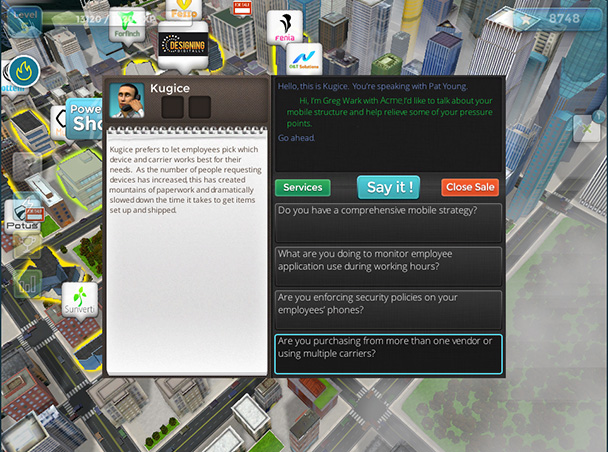
Figure1: Sales skills are a perfect application for serious games
First and foremost:team member attitude!
The keything that has helped us to be very successful in developing online trainingsolutions for clients is the willingness of each team member to adapt andchange. Technology and skills are important, but team efforts will not succeedunless team members leave their egos at the door. A collaborative group dynamicmakes a huge difference. This enables the work to move forward as the membersthink through processes together. When everyone does this, the results areamazing—even award winning!
It takes a teamwith skills to build a good serious game
Thelevel of sophistication that it takes to develop a serious game goes beyondusing television game shows as a model. Those models do provide good mechanicsif your aim is only to drop in content or as a format for course reviews, but theyare “so 1990s” as approaches to eLearning. Developing serious games requiresstepping up your game (if you’ll pardon the pun) (Figure 2).
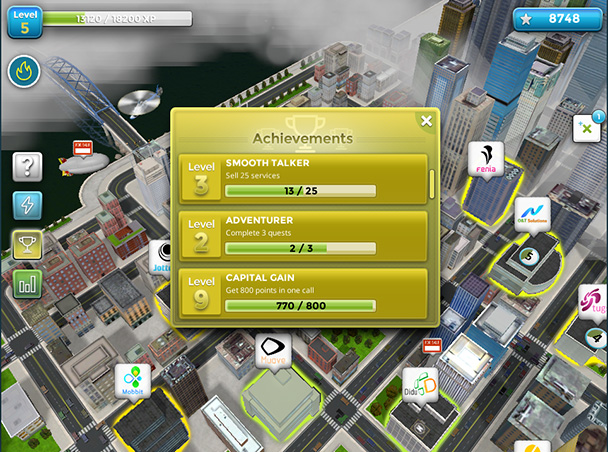 Figure2: A serious game will requireachievement feedback that is more sophisticated than a simple leader board
In ourexperience, the best way to create serious games is to assemble a team made upof:
- Video-game developers
- 2-D and 3-D graphic artists and animators
- Interactive media developers
- Web programmers and designers
- Instructional designers and copywriters (who are gamers at heart)
- Educational specialists and subject matter experts
- Quality-assurance testers
Thenyou lock them in a large studio together with no sharp objects. Thiscollaboration between different types of people from very different backgroundsallows for a very creative workspace and extremely creative learning experienceoutcomes.
The mostimportant people in the room (apart from the learners)
Nowthat we have a team together to spearhead the development, we must talk aboutthe client team. It often seems that clients feel that if they throw money atthese efforts it will be a huge success. Too bad it’s not that simple.
Wefound that if you do not treat a serious game as a plant that needs consistentnurturing and watering by an internal client champion you will not get the ROIyou would like to see from your venture. This is very true with any adaptationof new approaches or technologies.
Theclient team comprises a subject matter expert (SME), and a project champion (PC),plus a target audience group for testing purposes. These are critical playersat the organization who must be available throughout the experience. You mustfind out how many hours the client can allocate to this effort; all of themembers of the client team already have at least a 40-hour workweek, and thisis an additional task on their to-do lists. That means you will frequently below on their list of priorities, but that does not change the client’sexpectation that you are going to provide a home run with your “field ofdreams” serious game. Be careful of this, and make sure the client takes thistype of approach as more “serious” and less “game.”
Game developmentphase by phase
Thefirst priority for the game-development team from beginning to end is to workhand-in-hand with the client—this is critical. The development team must beable to open lines of communication (and keep them open) so the client teamfeels free and safe to talk about pain points, issues, and problems at theirorganization.
Phase One: Research
Your goal in theresearch phase is to identify the actual problem the game is to solve or thebehavior or skill the game is to produce, not the perceived one. Do this byinterviewing the audience members on the client team, and by doing a detailedneeds analysis. What you are aiming to do as a team is find out why the problemexists, and what is affecting the behavior of the client’s staff. Thedevelopment team and the client team can then develop concept ideas andsolutions that focus on the appropriate audience and the actual need.
Phase Two: The design document (where it getsreal)
Withthe need clearly understood, the next step is to prepare a detailed designdocument. This specifies the game mechanics, game loops, infrastructure,technology used, and learner themes that support the learning content and theaudience.
Seriousgames put so much focus on the gaming aspect. However, no matter howyou shake it, you need the learner to learn something, and you have to put itin their face throughout the game experience. The goal of having the gamedeveloper and instructional designer work together in this phase is to ensureyou effectively mix the game mechanics with content, while still askingeveryone this question: “How does this aid in learning?” If there is not a quickanswer for that concept, and possible theme for this serious game, you may wantto try a new approach.
Phase Three: Technology decisions
Oncethe dust has settled from the epic research and analysis we determine thetechnology used to create the serious game. Most of the time this technology determinationtakes place during the research and analysis phase, but I am going to discussthis separately because it’s so very important to the limitations of yourmechanics.
Clientsoften want to ensure that the learning experience works within specifictechnology or bandwidth restrictions, while still expecting something that isfar beyond the technology capacity of their infrastructure. The developmentteam must ensure that the technology for the serious game fits the client’sinfrastructure, supports the client’s technology, software, and hardware, andwill continue to fit and evolve as the company evolves. Make sure you spendtime analyzing the technologies that can be implemented without upsetting theIT department.
That moment when your assumptions come around andbite you
In ouryears of experience we have come to understand that, once you developstoryboards, agree on the game mechanics, and approve the storylines, there arebreakdowns in communication due to assumptions.
Assumptionscan be a good thing and a bad thing in serious game development. Many times aninstructional designer may have a vision. Maybe it’s clear, maybe it’s not, anduntil the designer can get their hands on it they may not even know themselves.A programmer may think they know exactly what the ID is thinking, but untilthey have something that both parties can grasp with their five senses, theydon’t really know what they have. So prototyping, sketching, and walkthroughsare just as vital internally as they are with the client or end user. Thismeans the instructional designers, the game developers, artists, and projectmanagers must be actively involved in each and every step within the project toensure that the vision from each person is brought to the table and fullyunderstood. Otherwise your execution will not meet the expectations of yourclient, and may not grab the interest of the target audience.
Phase Four: Test and fix and test again
One ofthe biggest secrets is to make sure you allocate enough time for testing. Whilecreating a linear eLearning module is what our industry is very used to making,those types of learning experiences do not necessarily need ongoing nourishmentlike a serious game does. You can stick the eLearning module on the shelf andtell people to go take it online. That’s not really the case for a seriousgame. The development team must have time to test both internally and thenwithin the client’s location(s). Testing should take as much time as theoriginal development took.
Mutualunderstanding and … marketing!
Yourjob as the development team is to make sure you and your client fullyunderstand what this serious game really is. With a serious game there has tobe constant nurturing of this experience and, as stated above, an internalchampion promoting it to staff. Above all, there has to be a compelling reasonwhy people want to play this learning experience. That means you need make surethat you have effectively understood the audience and that you have marketedthis effort internally.
Don’tforget to market! Throughout the years we have found that many organizationsfocus on the serious game development. However, there is so much more than justthe bells and whistles to think about. Clients sometimes believe that if youbuild a serious game, it’s going to be so popular you will change the way thecompany learns. This is called the field of dreams mentality, and it has failedin our industry many times over. There is a mindset that if we build anaddictive serious game, they will come play.
If youtruly want your serious game to be a success, it doesn’t matter how many gamedevelopers and instructional designers created it, you must have an integratedmarketing plan to constantly provide intrinsic and extrinsic incentive to youremployees for it to succeed.
And there’s still more
I hope this fast management-oriented overview ofthe team requirements and the process for serious game development has beenhelpful to you. There is truly much more to learn about game design anddevelopment: technical details, techniques, mechanics, modeling, and graphics,just to name a few specifics. There are many venues in which to learn aboutthese matters; The eLearning Guild’s events and Learning Solutions Magazine will have much more to say about themin coming months. But the foundation of your success is the team that you buildand the collaborative group dynamics that develop between the members.