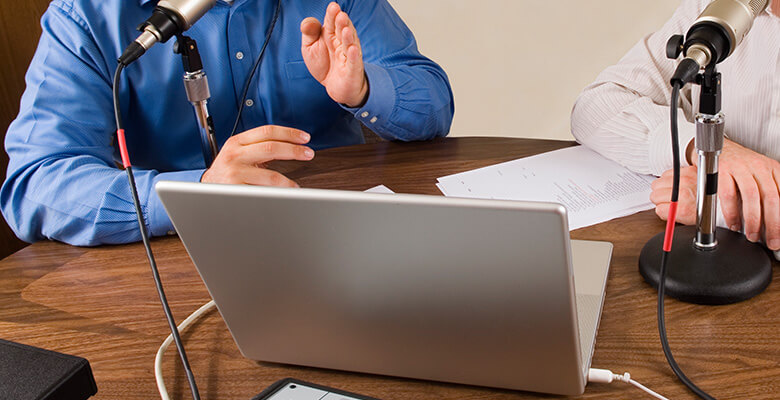
There are a number of production values that narrativepodcasters find effective for grabbing listener attention and keeping theiraudiences engaged in the story; you could think of these as technical elementsof professional audio quality. They range from techniques for improving contentwhen applied to script writing to methods applied to audio recording andediting. The most successful professional podcasters use these elements tocreate immersion in the audio environment and to eliminate audio distraction. Theresult is the creation of a kind of audio theater. Here are four basicpractices to embrace while creating your narrative podcasts.
Set thescene first
Many times, podcasters can get too enamored with theircontent or story and find themselves in too much of a hurry to get to theirlearning moments. For narrative podcasts to maximize their retentioncapabilities, you must immerse the audience in the story emotionally.
One way to do this is to take some time to set your scenesbefore jumping into content. Paint a verbal and audio picture through asoundtrack that creates an environment for your listener. Presentthe background information listeners will need to understand the context of ascene and get to the most out of the story. This can include describing asetting with vivid details, or perhaps explaining the way a character isfeeling or thinking in a given moment.
Often, you can also use sound effects to help underscore thescene setting, such as ambient audio of a location that lies underneath the dialogueaudio, or music clips intended to set the pace of the scene (i.e., frantic musicif a scene is action-packed or serene music if the main character is having animportant realization.) However, remember that the ambient audio or music mustsupport the environment and story, not distract from them.
Hook the audience
You only have a couple of minutes at most to grabthe listeners’ attention and engage them in your podcast. Knowingthis, it’s a good idea to start your podcast with something interesting.
One common technique is to play around with story structurein order to present a cliffhanger at the very start of your story. This canimmediately increase the drama of the story and give listeners a reason to keeplistening. One well-known example of this technique was used in the firstseason of the podcast Serial, whichtells the story of a murder in the late 1990s. The narrator told listeners fromthe very beginning who was convicted for the crime, then worked backwards todetermine if the conviction was correct. Presenting a resolution at the verystart of the story, and then questioning it, served to quickly pique theinterest of listeners and keep them listening to learn more.
Another way to achieve this ongoing interest is to createrecaps at the start of each episode: Splice together interesting clips of thingsthat happened in the previous episode or episodes. This also gives you theability to remind listeners of important events that have already occurred thatmay be relevant to the part of the story they are about to hear.
Vary charactervoices
Remember, with podcasts, the only sense you are able toappeal to is a person’s hearing. Knowing this, it’s important to focus on theway your podcast sound, not just from a sound quality standpoint, but also froman auditory flow standpoint. Having a single person talking for a long periodof time gets boring. Utilizing more than one character voice can give you theability to keep your audio flow fresh. Instead of having one character explainsomething, have multiple voices combine to discuss a topic.
You can always switch up which characters are providinginformation to the listener. Pay attention to how each character’s voice sounds as well; try to get varying typesof voices. For example, switching the gender, accent, and ethnicity ofcharacters whose voices follow one another can give you a way to break up thedoldrums of a single type of voice rambling on.
Talk like realpeople
This is a concept we have touched on a bit previously, but Icannot stress enough how important it is. If a podcast feels fake, listenersare going to disengage. You need to scriptdialogue so that you can ensure your voice actors are delivering the linesand messages as you intend, but you don’t want your podcast to actually feelscripted. Writing and recording dialogue that sounds how people actually talkis extremely important.
Often this involves straying from some of the tenets of“professional” writing. Don’t be afraid to use contractions or colloquial termsand slang. Don’t be afraid to interject pauses in speech, or charactersstumbling on words or showing emotion in their speech, as these are things thatreal people tend to do when having conversations. Even though your dialogue hasa script, you want the script to read like a natural, normal conversationbetween two or more people. The more realistic your characters feel, the moreemotionally attached to them your listeners will become.
These are just a few methods you can use to increase thequality and enjoyability of your narrative podcasts. In the next article, Iwill add a few more production techniques that you can use to achieve thesegoals.