
Swiss Re is awholesale provider of reinsurance, insurance, and other insurance-based formsof risk transfer. In April 2014, the Swiss company turned to gamificationin order to address some business inefficiencies. In the process it reapedsignificant savings, reduced its carbon footprint, and demonstrated socialresponsibility by aiding poor farmers in Kenya.
Drowning in data
Swiss Re was paying millions of dollars each year tomaintain an old network drive that housed a great deal of data the companysuspected was irrelevant. The company wanted its 13,000 employees to sortthrough an accumulation of 143,000 gigabytes of data, deleting what they nolonger deemed necessary. Recognizing that few employees would voluntarily takeon what might be considered a long and onerous task, Swiss Re turned to G2G3 for help.
G2G3, an Edinburgh-based leader in gamification solutions, developedmyProductivity for Swiss Re. The innovative product was a customized version ofan underlying gamification platform G2G3 already had. It featured severalgame-based quests employees could participate in, along with a countdown formatthat challenged them to remove unnecessary data from their computers within 70days. The more the employees deleted, the more “honey coins” they collected. Leaderboardsadded an element of friendly competition to the game.
Figure 1: myProductivity was designed by G2G3
The challenge was linked to Honey Care Africa, a charityprogram Swiss Re had partnered with to help 2,000 poor families in rural Africabecome more self-sufficient via beekeeping and honey-making operations.Employees could donate their collected honey coins to fund a variety ofdesignated gifts Swiss Re had pledged to the program, including beehives andequipment.
Buzzing engagement
On launch day, 10 percent of Swiss Re’s workforce engagedwith the program. Within four weeks, 60 percent of the target audiencecompleted the task—significantly ahead of schedule. At the conclusion of the70-day period, 87 percent of all employees had removed their old data from thenetwork, freeing 91 percent of the old storage drive. The program alsogenerated an unprecedented amount of excitement.
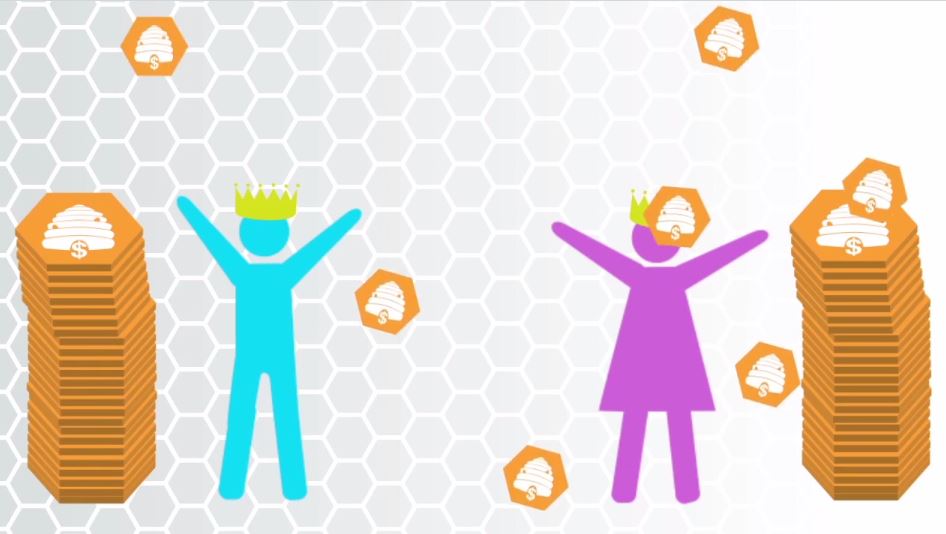
Figure 2: Employees who participated earned honey coins, which theycould later donate to a charitable cause
Based on the positive response it received, Swiss Re decidedto institute a calendar of other quests tied to other business challenges.
Think before you ink
Like many companies, Swiss Re was spending a lot of money onprinting. It enlisted G2G3 to develop a gamified tool that would illustrate theimpact printing had on the business and inspire employees to be more consciousabout it. In addition to raising awareness about the costs of printing—bothmaterial and environmental—Swiss Re’s goals were to significantly trim theactual number of pages printed and, ultimately, to reduce the number ofprinters in the workplace.
G2G3 developed another quest. The platform used acombination of game mechanics including regional leaderboards and charitabledonation incentives, once again in the form of honey coins that employees couldallocate to the Honey Care Africa program.
The program was a resounding success. When the 13-week questconcluded, five million fewer pages had been printed compared to the sameperiod a year prior, and Swiss Re realized direct savings of $350,000. Inaddition, Swiss Re was able to remove almost 200 printers, which allowed it tolower its carbon footprint and make progress toward the company’s long-term sustainabilitygoals.
Game on!
Swiss Re’s gamification initiatives motivated staff to adoptdesired behaviors, drove company-wide cost-saving initiatives, and improvedworkplace productivity. To watch a video about the program, click here.