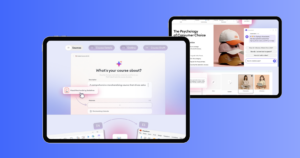
Learning occurs in a variety of situations; a learner can beenrolled in a long-term course of study or simply be seeking information neededright now. Learners might be in anoffice setting, at one of dozens of stores or outlets in a large business, oron the road, calling on customers or making sales. They might need the “rightnow” information to solve a problem, figure out or remember how to perform aparticular procedure, or adapt what they are doing to a new or unusualsituation.
A traditional-format online course is not always the mosteffective approach to online training. eLearning can take any of a number offormats: a one-hour learning module; an infographic or diagram; a video orsimulation; a microlearning module. You can also deliver it in many ways: synchronousor asynchronous courses, “just in time,” or on a schedule. Delivery might be vialearners’ laptop or desktop computers or sent to their mobile devices. The goalmight be to impart knowledge (facts and information) or to teach a skill orimprove performance.
Therefore, there’s no single answer to “What’s the best wayto provide training?” When choosing a format for online learning and a deliverymethod, managers should consider how and when employees will use and apply thelearning. Here are five questions to help managers decide what type ofeLearning is appropriate:
Will this training stand alone, or will it complement or formpart of a deeper course of study?
Microlearning and just-in-time modules are ideal for stand-alonetraining. These formats also work well to refresh learners’ memory of processesand procedures or quick facts that they might have covered in a longer trainingcourse. But for deeper concepts, strategic learning, or complex topics, alonger-format course is more suitable.
When and where are learners likely to need this training?
A sales rep making calls on potential customers might needjust-in-time training, available in a quickly searchable mobile format thatprovides quick facts about products and short demo videos the rep can call up ona tablet during sales meetings. Employees who perform a particular procedureonly occasionally might need a refresher video or infographic that steps themthrough the procedure. You can easily provide these types of trainings asmicrolearning modules that they can access from their desks; for employees whoare in stores or on the go, mobile formats that they can access on tablets ormobile phones are a better choice.
Is the skill something that learners are likely to need extensivepractice to master?
Some skills need to be learned at a deep level; they almostneed to become internalized. For example, employees who answer a crisis hotlinerequire skills that can’t be taught using a simple five-step diagram. You canteach complex skills and learners can practice them using an eLearning modulethat includes simulations and allows learners to choose from several possibleresponses or options, then explore how each choice might play out. Aninteractive format, whether learners interact with fellow employees in asynchronous online session or with avatars in an online game, allows learnersto become comfortable responding to a number of different scenarios before theyconfront similar ones with real-life callers.
Is the training in response to a real or a perceived threat?
Companies often spend large amounts of money on training asa response to a perceived threat: fear of legal action, risk of employeeinjury, or fear of harm to reputation, for example. However, before embarkingon an expensive in-depth training project, managers should conduct a riskassessment and realistically consider the likelihood of various scenarios.Managers must also consider the laws and regulations that apply to employees. Thescale and complexity of training, the platform and manner of delivery, and themethod of assessing learning should all be appropriate to both the actual riskand the organization’s goals.
How can we make this information most accessible to our employees?
Employees are asked to process massive amounts ofinformation. Some, such as simple facts, product details, due dates, useexamples, or common procedures, might be best presented in a quick-accessdatabase or a job aid: a chart, table, infographic, or checklist. Other typesof information, such as instructions for performing a complex process, lendthemselves to presentation via instructional videos, perhaps accompanied bysearchable manuals. Choosing the right format makes the information more accessibleand useful.
Office employees might benefit from a shared resourcesdatabase or website, where frequently referenced information, job aids, FAQs,and processes are available in a curated, up-to-date location—and whereoutdated or irrelevant information is excluded. If employees are on the road orscattered among multiple non-office locations, consider a mobile app where theinformation is gathered in one easy-to-search location. These steps will makethe information easy to find at the moment each employee needs it.