“Our new LMS is helping INHOPE sharpen ourcapacity to identify child sexual abuse material globally, reduce itsavailability, and help minimize online re-victimization,” says Amy Crocker, the hotline development coordinator forINHOPE, based in Amsterdam, Netherlands.
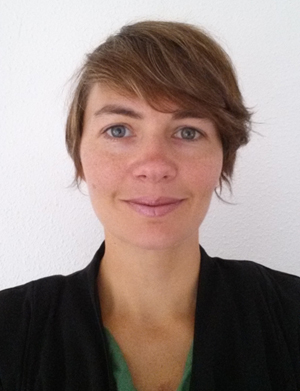
AmyCrocker
I wrote recently about Internet safety, ourresponsibility in eLearning to be aware of the risks, and our roles in helpingkeep the Internet safe. However, whatever we do, there is a dark side that is areal threat to every human being—especially children. That challenge is beingaddressed by INHOPE, anactive and collaborative network of 51 hotlines in 45countries worldwide, that is committed to stamping out childsexual abuse material from the Internet.
INHOPE comprises theINHOPE Association and the INHOPE Foundation, a charity constituted in 2010 to help start upnew hotline activities in emerging markets. INHOPE has a tiny but highlyspecialized secretariat, with the range of skills necessary to ensure aneffective operation.
As Internet accessibilitycomes to places where connectivity, bandwidth, availability of devices, andother barriers had previously denied the opportunity to citizens, thoseconstraints are disappearing. That’s the good news for millions now able toaccess information, to communicate, and to learn through technology.
The bad news is thatthe Internet’s dark side is expanding just as fast, in many countriesexploiting the lack of awareness, governance, political will, and judicialcapability to ensure the safety of users, especially children and othervulnerable groups. Even in places where significant national responsemechanisms are in place, there is a constant battle to ensure the health of an Internetthat transcends boundaries.
I recently interviewedINHOPE’s Amy Crocker.
Amy tells me: “INHOPEgrew out of a 1999 initiative within the European Union into a global networkof hotlines. The INHOPE Foundation was established to spread the knowledge andexperience to countries where the risks are outpacing their current speed ofdevelopment of appropriate governance. We aim to help the creation andcoordination of hotlines as a way for Internet users to be able to takeresponsibility for the net.”
“Establishing newnational hotlines is a complex challenge” she says. “The timelines and speed ofprogress have to align with the country’s ability to put the governance inplace. We and our partner organizations help with examples of protocols, legalframeworks, hotline designs, and operating procedures. We also provide adviceon creating public trust for exposing and eliminating child sexual abuse materialfrom the Internet. One of the biggest issues is creating enough visibility to sustain the new hotlines.”
Nowadays there is asophisticated global network of organizations, among whom INHOPE is a majorplayer, that have the ability, in cooperation with law enforcement agencies andthe Internet industry, to rapidly identify and act to remove child-abuse materialfrom the Internet in response to hotline information. Amy says, “Local hotlineshave well-trained analysts, good data systems, and rapid-response protocols.”
Until recentlynational hotline staff could only be trained on a face-to-face basis, butrecognizing a need and the opportunities offered by technology, a new LMS,supplied by DOCEBO, has changed that. Amy: “Masterminded by INHOPE’straining and services manager, Denton Howard, INHOPE can now provide online learning forour hotline network—webinars, static courses, and other media. This also opensup the opportunity for certification of analysts and for ongoing monitoring ofstandards through compliance evaluations.” This all ensures that exploiters ofthe net’s most vulnerable people will find it harder to do, and that every userwill be safer and have a more wholesome world of knowledge to explore.
Working with multiplestakeholders, dependent on public trust, ensuring support for referrals andchildren who are victims, while at the same applying the full force of criminalinvestigation techniques is challenging. Developing online learning in thisenvironment has interesting dimensions. The need for accessibility is paramount—makinglanguage issues, cultural sensitivities, and the challenging entrenchedattitudes toward child sexual abuse a delicate balance. One size will not fitall—but there are global commonalities.
Currently, materialsare mainly in English as the working language of INHOPE, but the expansion ofwork into South America (Brazil, Colombia, and Peru have hotlines and otherscountries are developing them) is requiring courses in Spanish with possiblefurther diversification, such as French. “Accessibility” is key to localsupport and hotline use.
It is a constantstruggle to keep up with and stop the abusers, and stop the circulation ofimages and videos of child sexual abuse online. Better coordination of learningand the pervasive technology of the Internet can be used to stop young livesbeing ruined and our global culture being debased.
Take responsibility—jointhe fight!