
The Guild’s newest research report, Informal Learning Takes Off, by Jane Hart, provides results of the April 2014eLearning Guild informal learning survey. When I posted the following tweet afew days ago, “Informal learning with L&D vs. without L&D—a differentpicture,” I got a LOT of retweets, so I decided to show the differences in thismonth’s article.
Differences
What are the most common informal learning activities takingplace without L&D intervention?Figure 1 shows the top 10 activities taking place without L&D intervention.
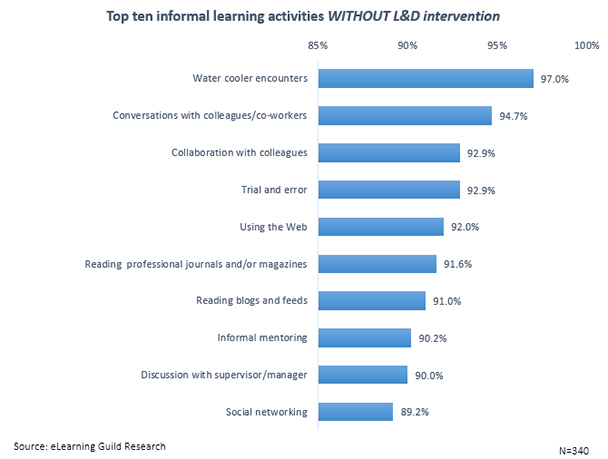
Figure 1: The top 10 activities taking place without L&Dintervention
What are the most common informal learning activities takingplace with L&D involvement?Figure 2 shows the top 10 activities taking place with L&D involvement.

Figure 2: The top 10 activities taking place with L&Dinvolvement
Conclusions from the latest report
Here are some things that Jane Hart concluded from thesecharts (and the chart that showed all of these together). Respondents realizethat much more informal learning happens without L&D intervention thanhappens with it. That makes sense of course, because informal learning issomething that naturally happens without L&D intervention. So the maininformal learning activities taking place with L&D interventions are notthe same as those main informal learning activities that take place withoutL&D intervention. So most of the activities that are happening with L&Dintervention might be termed “informal training” or “non-formal learning,”which is not exactly the same as “informal learning,” which we described in theGuild’s 2012 research report Smart Companies Support Informal Learning: “Informal learning includes situations where thelearner determines some combination of the process, location, purpose, andcontent and may not even be aware that instruction has occurred.”
Examples
The new report also shows examples of respondents’ informallearning initiatives. I thought we might share two of them with you today.
Using work shadowing as part of onboarding:
“During the two-weekplus onboarding process, we have included on-the-job observations of particularskills taught. This shadowing or formalized informal learning encouragesemployees to observe skills they’ve learned and to ask questions and discusswhen followed by debriefing back in the classroom. This allows forreinforcement of skills learned, and also provides opportunity for newemployees to practice skills while receiving feedback.” Kristen Henderson, Instructional Designer, Trainertainment
Facilitating “Lunch-‘n-Learns,” and other informal group sessions
“We hold many information sessions open for all employees,with no registration needed. This could be about an available resource (how touse the employee portal), a book discussion (that ties into an upcomingall-college external presenter), or something that takes fear away (the newOffice 2013 user-interface changes). We find informal sessions (in smallchunks) will increase attendance at workshop training sessions overall, andgets employees excited in training in general.” Judy Coates, Manager Learning & Organizational Development, Collegeof DuPage
Ihighly recommend that you download both of these reports (Smart Companies Support Informal Learning and Informal Learning Takes Off) as soon as possible so your traininggroups can begin to make the most of informal learning.